
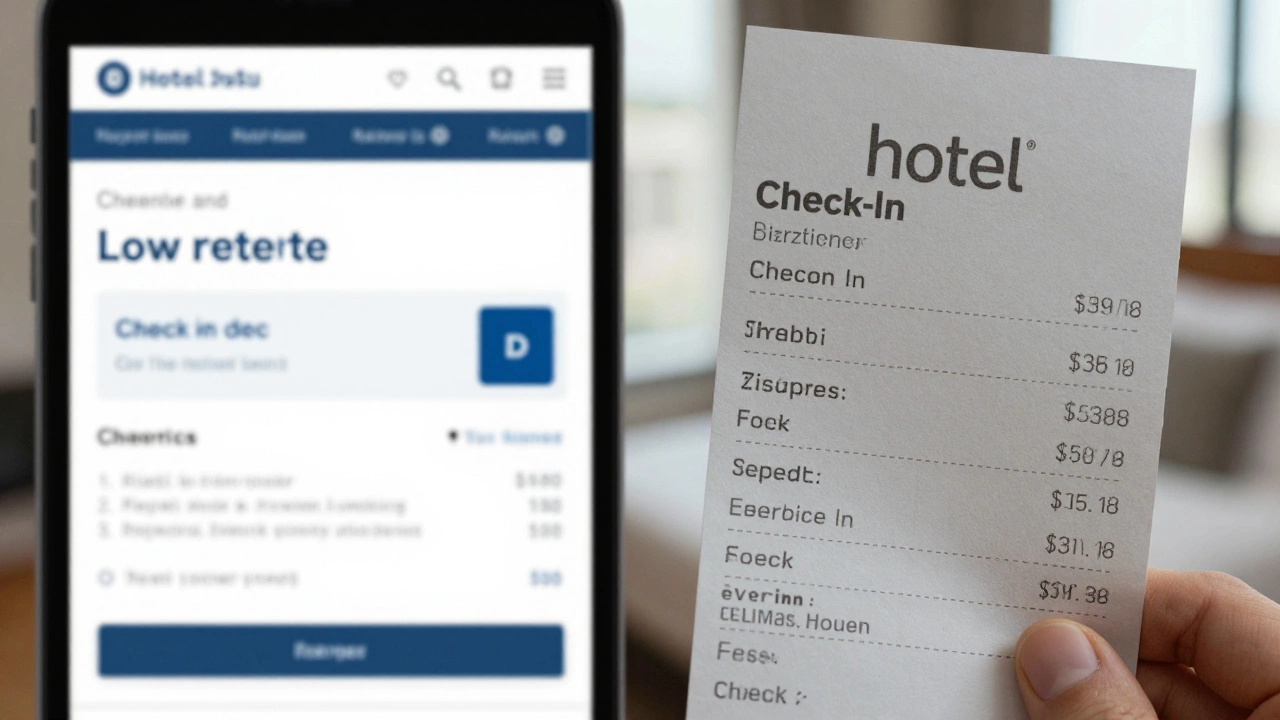
You book a stay at what looks like a perfect all-inclusive resort. The price looks great. You’re excited. Then, at check-in, they hand you a bill for $50 a night - "resort fee" - and say it’s mandatory. You didn’t see it listed anywhere. You feel tricked. Resort fees are one of the most common travel traps, and yes, you can refuse to pay them - but there’s a right way to do it.
What Exactly Is a Resort Fee?
A resort fee is an extra charge added to your hotel bill, usually between $25 and $75 per night. Hotels claim it covers things like Wi-Fi, parking, pool access, fitness center use, bottled water, or even local shuttle service. But here’s the catch: many of these "amenities" are either free elsewhere or so basic they shouldn’t be charged for at all.
In 2023, the U.S. Federal Trade Commission (FTC) found that 82% of U.S. hotels with resort fees didn’t clearly disclose them during the booking process. That’s not a mistake - it’s a pattern. Resorts rely on you seeing the low nightly rate, clicking "Book Now," and only realizing the extra cost when you’re already there with your bags.
Are Resort Fees Legal?
Yes - technically. But legality doesn’t mean fairness. Hotels can add resort fees because there’s no federal law banning them. However, many states have laws requiring clear disclosure before you book. If the fee wasn’t shown on the booking site, on the confirmation email, or in the hotel’s own description, they’re violating consumer protection rules.
California, New York, Florida, and Illinois have all taken action against hotels that hide these fees. In 2024, a group of travelers in Florida won a class-action lawsuit against a major resort chain for failing to disclose a $45 nightly resort fee until check-in. The court ruled the practice was deceptive.
Why You Can Say No - and How to Do It
You are not legally required to pay a resort fee if it wasn’t clearly disclosed before you booked. Here’s how to handle it:
- Check your booking confirmation. Did it say "resort fee" or "mandatory daily charge"? If not, you have grounds to refuse.
- Ask to speak to a manager - not the front desk agent. Agents are trained to push payment. Managers have more authority and are more likely to understand the law.
- Politely say: "I didn’t see this fee listed anywhere before I booked. I’m not paying for services I didn’t agree to." Keep your tone calm. Anger won’t help.
- If they insist, ask: "Can you show me where this fee was disclosed before my reservation?" If they can’t, you’re in the right.
- If they still refuse to remove it, ask to speak to the corporate customer service line. Many chains have policies to waive undisclosed fees.
Real example: A couple from Toronto booked a resort in Cancún through a third-party site. The fee wasn’t listed anywhere. At check-in, they refused to pay. The manager offered a free cocktail and waived the fee. They didn’t complain. They didn’t threaten. They just stood their ground with facts.
What About "All-Inclusive" Resorts?
This is where it gets confusing. If a resort calls itself "all-inclusive," then everything should be included - meals, drinks, activities, taxes, fees. That’s the whole point. If they’re charging extra for Wi-Fi or parking at an "all-inclusive," they’re breaking their own promise.
Look at the fine print. Some resorts use "all-inclusive" loosely. They include food and drinks but add fees for premium services like spa treatments or airport transfers. That’s fine - as long as it’s clear. But if they tack on a $60 resort fee on top of an "all-inclusive" price, that’s misleading.
Real data: A 2025 survey by Travelers United found that 67% of resorts labeled "all-inclusive" still charged mandatory resort fees. The most common? Wi-Fi, parking, and "local area access." None of those should be extra in an all-inclusive package.
What You Should Do Before Booking
Don’t wait until check-in to fight this. Protect yourself ahead of time:
- Always book directly through the hotel’s website. Third-party sites like Expedia or Booking.com often hide fees in small print.
- Look for the phrase "mandatory daily fee" or "resort fee" in the fine print. If it’s buried in a link labeled "additional charges," that’s a red flag.
- Call the hotel and ask: "Is there a daily resort fee? If so, what’s included?" Record the date, time, and name of the person you spoke to.
- Use Google Maps. Type in the hotel name and scroll down to reviews. Search "resort fee" in reviews. You’ll see what other guests experienced.
- Compare the total price. If the hotel’s own site shows $299/night and Booking.com shows $249, the $50 difference is likely the resort fee. The lower price isn’t a deal - it’s a lie.

What Happens If You Refuse and They Kick You Out?
They can’t. You’ve paid for your room. You’ve signed a contract. The resort fee is an additional charge - not part of your room rate. If they threaten to evict you, ask to speak to the general manager. If they still refuse, file a complaint with your credit card company. Most cards offer purchase protection. You can dispute the fee as a misleading charge.
Also, report the hotel to your country’s consumer protection agency. In the U.S., file with the FTC. In Canada, contact the Competition Bureau. In Australia, use the ACCC. Even if you’re from New Zealand, you can report international hotels to your local consumer watchdog - they track global travel scams.
Alternatives: Avoid Resort Fees Altogether
You don’t have to fight these fees. Just avoid them.
- Stay at hotels that don’t charge them. Many boutique hotels, independent properties, and even some chains like Hyatt and Marriott have eliminated resort fees entirely.
- Use loyalty programs. Members of hotel reward programs often get waived fees as a perk.
- Book through a travel agent who knows which hotels hide fees. They’ll tell you before you commit.
- Choose destinations where resort fees are rare. In Europe, they’re almost nonexistent. In Mexico and the Caribbean, they’re common - but you can still find places that don’t charge them.
For example, in Cancún, the Barceló Maya Palace includes everything - no resort fee. But the Grand Velas charges $48. Same beach. Same service. One is honest. The other isn’t.
Final Tip: Don’t Pay at Check-In
Never pay a resort fee with cash at check-in. Always use your credit card. That way, you can dispute it later if needed. Debit cards and cash make it nearly impossible to reverse the charge.
And if you do end up paying? Still file a dispute. If the fee wasn’t disclosed, you’re not just being picky - you’re standing up for fair pricing in travel.
Can I refuse to pay a resort fee if it wasn’t listed on the booking site?
Yes. If the resort fee wasn’t clearly disclosed before you booked - on the hotel’s website, in your confirmation email, or on the booking platform - you have the right to refuse. Many state and federal consumer laws require transparency before payment. Hotels that hide fees are violating those rules.
Are resort fees included in all-inclusive packages?
No, they shouldn’t be. "All-inclusive" means all standard amenities - Wi-Fi, parking, pool, activities - are covered in the price. If a resort charges a separate resort fee on top of an all-inclusive rate, they’re misleading customers. This is common, but it’s not right. Always ask for a written breakdown of what’s included before you pay.
What if the hotel says the fee is mandatory?
"Mandatory" doesn’t mean legal. Many hotels use that word to pressure guests into paying. But if the fee wasn’t disclosed upfront, it’s not enforceable. Ask for the disclosure document. If they can’t show it, insist on speaking to a manager. Most will waive it to avoid a complaint or chargeback.
Do all hotels charge resort fees?
No. Many hotels, especially in Europe, Canada, and independent properties, don’t charge them. Even some big chains like Hyatt and Marriott have eliminated resort fees at most locations. Always check the hotel’s official website for a fee breakdown - not third-party sites.
Can I get a refund if I paid a resort fee after booking?
Yes, if it wasn’t disclosed. Contact your credit card company and file a dispute. State that the charge was not clearly shown before purchase. Include screenshots of the booking page and your confirmation email. Most card issuers side with the customer in these cases - especially if the fee was hidden.