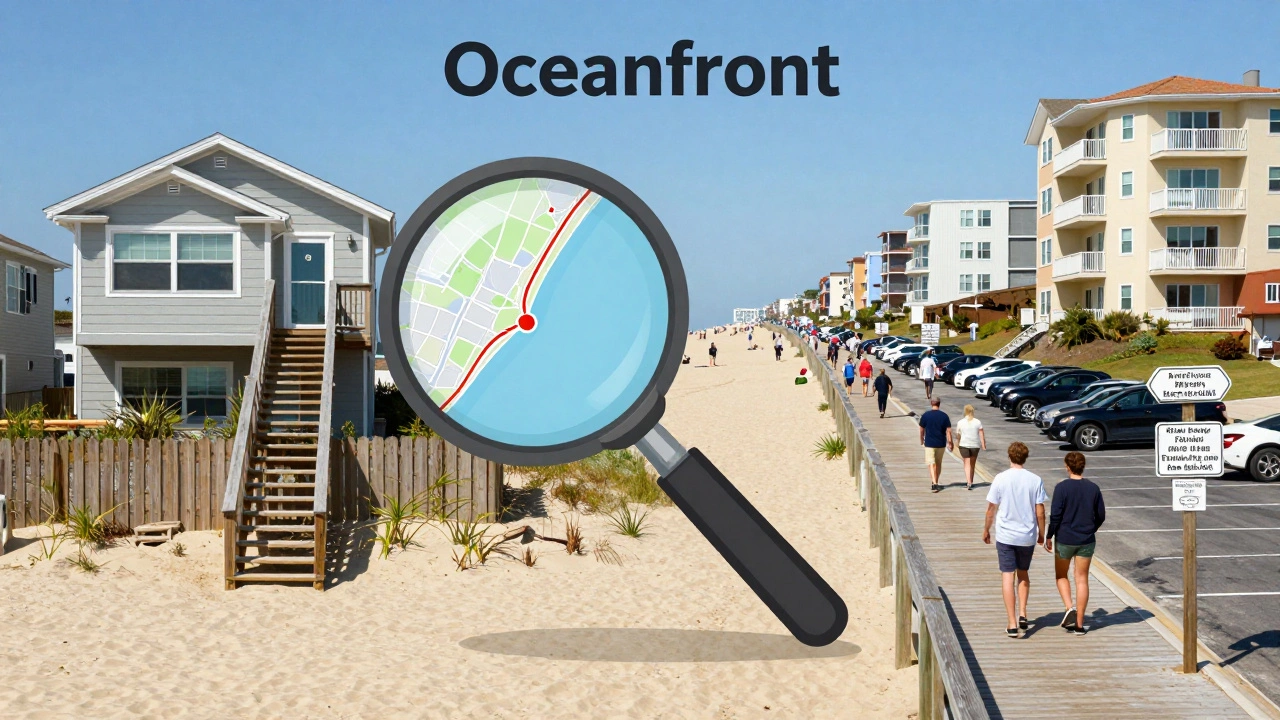
Oceanfront vs Beachfront Distance Calculator
How to Identify True Oceanfront
Based on Vrbo listing data, properties within 50 feet of the water are typically true oceanfront. Beyond 200 feet, it's usually beachfront. Check the map!
Access Type Analysis
Price Impact
Important Note
This calculator shows proximity only. Always verify with:
- Google Maps satellite view
- Review mentions of "private access"
- Direct host confirmation
When you’re scrolling through Vrbo looking for a seaside escape, you’ve probably seen listings labeled both oceanfront and beachfront. They sound the same - until you book one and realize you’re not actually stepping onto sand in the morning. That’s not a mistake. It’s a difference that matters.
Oceanfront Means Direct Access to the Water
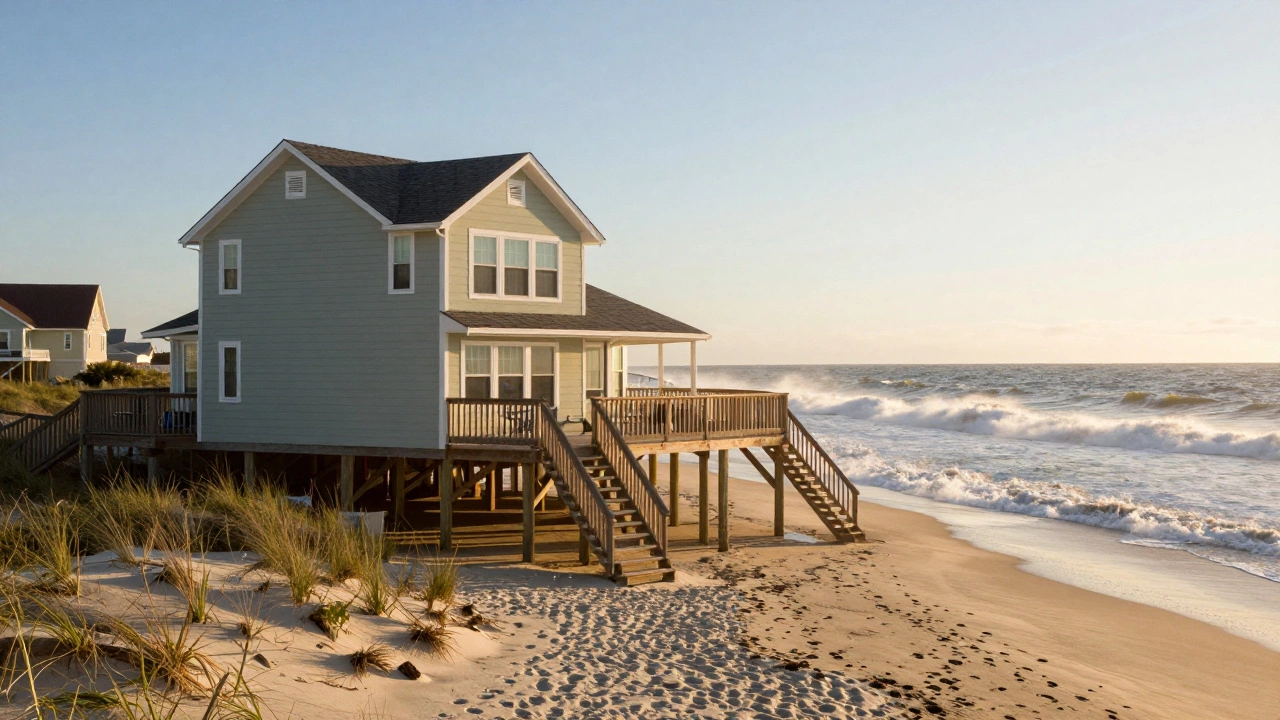
An oceanfront property on Vrbo sits right on the edge of the ocean. There’s no road, no dune, no public walkway between the house and the water. You open your back door and you’re standing on a cliff, a seawall, or a sandy shore that drops straight into the sea. These homes often have unobstructed views - no trees, no buildings, no parking lots blocking the horizon.
Think of it like this: if you’re sitting on the porch at sunrise and you can see the waves crashing just 10 feet away, you’re oceanfront. These rentals are common in places like Outer Banks, Florida’s Gulf Coast, or Big Sur. They’re usually the most expensive because of the view and the rarity of the land.
Some oceanfront homes are built on elevated platforms or cliffs to protect against erosion. That means you might need to walk down a set of stairs to reach the beach. But the moment you step outside, the ocean is right there - no detours, no compromises.
Beachfront Means the Property Is Near the Beach - Not Necessarily on It
Beachfront is trickier. On Vrbo, this term often means the property is close to the beach - maybe 50 feet, maybe 200. It might even be across the street. The listing might show a photo of the beach and say "just steps away," but the actual walk could involve crossing a busy road, walking through a parking lot, or navigating a public boardwalk.
Some beachfront rentals sit on the dune line, with a narrow strip of sand between them and the road. Others are tucked into a residential neighborhood with a public beach access point 100 yards away. You can still hear the waves and smell the salt, but you’re not waking up with your toes in the sand unless you put on shoes and walk out the door.
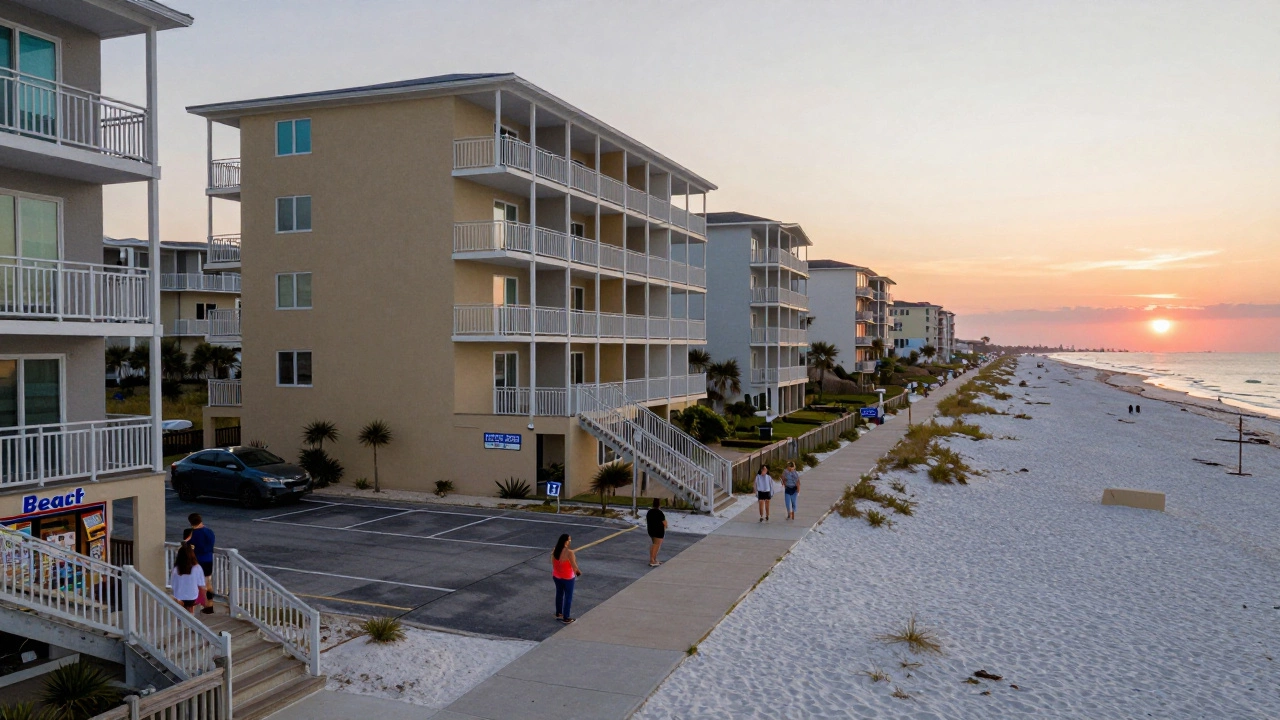
In places like Myrtle Beach or Panama City Beach, you’ll find dozens of beachfront condos where the beach is visible from the balcony - but you have to take the elevator down, cross a sidewalk, and walk through a public access path to get there. That’s beachfront. Not oceanfront.
Why the Confusion? It’s a Marketing Game
There’s no official rulebook for what counts as oceanfront or beachfront on Vrbo. Hosts can label their property however they want. And many do - because "oceanfront" gets more clicks, more bookings, and higher prices.
One host in Florida listed a home 150 feet from the beach as "oceanfront" because the ocean was "visible" from the second floor. Another in New Jersey called a house on a quiet street with a 300-yard walk to the shore "direct beach access" - even though you had to cross two driveways and a bike path.
That’s why you can’t trust the label alone. You have to check the map, the photos, and the description. Look for phrases like:
- "Direct ocean access" - means you walk out and hit the water
- "Just steps to the beach" - could mean 10 steps or 100
- "Overlooks the ocean" - might mean you see it from afar, not touch it
- "Beachfront community" - the whole neighborhood is near the beach, not your unit
How to Spot the Real Deal
Here’s how to tell if a listing is truly oceanfront - not just marketed that way:
- Check the satellite view on Google Maps. Zoom in. Is the property touching the water? Or is there a road, a fence, or a parking lot between it and the surf?
- Look at the photos. Are there stairs leading down to the beach? Is the property on a bluff? Is the water visible from the main living area? If the only beach photo is from a distance, be skeptical.
- Read the reviews. Guests often say things like, "We thought we were oceanfront, but had to walk 5 minutes to the beach" or "The view was amazing, but we had to cross a highway to get to the sand."
- Message the host. Ask: "Is there any land, road, or public area between the property and the water?" If they hesitate or say "it’s right on the water," you’re probably good.
Real oceanfront rentals often have features like private beach access gates, seawalls, or elevated decks designed to handle wind and spray. Beachfront rentals rarely do.
Price Difference? It’s Bigger Than You Think
Oceanfront rentals on Vrbo typically cost 30% to 60% more than beachfront ones in the same area. In Destin, Florida, a beachfront condo might rent for $450 a night. A true oceanfront home with direct access? $700 to $900. In the Outer Banks, the gap can be even wider.
Why? Because oceanfront land is scarce. It’s harder to build on. It’s more vulnerable to storms. And it’s in high demand. If you’re paying a premium, you should get what you’re paying for.
Beachfront is still great - especially if you’re traveling with kids, want to park your car close by, or don’t mind a short walk. But if you want to wake up, step outside, and hear the tide roll in without putting on shoes - you need oceanfront.
What About "Direct Beach Access"?
That phrase is another red flag. Many hosts use it to imply you can walk straight to the sand. But "direct access" doesn’t mean private. It just means there’s a path - and it might be shared with 50 other renters.
True private beach access means your property has its own stairway, gate, or trail that leads straight to the shore - and no one else can use it. That’s rare. Most "direct access" is just a public boardwalk with a sign that says "Property #12 - Beach Access."
If private access matters to you, ask the host: "Is this beach access exclusive to guests of this property?" If they say yes, ask for a photo of the path or gate. If they can’t show it, assume it’s shared.
Real Examples From Vrbo
Here’s what you’ll actually find:
- Oceanfront: A two-story home in Hilton Head with a wraparound deck overlooking the Atlantic. The front yard ends at the high tide line. No road. No dune. Just sand and waves. Guests walk out the back door and stand on the beach.
- Beachfront: A three-bedroom condo in Gulf Shores with a balcony facing the water. The beach is across the street. You walk down three flights of stairs, cross a sidewalk, and pass a gift shop to get to the sand.
- Beachfront with "direct access": A cottage in Cape Cod with a sign that says "Private Beach Access." But the path is shared with three other homes. You share the staircase with strangers.
The difference isn’t subtle. It’s the difference between waking up to the sound of waves and having to plan your beach trip like a daily errand.
What Should You Choose?
If you want the full seaside experience - the sound of the ocean as you drink your coffee, the wind on your skin without walking anywhere - go oceanfront. It’s worth the extra cost if you’re planning a romantic getaway, a family reunion, or a long vacation where you’ll be outside a lot.
If you’re budget-conscious, traveling with a group, or don’t mind a short walk, beachfront is perfectly fine. You still get the salt air, the sunsets, and the vibe. You just need to pack your flip-flops and plan your beach trips.
And if you’re booking last-minute? Always double-check the map. A photo can lie. A satellite view won’t.
Final Tip: Don’t Trust the Title
On Vrbo, the title says "Oceanfront Paradise!" But the description says "100 yards from the beach." That’s not oceanfront. That’s a misleading label. Always read the full listing. Look at the map. Ask questions. And if the host doesn’t answer clearly, move on.
There’s no substitute for knowing exactly where you’re staying. The ocean doesn’t care what you call it. But your vacation will.
Is oceanfront always better than beachfront on Vrbo?
Not always. Oceanfront is better if you want direct, private access to the water and don’t mind paying more. But beachfront can be just as enjoyable if you’re okay with a short walk, want to save money, or are traveling with kids who need easy parking. It’s about your priorities, not just the label.
Can a property be both oceanfront and beachfront?
Technically, yes - but it’s redundant. If a property is oceanfront, it’s automatically beachfront because it’s right on the beach. But the reverse isn’t true. Beachfront doesn’t mean oceanfront. So if a listing says "oceanfront," it should mean direct access. If it says "beachfront," it might not.
Why do some oceanfront rentals have stairs to the beach?
Because the land slopes. In places like Big Sur, Outer Banks, or Santa Barbara, the ocean meets cliffs or dunes. Builders construct homes on top to protect them from erosion and storms. The stairs are part of the access - not a sign it’s not oceanfront. As long as there’s no road or public space between the house and the water, it’s still oceanfront.
How do I know if a beachfront rental has private access?
Ask the host directly: "Is the beach access path exclusive to guests of this property?" Then look for photos of a gate, a private staircase, or a path that doesn’t connect to other homes. If the access point is shared with multiple units or appears on a public map, it’s not private.
Are oceanfront rentals more likely to be damaged by storms?
Yes. Oceanfront properties are more exposed to high winds, salt spray, and storm surges. That’s why they often cost more to insure and maintain. Many have reinforced foundations, elevated structures, or seawalls. Always check the cancellation policy and flood zone maps before booking.