Cottage vs Farmhouse Identifier
How to Identify a Property
Answer these questions based on the property's characteristics to determine if it's more likely a country cottage or farmhouse.
How It Works
Answer questions based on the property's features
Each answer gives points toward cottage or farmhouse
Higher score = more likely match
Check the article for details about what makes each type unique
Results
Answer questions above to see results
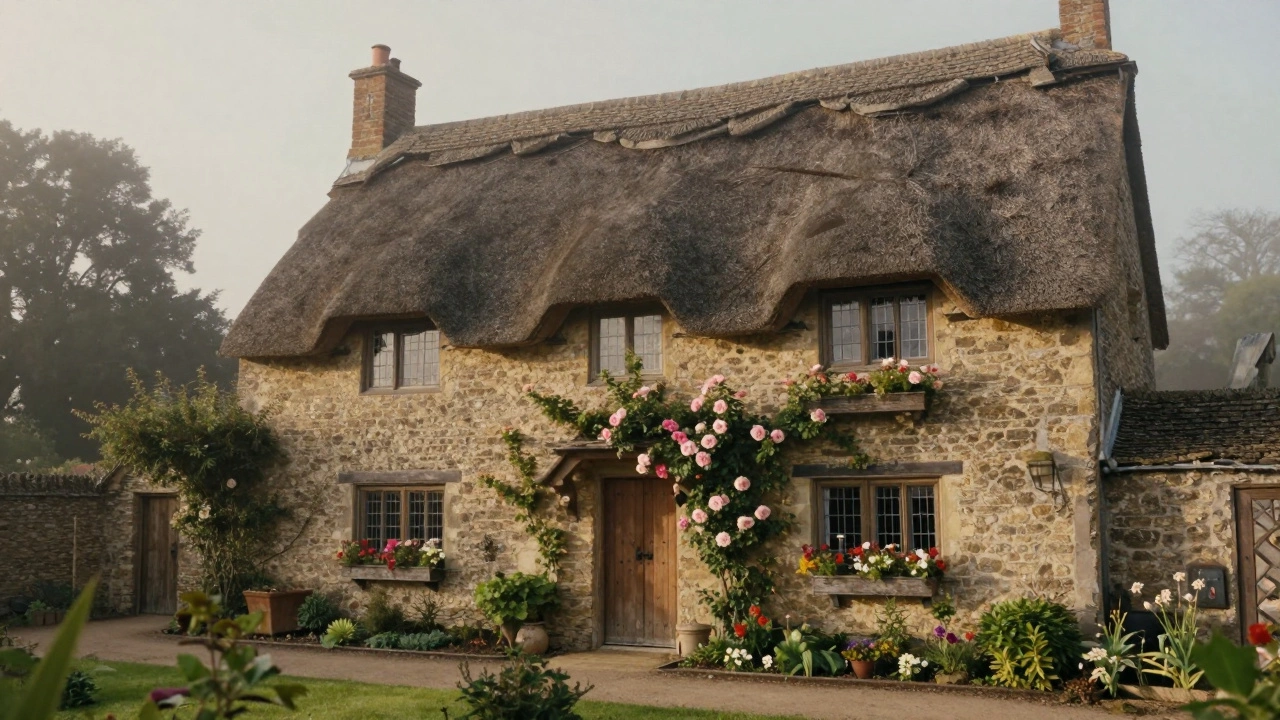
People often use the terms country cottage and farmhouse interchangeably, but they’re not the same. If you’ve ever stood in front of a cozy stone building with a thatched roof and thought, "That looks like a farmhouse," you’re not alone. But the truth is, these two types of homes have different histories, purposes, and designs - even if they both sit out in the countryside.
Origin and Purpose
A country cottage was built to house workers - not farmers. Think of a small, simple home for a gardener, a blacksmith, or a shepherd. These homes popped up near manor houses, villages, or along rural roads in England and Wales as early as the 1500s. Their job wasn’t to produce food; it was to provide shelter for people who supported the land’s economy from the sidelines.
A farmhouse, on the other hand, was the heart of a working farm. It was where the farmer and their family lived while managing livestock, crops, and harvests. It had to be practical: close to barns, stables, and fields. You’d find a large kitchen for canning, a pantry for storing root vegetables, and maybe even a bakehouse or smokehouse nearby.
Size and Layout
Country cottages are small. Most have one or two bedrooms, a single living room, and a tiny kitchen. Many were built with thick stone or cob walls to keep out the damp, and their roofs were originally thatched or made from local slate. Windows were small - glass was expensive back then - so interiors stayed dim and cozy. You might find a low ceiling, uneven floors, and a single fireplace that warmed the whole house.
Farmhouses are bigger. Even modest ones have three or four bedrooms, a large kitchen-diner, and often a separate dining room or parlour. The layout follows function: the kitchen is the hub, with direct access to the yard, barn, or garden. Many have a back porch for hanging laundry or storing tools. Some even have a second story with a loft used for storing grain or hay before modern silos came along.
Architecture and Style
Country cottages lean into charm. Think crooked chimneys, flower boxes under the windows, and climbing roses. They’re often painted in soft whites, creams, or muted blues and greens. Their irregular shapes come from being built in stages - a room added here, a lean-to there - over generations. You’ll rarely find symmetry in a true cottage.
Farmhouses are more straightforward. They’re built for efficiency, not aesthetics. You’ll see a rectangular or L-shaped plan, with a central door leading straight into the kitchen. Roofs are steep to shed rain and snow, and windows are larger to let in daylight for chores. The materials are local too - timber in New England, brick in the Midwest, stone in the UK - but the design stays functional. A farmhouse might have a porch, but it’s for drying boots, not sipping tea.

Location and Land
A country cottage can sit on just a few hundred square meters. It might be tucked into a village green, nestled beside a forest, or perched on a hillside with no direct access to farmland. Its land is decorative - a small garden, maybe a shed, perhaps a chicken coop. The focus is on quiet, not productivity.
Farmhouses come with land. Real land. At least a few acres, often more. The house sits near the barn, the milking shed, the vegetable patch. Even today, if you buy a farmhouse, you’re buying the right to grow crops or raise animals. The land isn’t an afterthought - it’s part of the property’s value.
Modern Use Today
In the 2020s, both have been turned into holiday homes, but their original roles still show. A restored country cottage might have a wood-burning stove, a clawfoot tub, and a vintage dresser. It’s marketed as romantic, peaceful, a retreat. You’ll find them listed as "perfect for two" - often with a note about the lack of Wi-Fi.
A farmhouse, though? It’s still practical. Even if it’s no longer a working farm, the layout stays the same: big kitchen for family gatherings, mudroom for boots, space for dogs and kids. Many have been updated with solar panels, modern insulation, and open-plan living - but the bones are still those of a working home. You won’t find a farmhouse marketed as "cozy" unless it’s being ironic.
How to Tell Them Apart
Here’s a quick way to spot the difference:
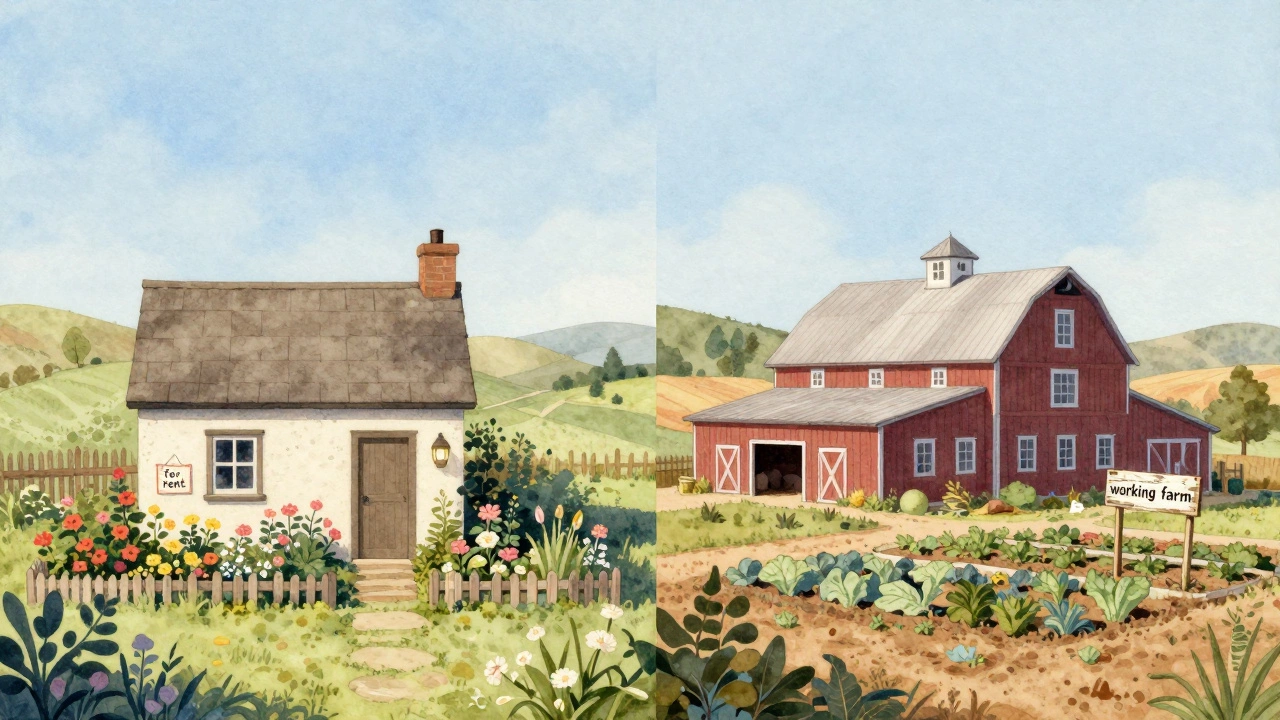
- If it’s small, crooked, and surrounded by flowers - it’s a cottage.
- If it’s larger, square, and has a barn or shed right next door - it’s a farmhouse.
- If the land is under 1 acre and the garden looks like a photo from a magazine - cottage.
- If the yard has a tractor parked under a tarp and a compost pile behind the shed - farmhouse.
Don’t be fooled by real estate listings that call any rural house a "farmhouse." Many are just cottages with a fancy label to raise the price. True farmhouses still carry the weight of hard work - even if no one’s milking cows there anymore.
Why It Matters
Understanding the difference isn’t just about history - it’s about what kind of life you’re buying into. A country cottage is for rest, for quiet mornings with coffee on the porch. A farmhouse is for doing - gardening, preserving, fixing fences, raising chickens. One invites you to escape. The other invites you to contribute.
If you’re looking for a weekend getaway, a cottage fits. If you want to grow your own food, keep bees, or live off-grid in a space built for real work, a farmhouse is the right choice. They’re both beautiful. But they’re built for different rhythms of life.
Can a country cottage have a garden?
Yes, most country cottages have small gardens - often ornamental. But they rarely include vegetable plots or livestock space. The garden is for beauty, not productivity. A true farmhouse garden, by contrast, is usually a mix of flowers, herbs, and vegetables - sometimes with chickens or a beehive.
Are all farmhouses old?
No. While many were built in the 18th or 19th centuries, farmhouses are still being built today - especially in rural areas where people want to live off-grid or run small farms. Modern farmhouses might have solar panels and open-plan kitchens, but they still follow the same layout: kitchen near the yard, bedrooms away from the noise, and plenty of storage.
Do country cottages have basements?
Rarely. Most country cottages were built with stone or cob walls directly on the ground, without basements. The idea was to keep the structure simple and cheap. If there’s a cellar, it’s usually a small storage space under the kitchen, not a full basement. Farmhouses, especially in colder regions, often have root cellars or partial basements for storing food through winter.
Can you turn a cottage into a farmhouse?
You can expand a cottage and add a barn or garden, but you can’t change its original purpose just by renovating. A cottage doesn’t have the layout for farming - no mudroom, no space for animals, no direct access to fields. You could live on a large plot and grow vegetables, but unless the house was built to support farm work, it’s still a cottage with a big garden.
Which is more expensive to buy?
It depends on location and land. In places like Devon or the Cotswolds, a well-kept country cottage with half an acre can cost more than a 10-acre farmhouse in a remote area. But generally, farmhouses cost more because they come with usable land, outbuildings, and infrastructure. A cottage’s value is in charm; a farmhouse’s is in potential.