Airbnb Eco-Friendly Savings Calculator
Current Utility Usage
Enter your current monthly utility information
Eco-Friendly Changes
Select improvements you can implement
More guests are asking one simple question before they book: Is this place really eco-friendly? It’s not enough to say you’re green-you need to show it. Making your Airbnb eco-friendly isn’t about buying expensive solar panels or installing a zero-waste system overnight. It’s about small, smart choices that add up. And the good news? Many of these changes save you money while making guests happier.
Start with the basics: energy and water
Energy use is the biggest hidden cost-and carbon footprint-in most vacation rentals. Start by switching to LED bulbs. They use 75% less energy than old incandescent bulbs and last 25 times longer. Replace old thermostats with programmable ones. Set them to lower temps when the place is empty and warm it up 30 minutes before check-in. Guests notice when the place is cozy without being wasteful.
Water matters too. Install low-flow showerheads and faucet aerators. They cut water use by 30-50% without reducing pressure. A standard showerhead uses 2.5 gallons per minute. A low-flow one uses 1.5. That’s 10 gallons saved per guest per shower. Over 50 bookings a month? That’s 500 gallons saved. And you’re cutting your water bill.
Go plastic-free in the bathroom and kitchen
Single-use plastics are the #1 complaint from eco-conscious travelers. Replace mini shampoo bottles with refillable dispensers. You can buy bulk, biodegradable shampoo and conditioner in 1-gallon containers for under $20. Fill the dispensers once a month. No more plastic waste. Same goes for soap, lotion, and even dish soap in the kitchen.
Swap out plastic cutlery, straws, and containers. Use bamboo, stainless steel, or glass instead. Keep a small basket of reusable utensils and cloth napkins in the kitchen. Guests love that you’ve thought ahead. If you offer coffee, skip the single-serve pods. Use a French press or drip machine with compostable filters.
Choose cleaning and laundry products wisely
Many commercial cleaners contain chemicals that end up in waterways. Switch to plant-based, biodegradable cleaners. Brands like Branch Basics or Ecover work well and smell better than synthetic fragrances. Make a simple solution of vinegar, water, and a few drops of essential oil for glass and surfaces.
For laundry, use a non-toxic, phosphate-free detergent. Line-dry linens when you can. Sunlight kills bacteria and fades stains naturally. If you must use a dryer, clean the lint filter every time-it improves efficiency by 30%. And never use fabric softener sheets. They coat fibers and reduce absorbency. A wool dryer ball does the same job without chemicals.
Stock the kitchen with local, sustainable goods
What you put in the kitchen sends a message. Instead of buying imported snacks and bottled water, offer local honey, organic tea, and reusable glass water bottles. Put out a pitcher of filtered water with lemon slices. Guests appreciate the effort-and they’ll leave better reviews.
If you offer breakfast, use eggs from local farms, bread from a nearby bakery, and seasonal fruit. You’re not just being green-you’re supporting your community. And guests remember that. One host in Vermont saw a 40% increase in repeat bookings after switching to local food offerings.
Make recycling and composting easy
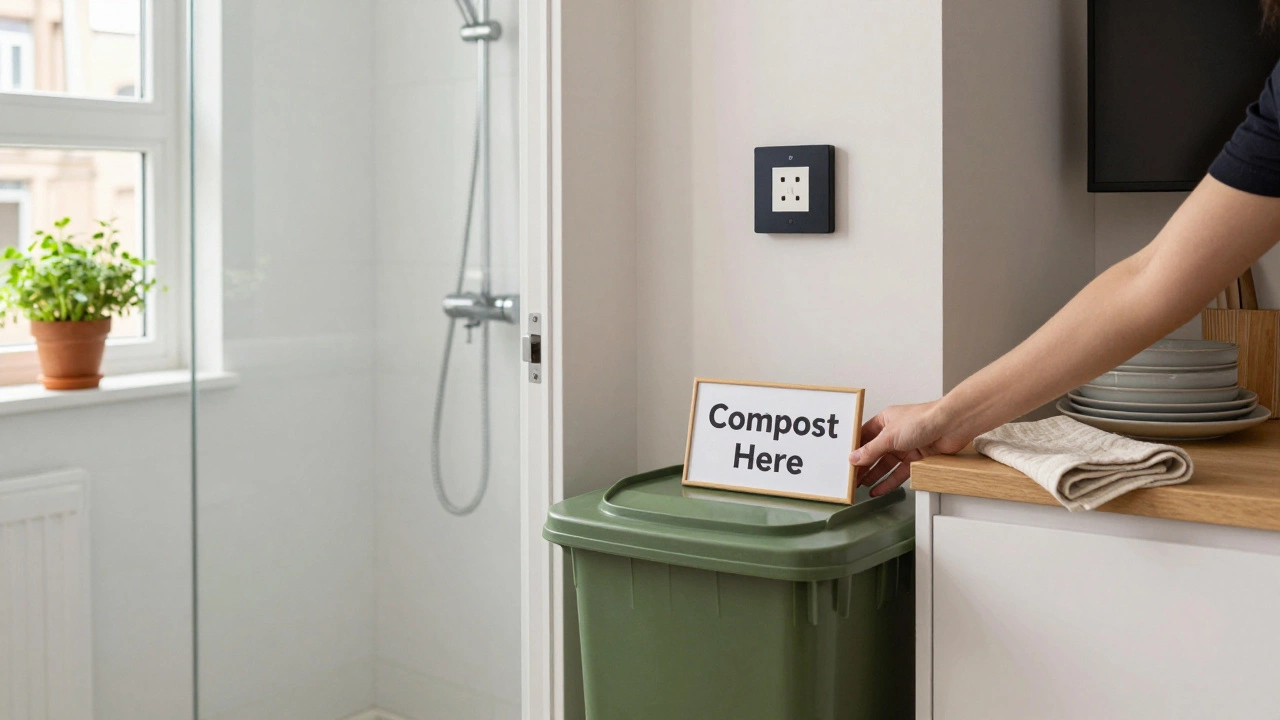
Don’t assume guests know what to do. Put out clearly labeled bins: one for recycling, one for compost, one for trash. Use signs with pictures: “Coffee grounds here”, “Bottles and cans here”. Include a small guide in the welcome book: “We compost food scraps and recycle glass, metal, and paper. Thanks for helping us keep it clean!”
Composting is easier than you think. Buy a countertop compost bin with a charcoal filter. Empty it into a backyard pile weekly. If you don’t have space, partner with a local garden or community compost program. Many will pick up for free.
Use smart tech to reduce waste
You don’t need a smart home to be smart about sustainability. A smart plug lets you turn off idle electronics remotely. Many guests leave chargers plugged in or TVs on standby. A smart plug cuts phantom energy use by 10-15%. You can even set schedules-like turning off the coffee maker at 10 p.m.
Use digital check-in guides instead of printed booklets. Host a simple PDF with Wi-Fi info, recycling rules, and local hiking trails. You’ll save paper and reduce clutter. Guests prefer this too. One study found 78% of travelers under 35 would choose an eco-friendly listing over a standard one-even if it cost 10% more.
Highlight your efforts in your listing
Don’t hide your green efforts. Add a section to your listing titled “Our Eco Commitment”. List what you’ve done: “LED lighting, low-flow fixtures, plastic-free amenities, local food, composting, and 100% recycled linens.” Include a photo of your compost bin or refillable dispensers. Guests look for these details.
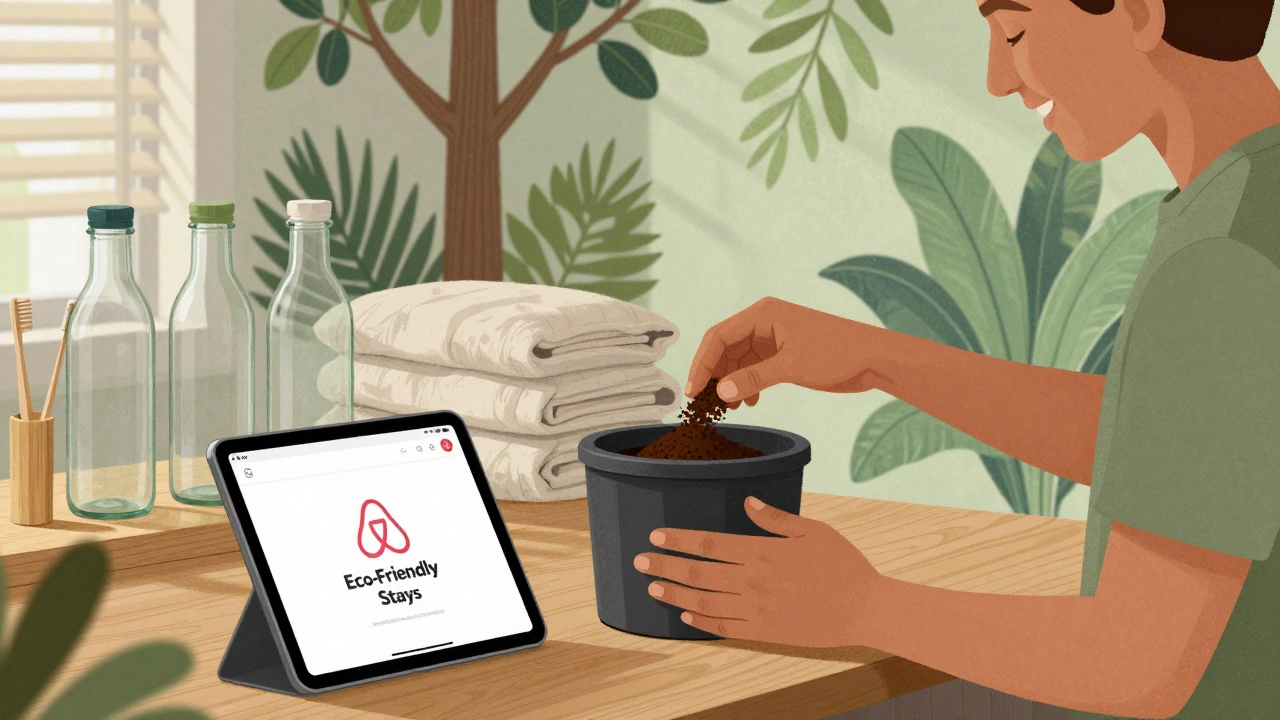
Apply for Airbnb’s “Eco-Friendly Stays” badge. It’s free. You just need to meet their criteria: energy efficiency, waste reduction, and sustainable products. Once approved, your listing gets a green label and appears in eco-focused searches. In 2025, 62% of bookings for eco-listings came from users who specifically filtered for sustainability.
Why guests care-and why it pays off
This isn’t just about saving the planet. It’s about business. Eco-friendly listings get 30% more inquiries. They book faster. And guests leave 5-star reviews mentioning “thoughtful details” and “real sustainability.” One host in Oregon saw her nightly rate increase by $18 after switching to all-natural products and adding a compost bin. Her occupancy rate jumped from 65% to 89% in six months.
People don’t want greenwashing. They want proof. And when you show them you’ve made real changes-small, consistent, practical ones-they feel good about staying with you. That’s loyalty. That’s word-of-mouth. That’s the kind of guest who returns year after year.
What to avoid
Don’t claim you’re “100% carbon neutral” unless you’ve actually offset emissions through a verified program. Don’t say “eco-friendly” if you still use disposable razors or plastic wrap. Guests will notice. And they’ll call you out in reviews.
Avoid cheap “green” products that break in a week. A bamboo toothbrush that snaps after two uses isn’t sustainable-it’s wasteful. Invest in quality. It lasts longer and saves money over time.
And don’t overcomplicate it. You don’t need solar panels on the roof. You don’t need a rainwater collection system. Start with one change. Then another. Within a year, you’ll have a listing that stands out-not just for its views, but for its values.
Do I need to spend a lot of money to make my Airbnb eco-friendly?
No. Many of the most effective changes cost little or nothing. Switching to LED bulbs, using refillable dispensers, and line-drying linens cost under $50 total and pay for themselves in under six months. The biggest savings come from cutting waste-less cleaning supplies, fewer replacements, lower utility bills.
Can I still make my Airbnb eco-friendly if I rent out a city apartment?
Absolutely. Urban stays benefit just as much from small changes. Use reusable containers for snacks, offer a public transit guide, and install a water filter instead of buying bottled water. Even in a high-rise, you can compost with a countertop bin and drop off at a nearby community center. Many cities now offer free compost pickup for residents and short-term rentals.
How do I know if my cleaning products are truly eco-friendly?
Look for third-party certifications: EPA Safer Choice, Ecologo, or USDA Biobased. Avoid products with “fragrance” or “surfactants” listed without explanation. Stick to brands that list all ingredients. A simple mix of vinegar, baking soda, and castile soap works for 90% of cleaning needs-and costs pennies per use.
Will guests notice if I don’t have a recycling bin?
Yes. Travelers who prioritize sustainability notice missing bins. One guest left a review saying, “I tried to recycle this bottle but couldn’t find a bin. I felt like my effort was ignored.” A simple bin with clear labels shows you respect their values. It takes 5 minutes to set up-and can boost your rating by a full star.
What’s the biggest mistake hosts make when going green?
Trying to do everything at once. You’ll burn out. Pick one area-like plastic waste-and fix it. Then move to energy. Then water. Sustainable hosting is a journey, not a checklist. Guests appreciate progress more than perfection.
Next steps: Where to start today
Here’s what to do in the next 24 hours:
- Replace one set of single-use toiletries with refillable dispensers.
- Install a low-flow showerhead (they cost $15 and take 10 minutes to install).
- Add a small sign near the trash can: “We compost food scraps. Please use the green bin!”
- Update your listing to say: “We use LED lighting, refillable amenities, and compost all food waste.”
- Apply for Airbnb’s Eco-Friendly Stays badge.
You don’t need to be perfect. You just need to start. And once you do, you’ll see the difference-not just in your utility bills, but in the kind of guests who choose to stay with you.