
Ever been handed a bill at an all-inclusive resort with a mandatory gratuity tacked on, and felt like you had no choice but to pay? You’re not alone. Many travelers assume that because everything’s "all-inclusive," tips are already covered - but that’s not always true. Some resorts slip in automatic service charges under the fine print, leaving guests confused, frustrated, or even angry. So, can you legally refuse to pay it? The short answer: yes. But how you handle it matters.
What’s the difference between a service charge and a tip?
Here’s where things get messy. A service charge is a fee added by the hotel, often labeled as "gratuity" or "service fee." It’s not optional. It’s baked into the price, and the hotel keeps it - or distributes it to staff. A tip, on the other hand, is voluntary. It’s money you give because someone went above and beyond.
Many all-inclusive resorts claim their gratuity is "included" - but that’s misleading. If you see a line on your bill that says "15% Service Gratuity Included," that’s a service charge. It’s not a tip. You didn’t choose to give it. You didn’t even see it coming. And that’s where the problem starts.
Why do hotels add automatic gratuities?
Hotels use automatic gratuities for one reason: predictability. They want to ensure staff get paid fairly, especially in places where tipping culture is weak or inconsistent. In places like the Caribbean or Mexico, where many all-inclusive resorts are located, staff often rely on tips to make up for low base wages. The hotel adds the fee to guarantee income.
But here’s the catch: just because it’s automatic doesn’t mean it’s legal or ethical. Many guests don’t realize the charge exists until checkout. Some resorts bury it in the fine print of the booking confirmation. Others don’t mention it at all. That’s not transparency - it’s deception.
Can you legally refuse to pay?
Yes. In most countries, including the U.S., Canada, the UK, Australia, and New Zealand, you have the right to dispute and refuse any charge you didn’t agree to. If the gratuity wasn’t clearly disclosed before you booked or checked in, you can challenge it.
Here’s how it works legally:
- Under consumer protection laws, businesses must clearly state all fees before payment is made.
- If the gratuity wasn’t mentioned on your booking confirmation, in your welcome packet, or at check-in, you can argue you never agreed to it.
- Even if it’s listed in small print, courts have ruled that hidden fees are unenforceable if they weren’t brought to your attention.
That means if you didn’t see it coming - you don’t have to pay it.
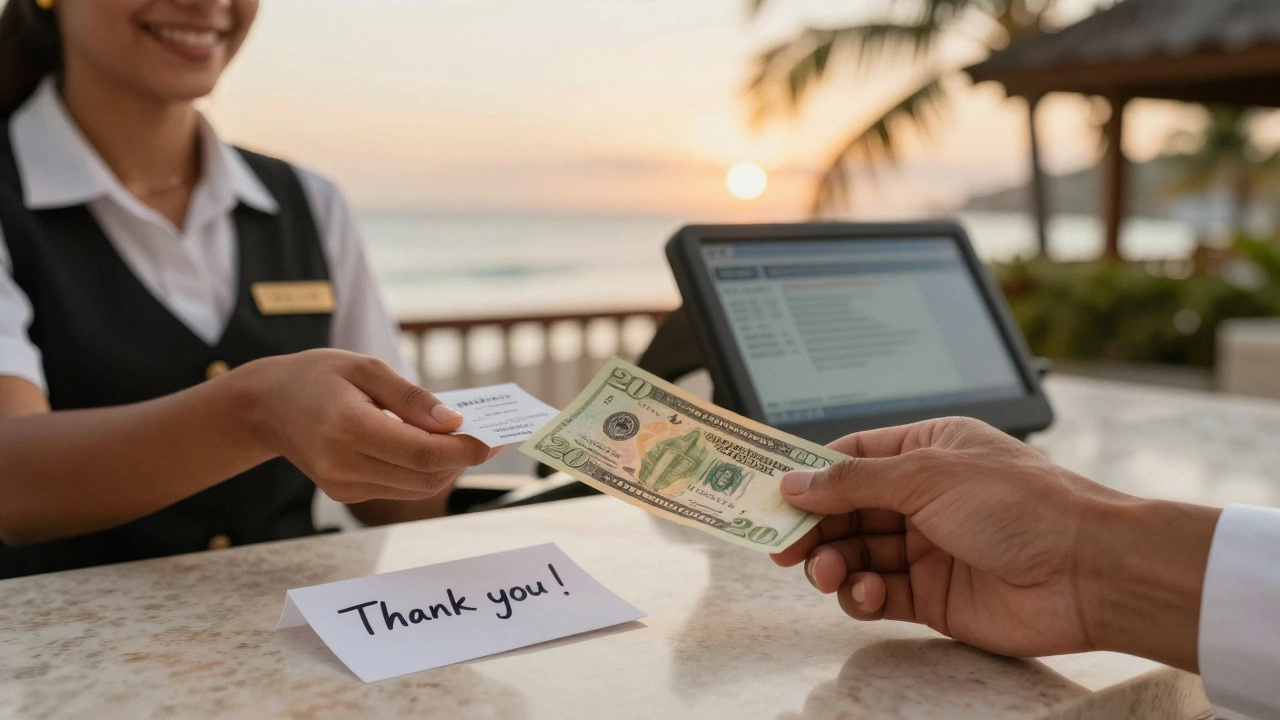
How to refuse it - without causing a scene
Refusing a gratuity doesn’t mean yelling at the front desk. It means being calm, clear, and prepared.
- Check your booking confirmation. Look for any mention of "service fee," "gratuity," or "mandatory tip." If it’s not there, you have leverage.
- At checkout, politely say: "I didn’t see this charge listed anywhere before or during my stay. Can we remove it?"
- If they say it’s "standard," ask: "Can you show me where it was disclosed?"
- If they refuse, ask to speak to a manager. Most managers will waive it to avoid a complaint or negative review.
- If they still say no, ask for a written receipt with the charge listed. You can dispute it later with your credit card company.
Most staff understand. They’re not the ones setting the policy - they’re just following orders. You’re not being rude. You’re being informed.
What if they say "it’s included in the price"?
That’s a red flag. If the resort claims "everything is included," but then adds a gratuity on top, they’re double-dipping. True all-inclusive means no extra charges - not even tips. If you paid $300 per night for "all-inclusive," and now they’re adding $45 more for gratuity, that’s not inclusive. That’s an upsell.
Some resorts get away with this because guests don’t ask. But if you do, they’ll often back down. In 2024, a traveler in Cancun successfully disputed a $120 gratuity after proving it wasn’t mentioned in their booking email. The hotel refunded it the next day.
What about the staff?
You might worry: "If I refuse, will the staff suffer?"
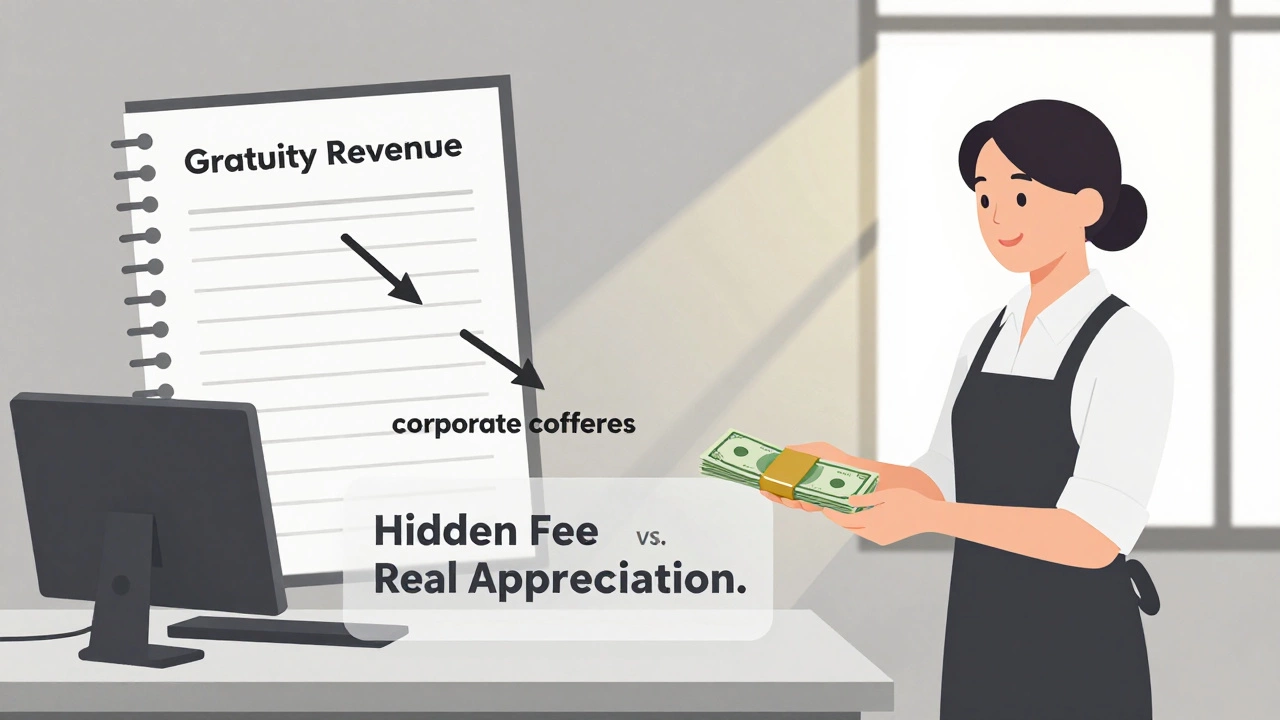
Maybe. But here’s the truth: if the hotel is adding a mandatory charge and keeping it, they’re already deciding how to distribute the money. They’re not passing it on. In fact, many resorts keep 30-50% of the gratuity for themselves. The rest goes to housekeeping or waitstaff - but not always evenly.
Real tip: If you want to reward good service, give cash directly. Hand a server $20 for extra help with your luggage. Slip $10 to the housekeeper who left a note and a chocolate on your pillow. That money goes straight to them. And they’ll remember you.
How to avoid this next time
Don’t wait until checkout to find out. Here’s what to do before you book:
- Read the booking terms. Look for "service fee," "gratuity," or "mandatory tip."
- Call the hotel and ask: "Is there a mandatory gratuity added to my stay?" Record the date and name of the person you spoke to.
- Check recent reviews on TripAdvisor or Google. Search "gratuity" or "tip charge."
- Book through a reputable travel agent. They often know which resorts hide fees.
Some resorts - like those under the Apple Vacations or Club Med brands - clearly state if gratuities are included. Others, especially smaller boutique resorts, don’t. Be proactive.
What happens if you dispute it?
If you pay the charge and later realize you were misled, you can dispute it with your credit card company. Do this within 60 days of the charge. Provide:
- A copy of your booking confirmation (no mention of gratuity)
- Your final bill showing the charge
- Any emails or receipts from the hotel
Card issuers like Visa, Mastercard, and American Express have strong consumer protections. If the fee wasn’t clearly disclosed, they’ll reverse it. You don’t need a lawyer. Just be clear and persistent.
Final thought: You’re not being cheap - you’re being smart
Refusing a hidden gratuity isn’t about being stingy. It’s about respecting your right to know what you’re paying for. If a hotel wants you to tip, they should ask. Not sneak it in.
And if you loved your stay? Reward the people who made it great - with cash, not a hidden fee.
Can I refuse to pay a gratuity if it’s listed in the fine print?
Yes. If the gratuity wasn’t clearly highlighted before booking or at check-in, it may not be enforceable. Courts and consumer agencies often rule that hidden fees - even if buried in fine print - are not valid if the customer wasn’t reasonably alerted. Always ask for proof of disclosure before paying.
Do all-inclusive hotels really include tips?
Not always. Some resorts include gratuities in the price - meaning they pay staff directly. Others use "all-inclusive" as marketing, then add a mandatory service charge at checkout. Always verify what’s truly included before you book. True all-inclusive means no extra charges - not even for coffee or tipping.
What if the hotel says the gratuity goes to staff?
They might be lying. Many resorts collect the gratuity but only pass along a portion - if any. Some keep 40% or more for administrative costs. If you want to support staff, give cash directly. That way, you know exactly who gets it and how much.
Can I get in trouble for refusing to pay?
No. Refusing an undisclosed charge won’t get you kicked out, blacklisted, or charged extra. Staff may be annoyed, but they can’t legally force you to pay. If they threaten you, ask to speak to a manager or file a complaint with your travel provider. You have rights.
Should I tip if I’m happy with the service?
Absolutely - but do it yourself. Give cash to your server, housekeeper, or bartender. A $5-$10 bill for exceptional service means more than a hidden fee. It shows appreciation directly. And it avoids the system that often siphons off tips before they reach the people who earned them.