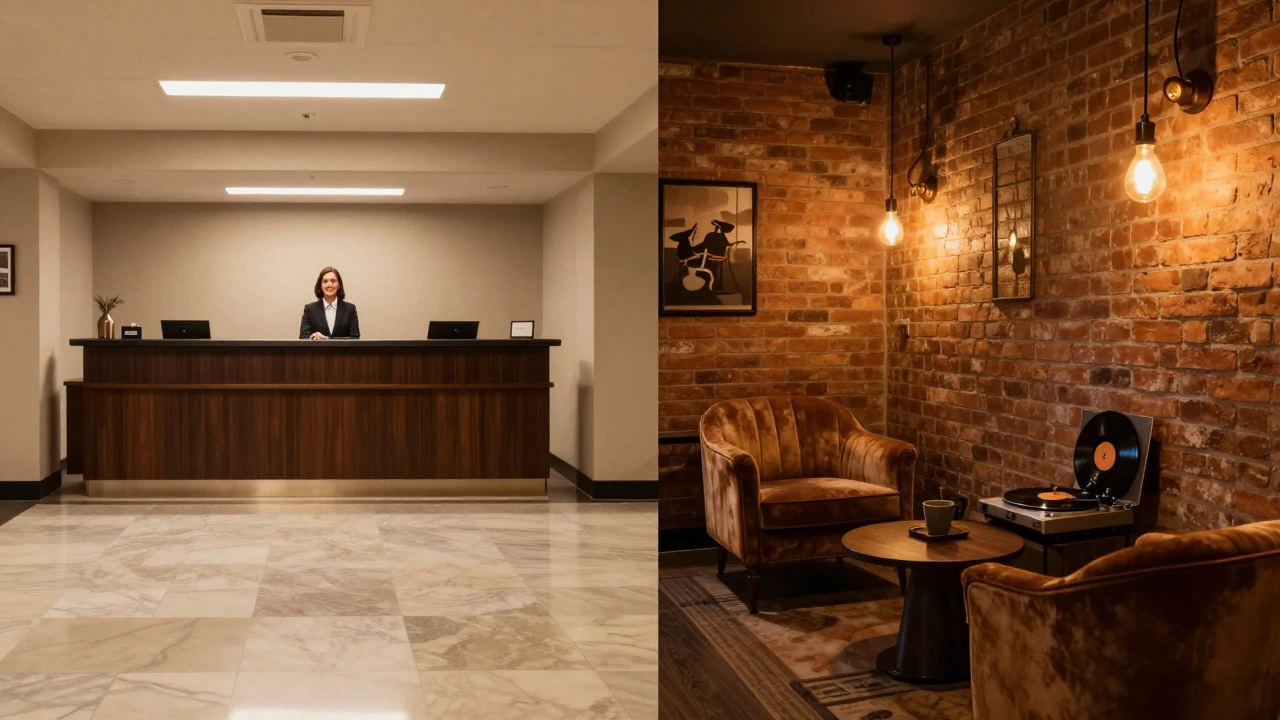
Picture this: you walk into a hotel lobby. On one side, there’s a polished marble floor, a generic art print on the wall, and a receptionist who smiles the exact same way they smiled at the last guest. On the other side, there’s a living room with mismatched vintage chairs, a jazz record playing softly, and a host who knows your name before you even check in. Which one feels like you? That choice is the heart of the difference between a boutique hotel and a regular hotel.
If you’ve ever scrolled through booking sites feeling overwhelmed by options that all look the same, you’re not alone. The hospitality industry has shifted dramatically in recent years. We moved from standardizing comfort to curating experience. Understanding where these two types of accommodations sit on that spectrum helps you stop guessing and start choosing the right place for your trip.
What exactly defines a boutique hotel?
A boutique hotel is a small, independent (or non-chain) property that prioritizes unique design, personalized service, and a distinct personality over standardized amenities. They typically have fewer than 100 rooms, often located in trendy urban neighborhoods or historic buildings.
The Scale Factor: Size Matters More Than You Think
The most obvious difference? Size. A regular hotel, especially those belonging to major chains like Marriott or Hilton, usually operates on a massive scale. We are talking about properties with hundreds, sometimes thousands, of rooms. This scale allows them to offer consistent pricing, widespread loyalty programs, and predictable amenities across the globe.
In contrast, a boutique hotel is intentionally small. Most definitions cap them at around 100 rooms, but many are significantly smaller-often under 50. Why does this matter? Because size dictates intimacy. In a large chain hotel, you are one of thousands. In a boutique setting, you might be one of ten guests staying that week. This physical constraint forces a different operational model. There isn’t room for a sprawling food court or a massive conference center. Instead, resources go toward creating a cohesive, immersive environment.
Think about it like dining out. A regular hotel is like a well-run cafeteria or a familiar fast-casual chain-you know exactly what you’re getting, and it’s efficient. A boutique hotel is like a chef’s table at a local bistro-the menu changes, the atmosphere is specific, and the interaction is personal.
Design and Atmosphere: Cookie-Cutter vs. Curated
Walk into any mid-tier chain hotel in New York, London, or Tokyo, and you’ll recognize the layout instantly. The carpet pattern, the lighting temperature, the furniture style-it’s designed for universal appeal. It’s safe. It’s clean. It’s also forgettable. This is the hallmark of a regular hotel: consistency above all else.
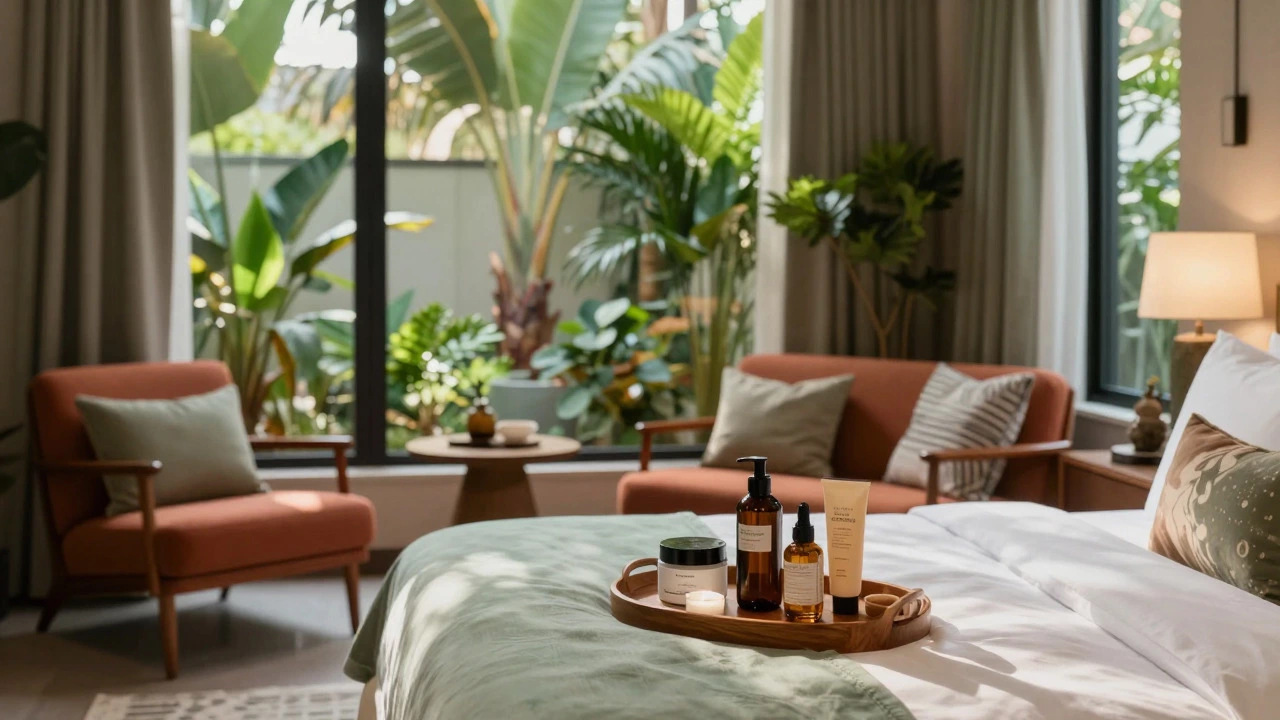
Boutique hotels reject this uniformity. Their design is often driven by a specific theme, historical context, or artistic vision. One might be housed in a converted 19th-century warehouse with exposed brick and industrial lighting. Another might mimic a tropical jungle with lush indoor plants and earthy tones. The decor isn’t just decoration; it’s storytelling. Every piece of furniture, every color choice, and even the scent in the hallway is curated to create a specific mood.
This approach means you won’t find the same boutique hotel twice. If you stay at a boutique property in Devonport and then another in Auckland, the experiences will feel worlds apart. With a regular hotel brand, the goal is for the Auckland location to feel as close to the Devonport one as possible. For travelers seeking novelty and aesthetic inspiration, the boutique model wins hands down.
Service Style: Transactional vs. Relational
How staff interact with guests reveals the core philosophy of each hotel type. In a regular hotel, service is transactional and process-driven. Staff follow strict protocols. Check-in takes five minutes because the system is optimized for speed. Housekeeping follows a rigid schedule. If something goes wrong, there’s a manager on duty, but they are likely managing dozens of other issues simultaneously.
Boutique hotels operate on relationships. The staff are often owners, managers, or long-term employees who take pride in the property. They aren’t just checking you in; they’re welcoming you into their space. You might get a handwritten note in your room, a recommendation for a hidden local bar that doesn’t appear on TripAdvisor, or a free upgrade because the owner remembers you stayed last year.
This level of personalization comes from the low guest-to-staff ratio. When you call the front desk at a boutique hotel, you’re more likely to speak to someone who can solve your problem immediately rather than being transferred through three departments. It’s the difference between being served by a robot and being hosted by a friend.
Amenities: Standardized Lists vs. Local Flavor
Regular hotels excel at providing a comprehensive list of amenities. You’ll almost always find a fitness center, a business lounge, multiple restaurants, a pool, and room service available 24/7. These facilities are built to serve a broad demographic: business travelers, families, tourists, and convention attendees. The trade-off? They often feel sterile and impersonal.
Boutique hotels trim the fat. They rarely have large gyms or business centers. Instead, they focus on high-quality, localized amenities. Maybe there’s a curated minibar with local craft beers and artisanal snacks. Perhaps the breakfast features ingredients sourced from farmers within a 20-mile radius. Some offer bicycle rentals to explore the neighborhood or partner with nearby galleries for exclusive viewing hours.
Consider the bathroom products. A regular hotel uses bulk-bought, neutral-scented soaps. A boutique hotel might use small-batch, organic toiletries made by a local entrepreneur. It’s a small detail, but it signals that the hotel cares about quality and community connection rather than just cost efficiency.
Price and Value: What Are You Really Paying For?
Here’s the tricky part: boutique hotels are often more expensive per night than comparable regular hotels. But is the price justified? It depends on what you value. If you need a reliable gym, a kids’ club, and a loyalty points program, a regular hotel offers better value. You’re paying for infrastructure and consistency.
If you value uniqueness, design, and personalized attention, the boutique premium makes sense. You’re paying for an experience that can’t be replicated elsewhere. However, don’t assume "boutique" automatically means "luxury." Some boutique hotels are budget-friendly hostel-style conversions, while others rival five-star resorts in price. Always look at the specific amenities and reviews rather than relying on the label alone.
| Feature | Boutique Hotel | Regular Hotel (Chain) |
|---|---|---|
| Size | Small (<100 rooms) | Large (100+ rooms) |
| Ownership | Independent or small group | Major corporate chains |
| Design | Unique, themed, curated | Standardized, consistent |
| Service | Personalized, relational | Efficient, protocol-driven |
| Amenities | Local, niche, selective | Comprehensive, standardized |
| Loyalty Programs | Rarely applicable | Extensive global networks |

Who Should Choose Which?
Choosing between a boutique and a regular hotel isn’t about which is objectively better. It’s about matching the accommodation to your travel style. Here’s a quick guide to help you decide:
- Choose a Regular Hotel if: You are traveling for business and need reliable Wi-Fi and meeting spaces. You are traveling with young children who need a pool and kid-friendly menus. You want to earn points toward future flights or stays. You prefer knowing exactly what to expect without surprises.
- Choose a Boutique Hotel if: You are on a romantic getaway or celebrating a special occasion. You love interior design and want your surroundings to inspire you. You prefer interacting with locals and discovering hidden gems in the city. You value privacy and quiet over bustling lobbies.
For example, if you’re attending a large conference in Wellington, a regular hotel near the convention center makes logistical sense. But if you’re spending a weekend exploring the vineyards of Marlborough, a boutique inn nestled in the countryside offers a much richer experience.
The Rise of "Soft Brands" Blurring the Lines
It’s worth noting that the line between these two categories is blurring. Major hotel chains have noticed the demand for unique experiences and launched "soft brands"-collections of independently owned hotels that retain their unique character but benefit from the chain’s booking platform and loyalty program. Examples include Marriott’s Autograph Collection or Hilton’s Tapestries.
These properties try to offer the best of both worlds: the quirky design and personalized service of a boutique hotel with the reliability and perks of a big chain. When evaluating such options, read carefully. Does the hotel still feel independent? Or has it been sanitized to fit a corporate mold? The true spirit of a boutique hotel lies in its autonomy.
Final Thoughts: Trust Your Gut
At the end of the day, your accommodation sets the tone for your entire trip. A regular hotel provides a comfortable base camp-a place to sleep and recharge efficiently. A boutique hotel becomes part of the adventure itself-a destination that enhances your connection to the place you’re visiting.
Ask yourself: Do I want to disappear into the background, or do I want to stand out? Do I need predictability, or am I craving discovery? Once you answer that, the choice becomes clear. Whether you book a sleek urban loft or a sprawling suburban resort, make sure it aligns with how you want to feel when you open your eyes in the morning.
Are boutique hotels safer than regular hotels?
Safety depends more on location and management than hotel type. Regular hotels often have stricter security protocols due to larger foot traffic. Boutique hotels may feel safer due to lower guest turnover and closer staff-guest relationships, but they might lack 24/7 security personnel. Always research the neighborhood regardless of hotel type.
Can I use my hotel loyalty points at a boutique hotel?
Generally, no. Independent boutique hotels do not participate in major loyalty programs like Hilton Honors or Marriott Bonvoy. However, some boutique hotels join consortiums like Leading Hotels of the World or Small Luxury Hotels of the World, which have their own reward systems. Soft-brand boutiques affiliated with major chains usually allow point redemption.
Why are boutique hotels so expensive?
Higher costs stem from economies of scale. Boutique hotels buy supplies in smaller quantities, pay higher wages for specialized staff, and invest heavily in unique design elements. They also lack the bulk purchasing power of giant chains. You’re paying for exclusivity, customization, and often, higher-quality materials and local partnerships.
Do boutique hotels have pools and gyms?
Rarely. Due to space constraints and target audience preferences, most boutique hotels skip large recreational facilities. If they do have a pool, it’s often a small plunge pool or rooftop feature rather than a lap pool. Gyms are uncommon; instead, they might offer yoga mats or partner with nearby fitness studios.
Is "boutique" just a marketing term now?
To some extent, yes. Many hotels slap the "boutique" label on themselves to justify higher prices without offering genuine uniqueness. True boutique hotels distinguish themselves through authentic design narratives, independent ownership, and highly personalized service. Look beyond the marketing copy and check guest reviews for mentions of "unique," "personal," and "character."