Business Hotel ROI Calculator
Trip Parameters
Efficiency Factors
Financial Impact Analysis
Room only
Base rate
Breakdown of Savings:
- Time Recovered (6 hrs): $300
- Productivity Output: $0
- Net ROI: +$150
By choosing the business hotel, you spend more upfront but gain significant productive hours back. The investment pays for itself within the first night.
You’ve booked the flight. You’ve got the presentation ready. But have you thought about where you’ll sleep? Most travelers treat accommodation as an afterthought, grabbing the cheapest room available. When it comes to work trips, that mistake can cost you more than just a few dollars-it costs you your performance.
Business hotels are not just places to crash between meetings. They are engineered environments designed to extend your office into the night and early morning. Unlike standard resorts or budget motels, these properties prioritize speed, connectivity, and convenience above all else. If you’re spending more than two nights a month on the road, understanding why these specific hotels matter could change how you work, save you time, and even protect your sanity.
The Productivity Multiplier Effect
Let’s talk about the real job you’re there for: getting work done. A standard hotel might give you a bed and a TV. A business hotel gives you a workspace that actually functions. Think about the last time you tried to write a report in a noisy lobby or a dimly lit bathroom. It doesn’t work.
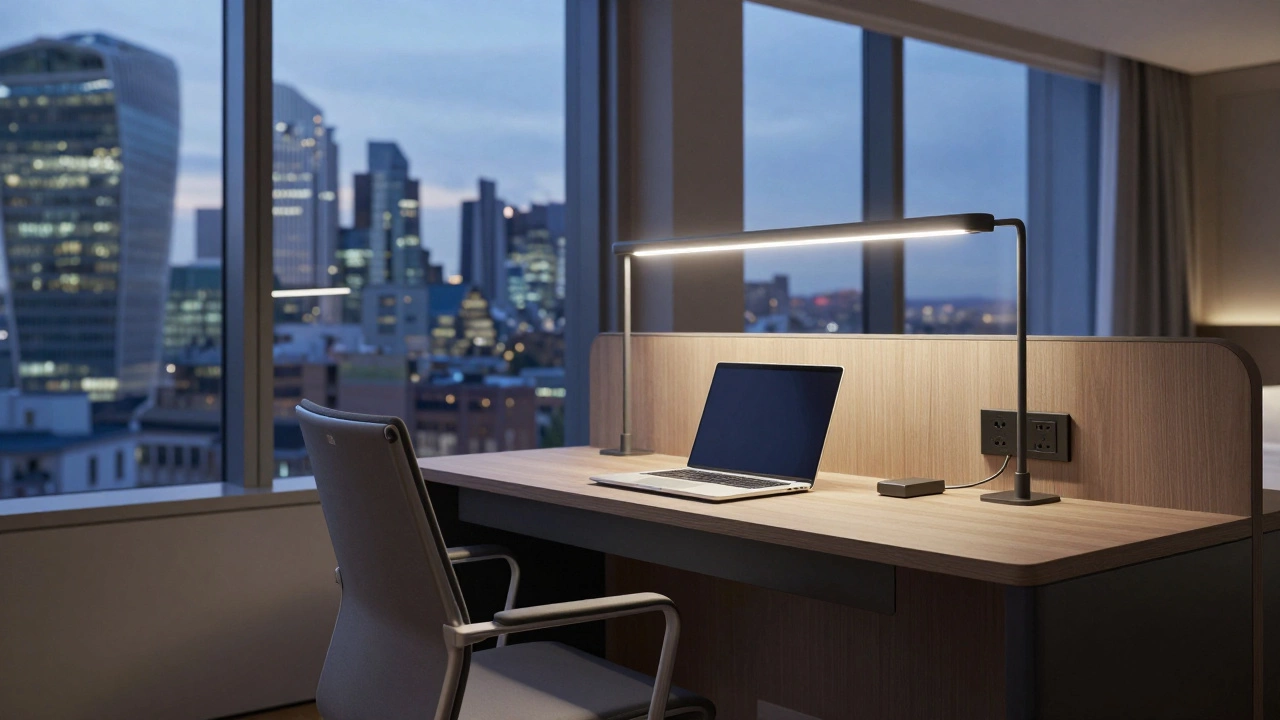
These hotels solve this with dedicated ergonomic setups. You get a desk at eye level, proper task lighting, and multiple power outlets within arm’s reach. This isn’t luxury; it’s utility. The goal is to reduce friction. When you arrive exhausted from travel, you shouldn’t have to hunt for a place to plug in your laptop or set up your monitor. Everything should be ready for you.
- Ergonomic Chairs: Designed for sitting 4-6 hours without back pain.
- Dedicated Lighting: Bright, focused light for reading documents or screens.
- Cable Management: Built-in ports so you aren’t tripping over wires.
This setup allows you to transition from 'travel mode' to 'work mode' instantly. You don’t waste mental energy figuring out logistics. You just sit down and start typing. That immediate shift keeps your momentum alive, which is crucial when you’re jet-lagged or dealing with tight deadlines.
Connectivity That Doesn’t Drop
If your internet connection dies during a video call with clients in London while you’re in New York, you look unprofessional. Period. Standard hotels often share bandwidth across hundreds of rooms, leading to buffering videos and dropped calls. Business hotels operate differently.
They invest in enterprise-grade infrastructure. This means higher bandwidth per room, stronger signal coverage in every corner (including the shower, if you need to take a quick call), and robust security protocols. Many offer seamless integration with cloud services and virtual private networks (VPNs) right out of the box.
Consider the difference in reliability. In a generic motel, you might struggle to connect to Wi-Fi because the router is overloaded. In a top-tier corporate hotel, the network is segmented and prioritized for data transfer. This ensures that large file uploads happen quickly and video conferences remain crisp. For remote workers or consultants who rely entirely on digital tools, this stability is non-negotiable.
Time-Saving Amenities: The Invisible Clock
Time is the most expensive resource on a business trip. Every minute spent waiting in line or hunting for supplies is a minute taken away from strategy, networking, or rest. Business hotels recognize this and design their operations around saving you time.
Take breakfast. In a regular hotel, you might wait 15 minutes for coffee. In a business hotel, you’ll find express grab-and-go stations, high-quality espresso bars, and pre-packed options for those rushing to an early meeting. This isn’t just about food; it’s about flow.
Laundry is another hidden time-sink. If you’re staying three days and only packed two shirts, you need clean clothes fast. Standard laundry services might take 24 hours. Business hotels often offer same-day service or even express one-hour turnarounds. Some even provide dry-cleaning pickup directly from your room door. These small conveniences add up. Over a week-long trip, you might save three to four hours just by avoiding logistical headaches.
| Feature | Budget Motel | Resort Hotel | Business Hotel |
|---|---|---|---|
| Wi-Fi Speed & Reliability | Basic / Shared | Moderate / Recreational | High-Speed / Dedicated |
| Workspace Setup | Small Table | Lounge Area | Ergonomic Desk + Lighting |
| Check-in Process | Counter Only | Concierge Assisted | Express / Digital Key |
| Meeting Facilities | None | Event Hall | Boardrooms + Tech Support |
| Laundry Service | Self-Service Coin | Standard 24hr | Express Same-Day |
Networking Opportunities Built Into the Walls
Who do you meet in a lobby? In a resort, you meet families looking for pool recommendations. In a business hotel, you meet other professionals. The environment naturally fosters professional interaction. Lobbies are designed as informal meeting spaces, with comfortable seating arrangements that encourage conversation rather than isolation.
Many business hotels host evening mixers, industry-specific events, or simply provide quiet corners where spontaneous deals are struck. You might strike up a conversation with someone from a competitor firm or a potential client over coffee. These organic connections are harder to forge in sterile office buildings or isolated vacation spots. The hotel becomes a neutral ground where relationships can form without the pressure of a formal boardroom.
Additionally, staff in these hotels are trained to understand professional etiquette. They know how to handle confidential documents, manage privacy concerns, and assist with last-minute printing needs. This level of service creates a safe space for business activities, allowing you to focus on the content of your interactions rather than the logistics.
Health and Wellbeing on the Road
Travel is stressful. Jet lag, irregular sleep patterns, and poor diet can wreck your health and your ability to think clearly. Business hotels increasingly address this through wellness-focused amenities. It’s no longer just about having a gym; it’s about creating a routine that supports your body.
Expect 24/7 fitness centers equipped with reliable equipment, not just a treadmill and some dumbbells. Many offer yoga mats, meditation apps on smart TVs, and healthy dining options that cater to specific dietary needs. Sleep quality is also prioritized. High-thread-count linens, blackout curtains, and soundproofing are standard features designed to ensure you get deep, restorative rest.
When you feel physically better, you perform mentally sharper. A well-rested brain makes fewer mistakes, negotiates better, and retains information more effectively. By choosing a hotel that supports your physical wellbeing, you’re investing in your cognitive performance for the next day’s tasks.

Cost Efficiency Beyond the Room Rate
It’s tempting to choose the cheapest option, but business hotels often offer better value when you factor in total cost. Yes, the nightly rate might be $50 higher. But consider what you save elsewhere.
You won’t spend money on cab rides to find a printer shop. You won’t buy expensive coffee from a café because the hotel’s brew is decent. You won’t lose billable hours waiting for slow Wi-Fi. For companies tracking Return on Investment (ROI), these efficiencies matter. Many business hotels also offer corporate rates, loyalty points that convert to flights or upgrades, and bundled packages that include breakfast and parking.
Furthermore, consistency reduces decision fatigue. Knowing exactly what amenities you’ll get-where the outlet is, how the thermostat works, where the gym is-saves mental energy. You don’t have to learn a new system every time you check in. This predictability allows you to settle in faster and start working sooner.
Security and Privacy Protocols
When you carry sensitive company data, security isn’t optional. Business hotels implement stricter safety measures than general accommodations. This includes secure key card access, CCTV monitoring in public areas, and encrypted Wi-Fi networks.
In-room safes are larger and more secure, capable of holding laptops and important documents. Staff training emphasizes discretion. Housekeeping protocols often include knocking multiple times before entry to prevent interruptions during confidential calls. These details create a layer of protection that allows you to work with confidence, knowing your data and privacy are respected.
In an era of cyber threats and corporate espionage, the physical security of your workspace matters. A business hotel provides a controlled environment where risks are minimized, letting you focus on your goals without worrying about external vulnerabilities.
Are business hotels always more expensive than regular hotels?
Not necessarily. While the base rate might be slightly higher, the total cost of stay often balances out. You save on transportation, food delivery, and lost productivity. Additionally, many business hotels offer corporate discounts and loyalty programs that can significantly reduce prices for frequent travelers.
What is the biggest difference between a business hotel and a resort?
The primary difference is focus. Resorts prioritize leisure, entertainment, and relaxation amenities like pools and spas. Business hotels prioritize efficiency, connectivity, and work-friendly environments like desks, fast Wi-Fi, and meeting rooms. One is designed for play, the other for productivity.
Do I need a business hotel if I’m only staying for one night?
If you have critical work to complete, yes. Even for a single night, reliable Wi-Fi and a proper desk can make the difference between finishing a project or scrambling the next morning. However, if you’re just attending a single event with no additional work, a standard hotel may suffice.
How do business hotels help with networking?
They create environments where professionals gather. Lobbies, lounges, and business centers serve as informal meeting spots. You’re more likely to encounter other travelers, entrepreneurs, or industry peers in these spaces compared to family-oriented resorts or budget motels.
Is the Wi-Fi in business hotels really faster?
Yes. Business hotels typically use enterprise-grade routers and dedicated bandwidth allocation per room. This ensures stable connections for video conferencing and large file transfers, whereas standard hotels often share limited bandwidth among all guests, leading to congestion.