When you’re looking for the perfect spot to rent or build an eco-friendly cottage, not all U.S. states are created equal. Some states lead in renewable energy, clean water policies, and low-carbon transportation. Others still rely on coal plants and have weak recycling laws. If your goal is to live lightly on the land - whether in a solar-powered cabin or a net-zero vacation home - you need to know where the real green leaders are.
California Leads in Renewable Energy and Building Codes
California isn’t just the most populous state - it’s also the most aggressive when it comes to cutting carbon emissions. By 2030, the state requires 60% of its electricity to come from renewable sources, and by 2045, it aims for 100% clean power. That’s not just a goal - it’s law. Solar panels are common on homes, even in rural areas. Many counties offer tax breaks for homeowners who install geothermal heating or rainwater harvesting systems.
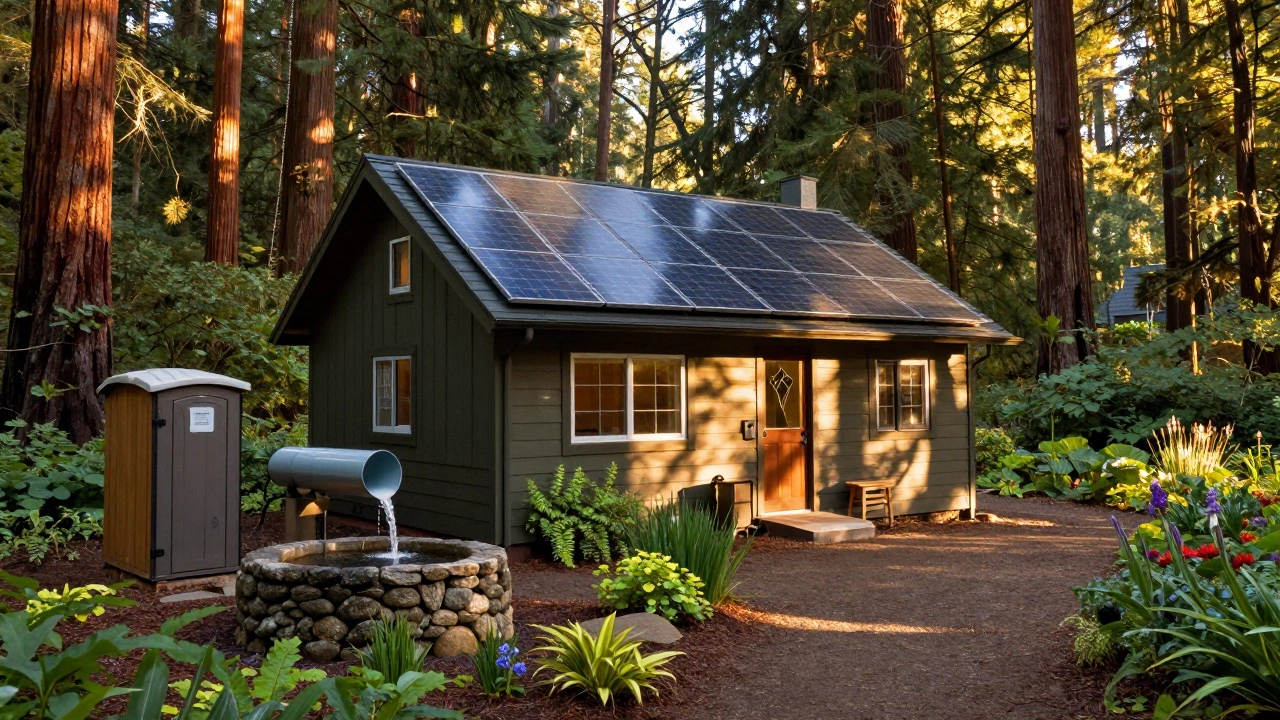
Building codes in California are among the strictest in the nation. New homes, including tiny homes and cottages, must meet Title 24 energy efficiency standards. That means better insulation, high-efficiency windows, and LED lighting are mandatory. In places like Mendocino and Marin County, you’ll find cottages powered entirely by solar and battery storage, with composting toilets and greywater systems built right in.
California also has the highest number of LEED-certified homes per capita. LEED stands for Leadership in Energy and Environmental Design. It’s the gold standard for green building. If you’re buying land to build an eco-cottage, California gives you the most tools and incentives to do it right.
Vermont’s Commitment to Rural Sustainability
Don’t let Vermont’s small size fool you. This state punches way above its weight in sustainability. Over 90% of its electricity comes from renewable sources - mostly hydro, wind, and biomass. Rural communities have embraced small-scale energy projects. A single cottage in the Green Mountains might be powered by a micro-hydro system running off a nearby stream.
Vermont doesn’t just focus on energy. It’s a leader in waste reduction. The state banned single-use plastic bags in 2020 and requires all residents to compost food waste. Many towns offer free compost bins to homeowners. That’s huge for cottage owners who want to live off-grid. You won’t just be reducing your carbon footprint - you’ll be turning scraps into garden fuel.
Local building materials are prioritized. Cedar, pine, and stone from Vermont forests are commonly used in eco-cottages. This cuts down on transportation emissions and supports local lumberyards. The state even offers grants to help low-income families retrofit older cabins with insulation and efficient heating.
Oregon’s Focus on Land Use and Conservation
Oregon has one of the oldest and strongest land-use planning systems in the country. Since the 1970s, the state has protected farmland and forests from sprawl. That means when you build a cottage in Oregon, you’re more likely to be on land that’s already been cleared - not cutting into old-growth forest.
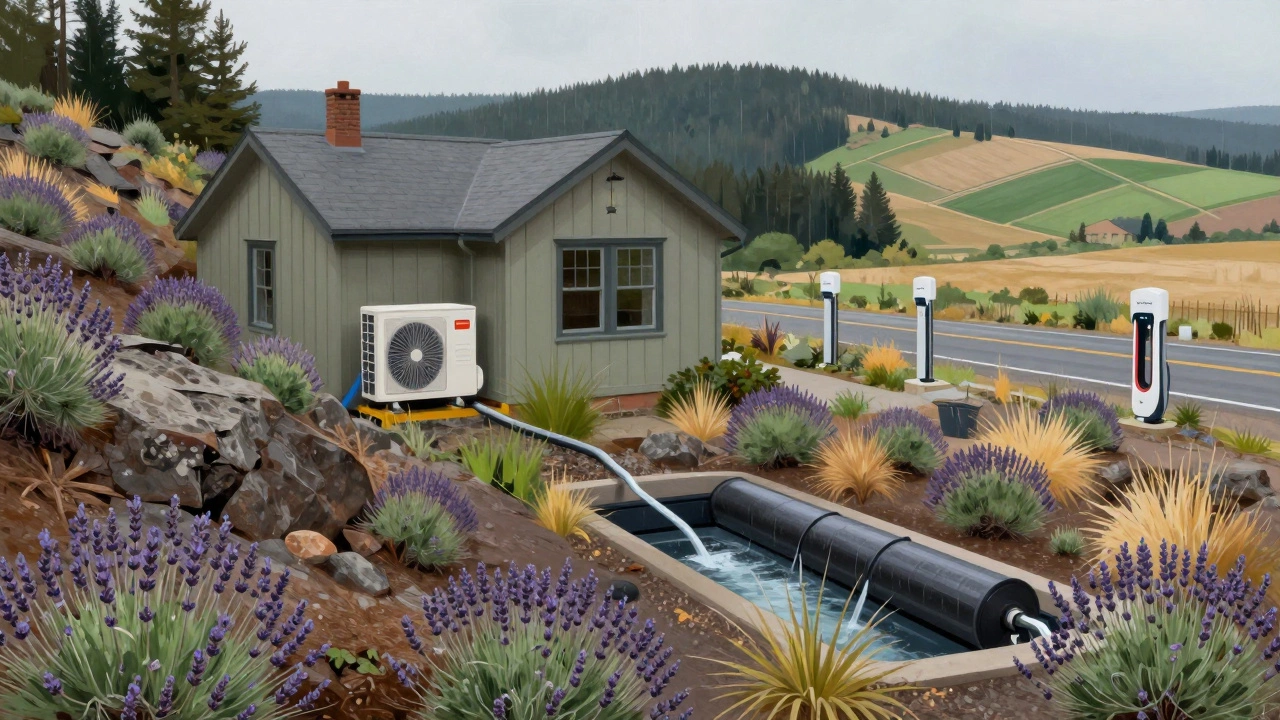
The state encourages green building through its Energy Trust of Oregon. This nonprofit gives cash rebates for solar panels, heat pumps, and high-efficiency windows. A typical cottage owner can get up to $5,000 back for installing a heat pump system. That’s more than most states offer.
Oregon also has the most electric vehicle charging stations per capita outside of California. If you’re planning to drive to your cottage, you won’t be stuck searching for a charger. Portland and Eugene have dense networks, but even small towns like Ashland and Bend are adding stations every year.
Water conservation is taken seriously too. In dry regions like Eastern Oregon, cottages are required to use low-flow fixtures and drought-resistant landscaping. Rainwater collection systems are common, and some counties even allow homeowners to use collected rainwater for drinking, if properly filtered.

Washington’s Green Tech and Forest Stewardship
Washington state is home to tech giants like Amazon and Microsoft - but it’s also a leader in sustainable forestry. Over 60% of its land is forested, and the state requires that every tree cut down be replaced. That means if you’re building a log cabin or timber-framed cottage, the wood likely came from a managed, replanted forest.
The state offers a 100% sales tax exemption for solar panels and wind turbines. That’s rare. Most states only offer partial exemptions. Washington also has one of the highest rates of rooftop solar adoption per household. In the Puget Sound region, it’s not unusual to see a cottage with a solar roof, a battery backup, and a heat pump water heater.
Seattle and Olympia have strict green building ordinances. New construction must meet the Living Building Challenge - a tougher standard than LEED. That means buildings must produce more energy than they use, collect their own water, and process waste on-site. Even small cottages are being built to this standard.
Why Other States Fall Short
States like Wyoming, West Virginia, and Kentucky still rely heavily on coal. Their electricity grids are dirty. Even if you install solar panels on your cottage, the grid you’re connected to might still be powered by coal plants miles away.
Some states have no building codes at all for energy efficiency. In Texas, for example, new homes don’t have to meet any minimum insulation standards. That means a cottage could be built with thin walls and single-pane windows - wasting energy and driving up bills.
Recycling programs are patchy. In Alabama and Mississippi, less than 20% of household waste gets recycled. That’s half the national average. If you’re trying to live sustainably, you’ll end up hauling your recyclables to a distant facility - or just throwing them away.
Water rights are another issue. In Arizona and Nevada, water is scarce and tightly controlled. Building a cottage with a lawn or a swimming pool is discouraged - and sometimes illegal. That doesn’t make them bad places to live, but it does make eco-living harder without careful planning.
What to Look for in an Eco-Friendly State
When choosing where to build or rent a sustainable cottage, ask these questions:
- What percentage of electricity comes from renewables?
- Are there tax credits or rebates for solar panels or heat pumps?
- Do building codes require energy efficiency?
- Is there a strong recycling and composting program?
- Are water conservation laws strict?
- Is locally sourced building material encouraged?
States that score high on all six are your best bet. California, Vermont, Oregon, and Washington all hit five or six of these points. Others fall behind on at least two.
Real-World Example: A Cottage in Mendocino
Take a cottage near Mendocino, California. It’s a 600-square-foot cabin built with reclaimed redwood. The roof holds 8 kW of solar panels. A 15 kWh battery stores excess power. A heat pump provides heating and cooling. Rainwater is collected from the roof, filtered, and used for drinking. Greywater from the sink and shower is piped into a garden bed. The composting toilet turns waste into fertilizer.
The owner pays $0 for electricity. The water bill is $12 a month. The property is off-grid, but connected to a local fiber internet line. It’s not a luxury - it’s a practical, affordable way to live. And it’s only possible because California’s laws and incentives made it easy.
The Bottom Line
If you want to live in an eco-friendly cottage, don’t just pick a scenic location. Pick the right state. California leads in clean energy and green building. Vermont leads in rural sustainability and waste reduction. Oregon leads in land use and water conservation. Washington leads in tech-backed green innovation.
These four states offer the most support, the most incentives, and the most realistic path to true sustainability. Other states may have beautiful landscapes - but without the right policies, your cottage will still be part of the problem, not the solution.
Build smart. Live light. Choose wisely.