Cozy Cottage Color Palette Generator
Discover the perfect warm, sun-faded colors for your cozy cottage style. Select 3-5 colors from the recommended palette that match your space and see how they work together in a virtual room.
The soft base color that mimics faded sunlight
Mimics dried herbs and aged patina
Like faded denim or old pottery
The perfect neutral for aged wood
Mimics natural stone and worn surfaces
Wall Color
Accent Color
Sample Room
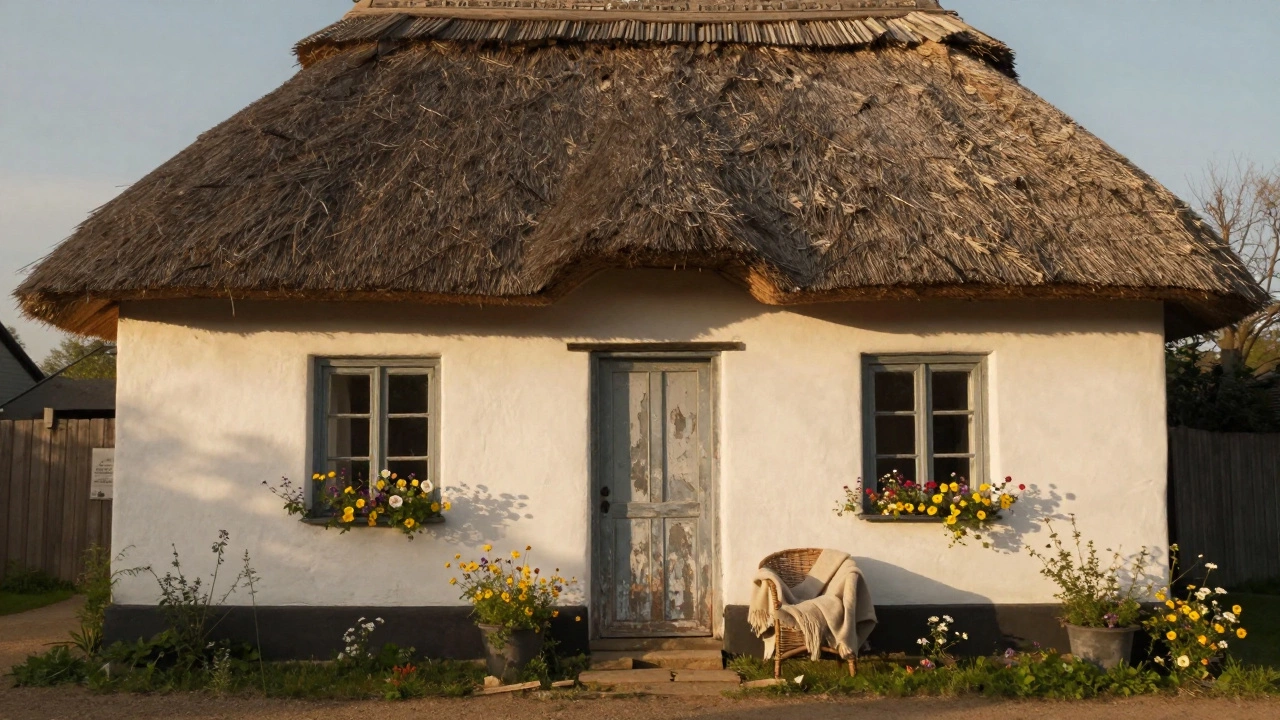
Think of a small house with a thatched roof, white-washed walls, and windowsills crowded with wildflowers. Inside, there’s a worn wooden table, a chunky knit blanket draped over a faded armchair, and the smell of baking bread lingering in the air. That’s cozy cottage style - not about perfection, but about comfort that feels lived-in and loved.
It’s Not Just a Look - It’s a Feeling
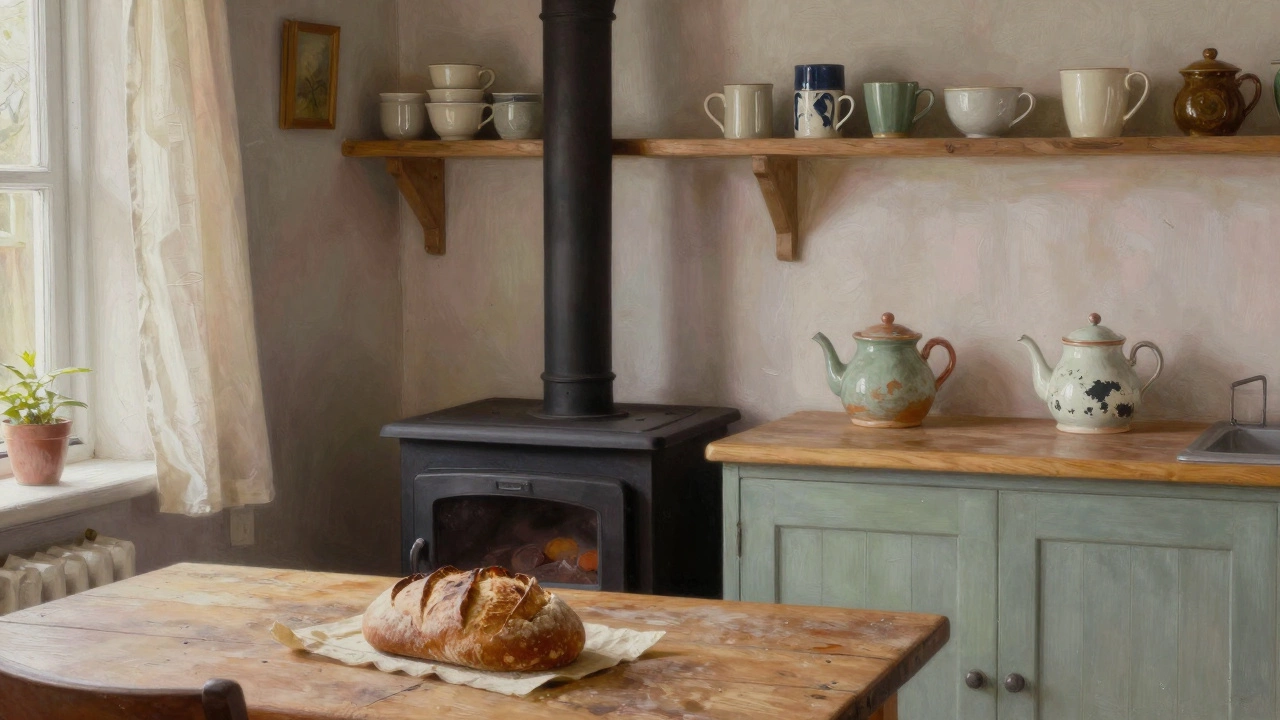
Cozy cottage style doesn’t come from a catalog. You won’t find it in a showroom with matching sets and plastic plants. It’s the kind of space that feels like a hug after a long day. It’s the crooked door that doesn’t quite close, the uneven floorboards that creak underfoot, and the mismatched teacups stacked on an open shelf. This style pulls from old European farmhouses, English village homes, and seaside retreats - places where function came before fashion, and beauty grew out of necessity.People who love this style aren’t chasing trends. They’re chasing warmth. They want a home that feels like it’s been passed down through generations, not one that was assembled from IKEA boxes last weekend.
Key Elements That Make It Work
There’s no strict rulebook, but certain things keep showing up in real cozy cottages. Here’s what actually matters:- Soft, muted colors - Think cream, sage green, dusty blue, and warm gray. Not pastels. Not bright whites. These are colors that have been faded by sunlight over years, not chosen from a paint swatch.
- Natural materials - Wood, stone, linen, wool, and rattan. You’ll see reclaimed barn wood on the ceiling, hand-thrown pottery on the counter, and a wool rug that’s been walked on for decades.
- Imperfect finishes - Chipped paint, weathered metal, cracked glaze on ceramics. These aren’t flaws to fix. They’re proof the home has a history.
- Layered textiles - A quilt folded at the foot of the bed, a lace curtain fluttering in the breeze, a sheepskin rug by the fireplace. Texture matters more than matching.
- Small, personal touches - A collection of vintage teapots, a handwritten recipe card taped to the fridge, a child’s drawing pinned to the wall. These aren’t decorations. They’re memories.
Notice what’s missing? No glossy countertops. No minimalist shelves. No LED lighting. Cozy cottage style avoids anything that feels cold, sterile, or mass-produced.
How to Build It - Step by Step
You don’t need a budget or a designer to create this look. Start small:- Paint the walls - Skip the bright white. Try a soft off-white like Benjamin Moore’s ‘White Dove’ or Farrow & Ball’s ‘All White’. Add a hint of gray or green to make it feel aged.
- Find secondhand furniture - Look for wooden chairs with worn seats, dressers with peeling paint, or a small table with wobbly legs. These pieces have character. New furniture looks like it’s waiting to be used - old furniture already has stories.
- Bring in texture - Drape a knitted throw over the sofa. Hang a woven basket on the wall. Lay a rag rug by the sink. Textiles soften hard surfaces and add warmth.
- Use natural light - Keep windows clear. Use thin curtains or no curtains at all. Let sunlight wash over the room. If you need privacy, choose gauzy linen instead of heavy drapes.
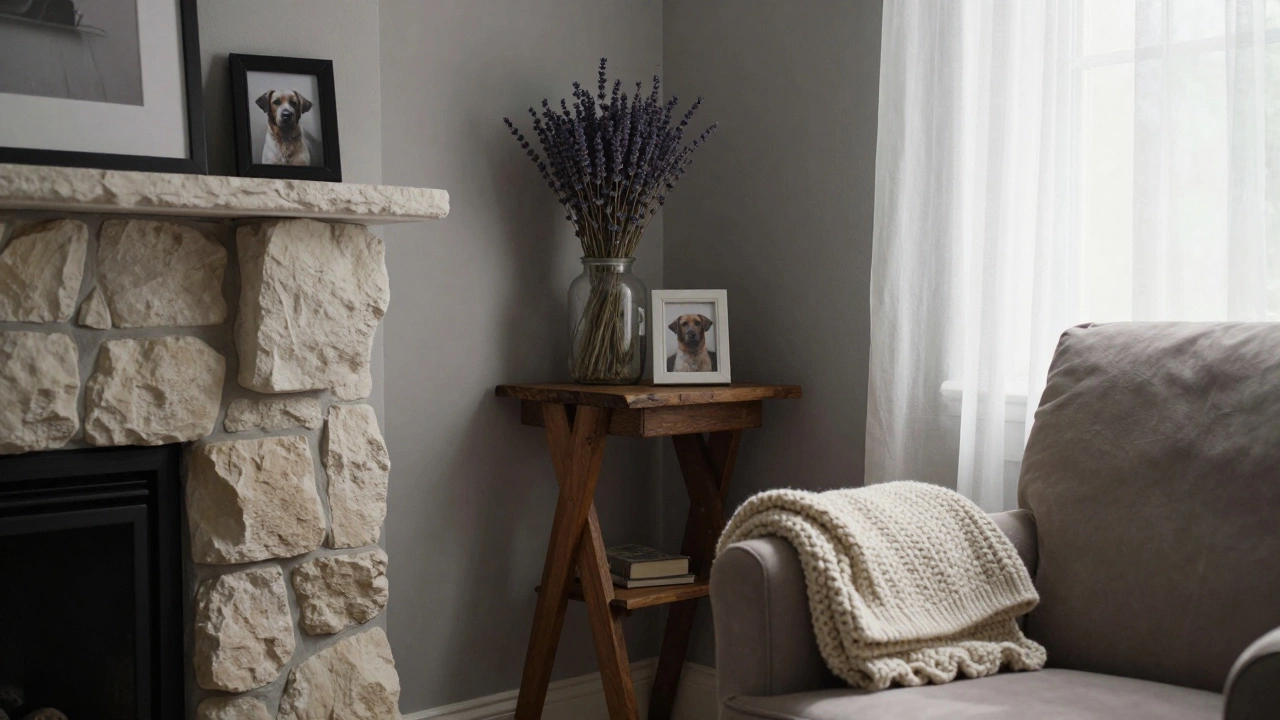
- Collect, don’t decorate - Don’t buy matching vases. Find one old jar, fill it with dried lavender from your garden, and place it on the windowsill. One meaningful object beats ten perfect ones.
What This Style Isn’t
It’s easy to confuse cozy cottage with other styles. Here’s how to tell the difference:| Feature | Cozy Cottage | Modern Farmhouse | Shabby Chic |
|---|---|---|---|
| Color palette | Muted, earthy, sun-faded | White, black, bold accents | Pastels, pink, floral |
| Furniture | Handmade, mismatched, worn | Clean lines, new distressed wood | Deliberately painted and distressed |
| Textures | Linen, wool, raw wood, stone | Metals, glossy finishes, clean cotton | Lace, velvet, painted finishes |
| Feel | Authentic, lived-in, quiet | Polished, curated, stylish | Feminine, romantic, staged |
Modern farmhouse tries too hard to look rustic. Shabby chic looks like it was designed by a magazine editor. Cozy cottage doesn’t care what it looks like - it just wants to be comfortable.
Real Examples From Real Homes
In Devonport, where I live, there’s a tiny cottage on the hill with a sagging porch and a garden that looks like it’s been growing wild for 40 years. Inside, the kitchen has a cast-iron stove from the 1950s, the walls are painted in a color that’s probably called ‘Dusty Rose’ but no one remembers who chose it. There’s a single framed photo of a dog on the mantle - the same dog, in the same spot, for 20 years.That’s not a design trend. That’s a life.
Another example: a cottage in the Lake District, England, where the owner still uses the original stone sink. The wood floor is worn smooth in the middle from decades of bare feet. The curtains are old sheets. The tea towels are from the 1980s. No one tried to make it look ‘Instagram-ready’. It just is.
Why This Style Feels So Good
In a world full of screens, speed, and perfection, cozy cottage style is a quiet rebellion. It says: It’s okay to be worn. It’s okay to be slow. It’s okay to be imperfect.Studies show that people feel calmer in spaces with natural textures and soft colors. The human brain responds to irregular shapes, uneven surfaces, and warm tones - things that mimic nature. That’s why a crooked shelf feels more comforting than a perfectly aligned one.
This style isn’t about nostalgia. It’s about presence. It’s about choosing comfort over convenience, warmth over shine, and meaning over mimicry.
Where to Start If You’re New to This
If you’ve never tried this style before, don’t overhaul your whole home. Start with one corner:- Swap your bright throw pillows for a wool blanket in a soft gray.
- Place a ceramic bowl on your nightstand and fill it with dried lavender or pinecones.
- Use a vintage lamp instead of a LED strip light.
- Leave one shelf in your kitchen unorganized - just stack your mugs and jars as you use them.
Let the space breathe. Let it collect things slowly. Over time, it will start to feel like home - not because you bought the right things, but because you lived in it.
Final Thought: It’s Not About the Decor - It’s About the Life
Cozy cottage style isn’t something you buy. It’s something you build - one cup of tea, one rainy afternoon, one cracked plate at a time. It grows from habits, not shopping lists.If you want this look, don’t search for ‘cottage decor ideas’. Instead, ask yourself: What makes me feel safe? What reminds me of home? What do I want to hold onto? Then let those answers guide you. The rest will follow.
Is cozy cottage style the same as farmhouse style?
No. Farmhouse style often uses clean lines, black hardware, and new distressed wood - it’s polished rustic. Cozy cottage is softer, older, and more lived-in. Farmhouse feels like a design choice. Cottage feels like a memory.
Can you have cozy cottage style in a small apartment?
Absolutely. Size doesn’t matter. Use soft lighting, layered textiles, and natural materials. A single shelf with a few well-loved books, a wool blanket, and a ceramic mug can create the same feeling as a full cottage. Focus on warmth, not square footage.
Does cozy cottage style cost a lot?
Not at all. Most of the best pieces come from thrift stores, garage sales, or your grandparents’ attic. The most expensive thing you might buy is a good wool blanket. The rest? It’s free - if you’re willing to wait, look, and love what’s already there.
How do you keep it from looking messy?
You don’t. Messiness is part of the charm. But if you want balance, keep surfaces mostly clear - let one or two meaningful objects stand out. A single vase, a stack of three books, a candle. Less is more, even in a cottage.
Can you mix cozy cottage with other styles?
Yes, but carefully. Try blending it with Japanese minimalism - clean lines with soft textures. Or with industrial elements - exposed brick with a wool rug. Avoid mixing with anything too glossy, modern, or bright. The contrast should feel calm, not chaotic.