Business Hotel Feature Checker
Is This Hotel Business-Friendly?
Enter the hotel's key features to see if it meets business traveler requirements. This tool checks against essential criteria from our business hotel guide.
A business hotel isn't just a place to sleep when you're on the road. It's a workspace, a meeting room, a quiet corner for calls, and sometimes even a place to grab a quick meal without leaving the building. If you've ever been stuck in a hotel room trying to join a Zoom call while a family down the hall is laughing loudly, you know the difference between a regular hotel and one built for business travelers.
What Makes a Hotel a Business Hotel?
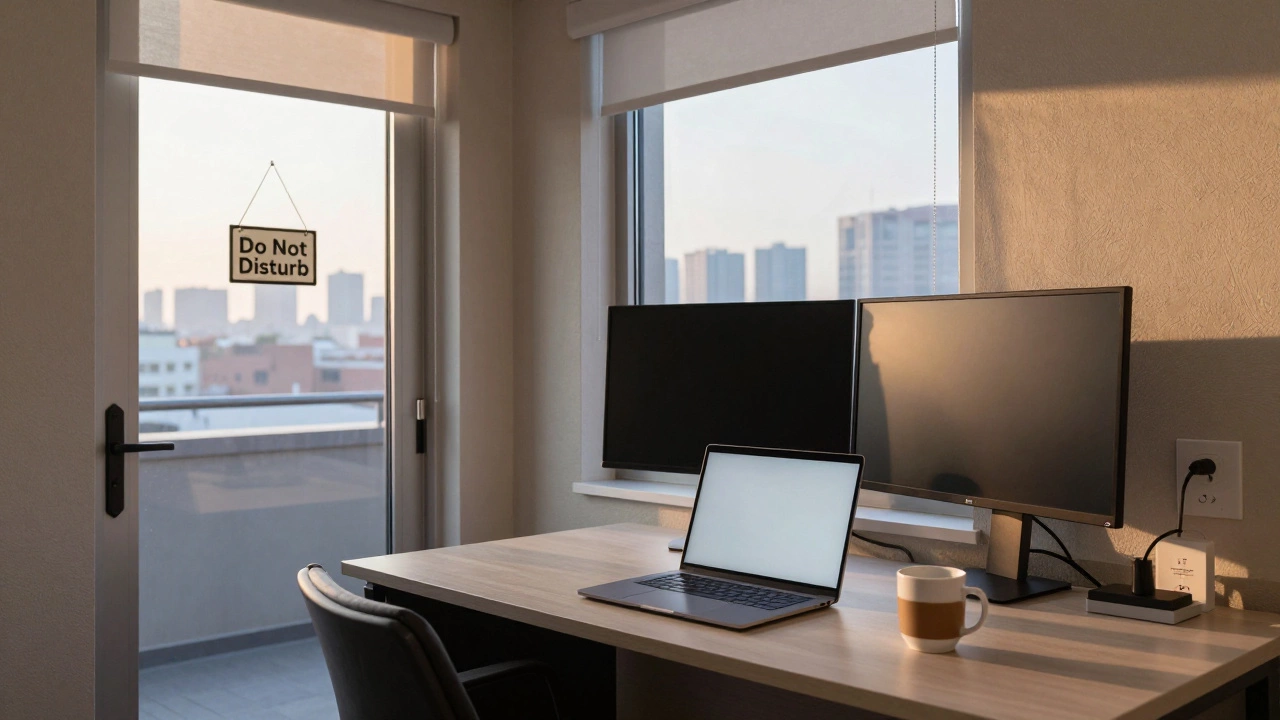
A business hotel is designed around the needs of professionals who travel frequently for work. These aren't luxury resorts with infinity pools and spa packages. They’re efficient, reliable, and built for productivity. Think fast Wi-Fi that actually works, rooms that stay quiet after 10 p.m., and desks that can handle a laptop, two monitors, and a coffee mug without tipping over.
Many business hotels are part of national chains like Holiday Inn Express, Hampton Inn, or Courtyard by Marriott. But not every branch of these brands is a true business hotel. The difference shows up in the details: the front desk opens at 6 a.m. for early check-ins, the breakfast buffet ends at 9 a.m. because most guests are already in meetings, and the laundry room is open 24 hours because someone always needs to press a shirt before a client call.
Core Features You Can’t Skip
If you're booking a business hotel, there are five things you should expect - and if they're missing, you're probably not in a real business hotel.
- High-speed, reliable Wi-Fi - Not just "free internet," but dedicated bandwidth for video calls. Business travelers don’t want to wait 10 minutes for a PowerPoint to upload.
- Workspaces - A desk with proper lighting, power outlets within reach, and enough room for a laptop and notebook. No more balancing your laptop on your knees.
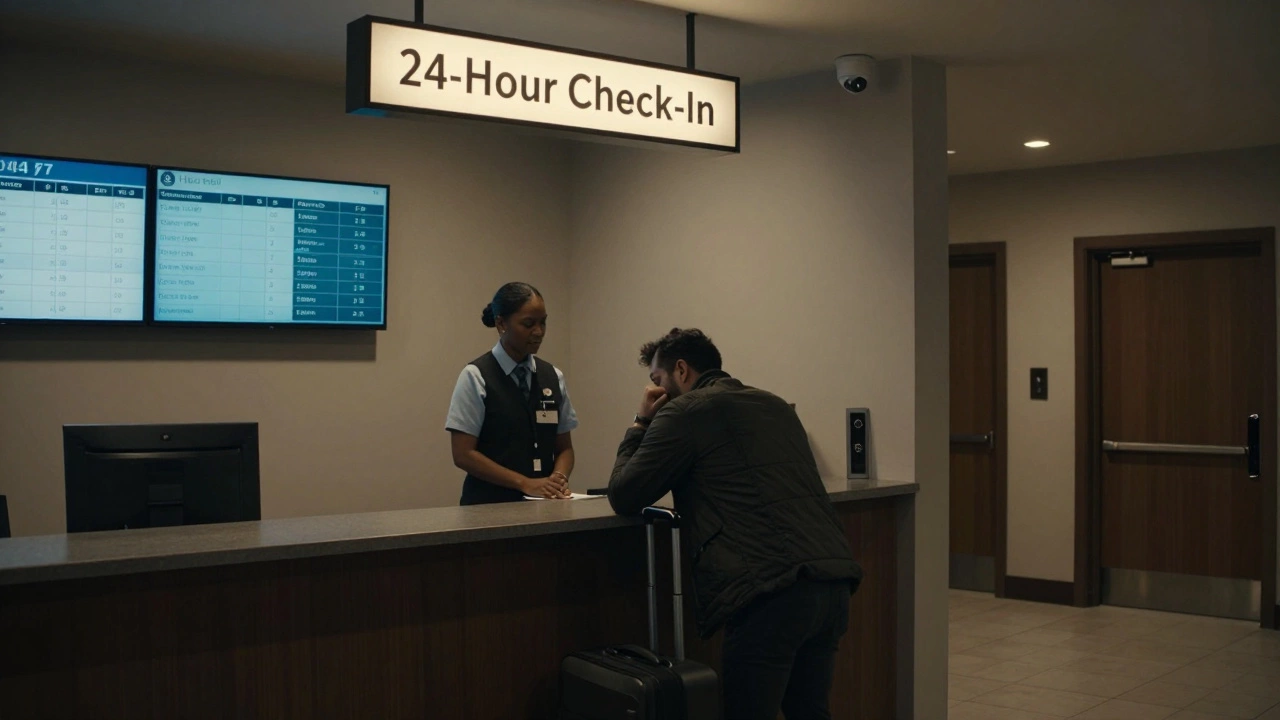
- 24/7 front desk and security - Late flights happen. So do early meetings. You need someone who can let you in at 2 a.m. and keep the place safe.
- Meeting rooms or quiet zones - Some hotels offer small rooms you can book by the hour for client calls or team huddles. Others have soundproofed corners with armchairs and charging stations.
- Business center - A printer, scanner, and fax machine (yes, people still use fax). No more hunting for a copy shop at 7 a.m. on a Monday.
Why Location Matters More Than You Think
A business hotel in downtown Chicago isn’t the same as one near an airport. Location defines what kind of business traveler it serves.
Hotels near corporate parks or downtown districts cater to professionals who need to walk to meetings, grab lunch with clients, or hop on public transit. These places often have partnerships with local restaurants for discounted business lunches or early-bird dinner deals.
Airport business hotels? They’re for the 5 a.m. flight crew, the delayed traveler, or the person who has a 9 a.m. meeting and no time to check into a downtown hotel. These hotels offer shuttle services, 24-hour snack bars, and rooms designed for short stays - sometimes even 3-hour "nap packages" for travelers with layovers.
What’s Missing? The Quiet Rules
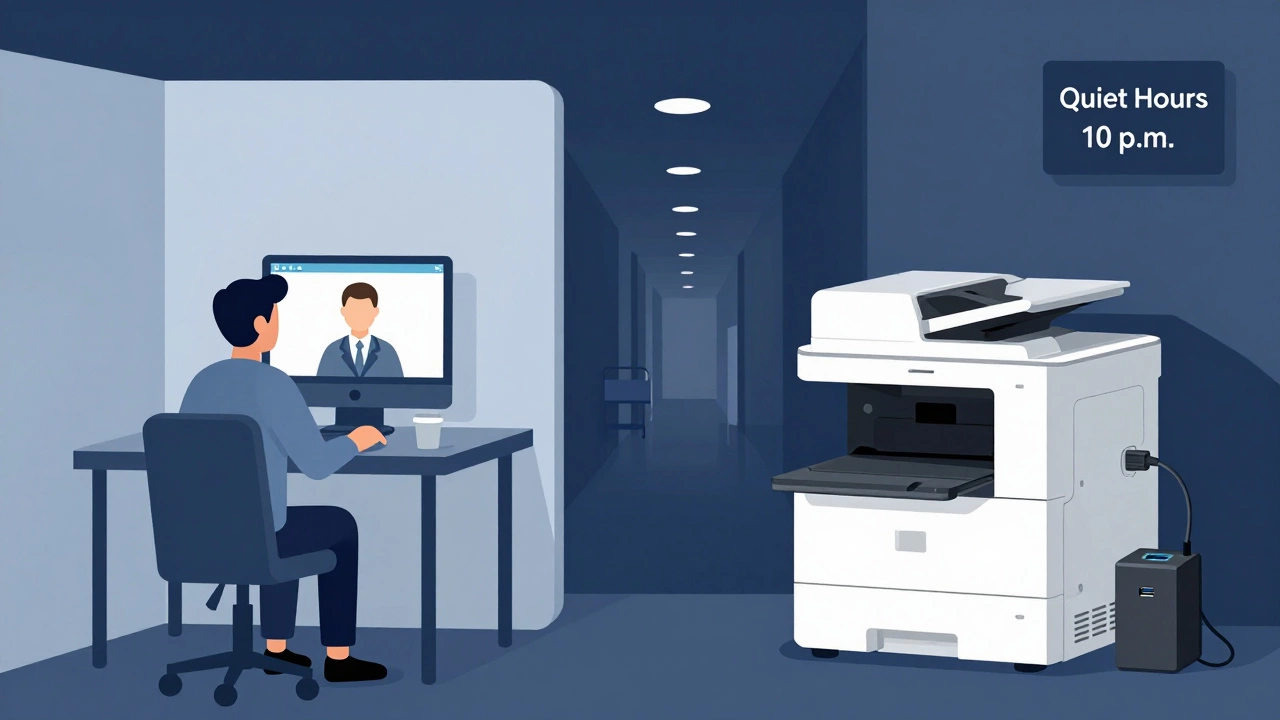
Business travelers don’t need a dance floor or a poolside bar. They need silence. That’s why most business hotels enforce quiet hours strictly. No loud music after 10 p.m. No parties in the hallway. No TV volume that carries through the walls.
Room doors often have automatic latches. Windows are double-glazed. Even the HVAC systems are designed to run quietly. You won’t hear the next room’s conversation - and if you do, the staff will fix it fast. That’s not a perk. That’s the baseline.
How Business Hotels Handle Technology
Modern business hotels don’t just offer Wi-Fi - they manage it. Many have dedicated IT staff who monitor network performance. If your video call keeps dropping, you can call the front desk, and someone will come up with a signal booster or a wired Ethernet cable within minutes.
Some even offer app-based check-in, digital room keys, and smart mirrors that show your calendar and weather. A few high-end business hotels let you control lighting, temperature, and blinds from your phone. It’s not sci-fi - it’s what professionals expect.
Breakfast Isn’t Just Food - It’s a Time Saver
Business hotels serve breakfast early and fast. It’s usually a grab-and-go style buffet: hard-boiled eggs, yogurt cups, oatmeal, coffee, and fresh fruit. No sit-down waiters. No 45-minute wait for pancakes. You’re in and out in 10 minutes.
Many also offer to pack a to-go breakfast if you’re leaving before the buffet opens. Just ask the night clerk the night before. It’s a small thing - but it makes a big difference when you’re racing to catch a flight.
Who Uses Business Hotels?
You might assume it’s just sales reps and consultants. But business hotels serve a much wider group:
- IT professionals on site visits
- Teachers attending conferences
- Healthcare workers rotating between clinics
- Freelancers who need a professional space outside their home
- Government employees on official travel
- Remote workers taking their first international trip
Even if you’re not a corporate executive, if your job requires you to be away from home regularly, a business hotel is built for you. It’s not about status - it’s about function.
How to Spot a Real Business Hotel
Not every hotel that calls itself "business-friendly" is actually built for business travelers. Here’s how to tell the difference:
- Check the room layout - Is there a desk? Or just a small table with a lamp?
- Look at the Wi-Fi description - Does it say "free internet" or "dedicated business-grade connectivity"?
- See the check-in/out times - Can you check in at 6 a.m.? Can you check out at 1 p.m. without extra charge?
- Ask about meeting spaces - Do they offer hourly rentals? Or just big ballrooms for weddings?
- Read recent reviews - Look for mentions of "noisy hallways," "slow Wi-Fi," or "no place to work." Real business travelers notice these things.
If most reviews mention productivity, quiet, and reliability - you’ve found a real one.
Business Hotels vs. Regular Hotels
It’s easy to confuse a business hotel with a standard hotel. But the differences are clear:
| Feature | Business Hotel | Regular Hotel |
|---|---|---|
| Check-in/out flexibility | Early check-in (6 a.m.) and late checkout (1 p.m.) common | Strict 3 p.m. check-in, 11 a.m. check-out |
| Wi-Fi quality | Dedicated bandwidth, support for video calls | Basic shared connection, often slow during peak hours |
| Work space | Desk, chair, multiple outlets, good lighting | Small table or no dedicated workspace |
| Quiet hours | Strictly enforced after 10 p.m. | Loosely enforced or not mentioned |
| Breakfast | Grab-and-go, early start, to-go options | Sit-down buffet, longer hours, more variety |
| Meeting spaces | Small, bookable rooms for 1-4 people | Only large event halls available |
| Staff availability | 24/7 front desk and maintenance | Limited hours, often overnight staff only for emergencies |
What Business Travelers Really Want
At the end of the day, business travelers aren’t asking for fancy toiletries or a marble bathroom. They want predictability. They want to know that when they walk into their room, the Wi-Fi will work, the desk will be clear, and the lights won’t flicker during a call.
They want to avoid surprises. No last-minute room changes. No broken printers. No noisy neighbors. No 30-minute wait for housekeeping to clear a used coffee cup.
That’s why business hotels succeed - not because they’re luxurious, but because they’re dependable. And in a world where your job might depend on a stable Zoom connection, dependability isn’t a luxury. It’s a necessity.
Is a business hotel more expensive than a regular hotel?
Not always. Business hotels often cost the same as mid-range hotels. You’re not paying for a spa or a rooftop bar - you’re paying for reliability. In fact, some business hotels are cheaper than tourist-focused hotels in the same city because they have fewer frills. The price difference comes down to location and brand, not the business amenities themselves.
Can I use a business hotel for leisure travel?
Yes - but you might miss out on fun extras. Business hotels don’t have pools, kids’ clubs, or late-night bars. If you’re traveling solo and just need a quiet place to sleep and work, it’s perfect. But if you’re planning a romantic getaway or family vacation, you’ll probably want a hotel with more amenities. Think of it as a tool, not a destination.
Do business hotels offer loyalty programs?
Most do - and they’re often better than standard hotel programs. Since business travelers stay frequently, chains like Marriott Bonvoy, Hilton Honors, and IHG Rewards give extra points for early check-ins, late checkouts, and meeting room bookings. Some even offer free room upgrades or priority check-in for frequent travelers.
Are business hotels only in big cities?
No. While they’re common in downtown areas, you’ll also find them near industrial parks, university campuses, and airport corridors. Even smaller towns with corporate offices or government centers often have a business hotel. The key is looking for hotels with 24-hour service, work desks, and reliable Wi-Fi - not just a name.
What should I pack for a business hotel stay?
Pack like you’re going to work, not on vacation. Bring a power strip (outlets are limited), noise-canceling headphones, a portable charger, and a small laundry bag. Don’t assume they’ll have a working iron or ironing board - many don’t. If you need to print something, bring a USB drive. And always carry a backup of your presentation - just in case.