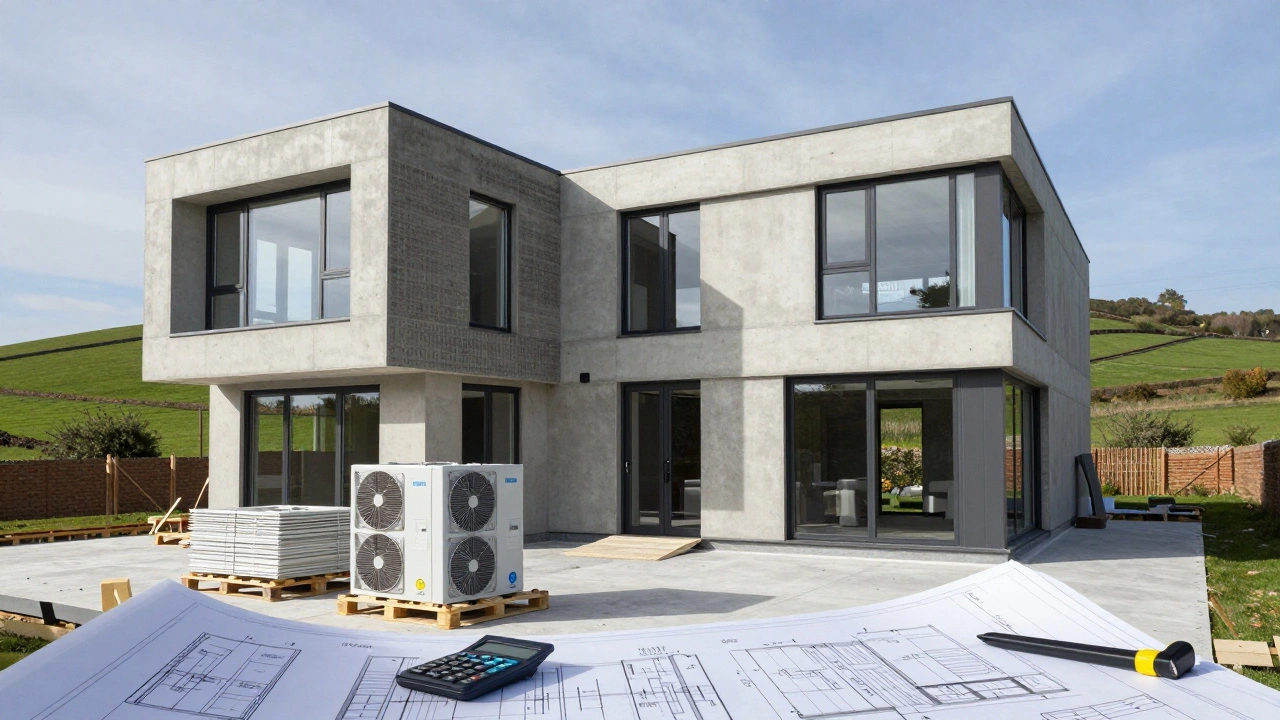
Green Building Cost & ROI Estimator
Investment Inputs
Financial Impact Analysis
Note: This tool estimates raw financial ROI. It does not account for "Embedded Carbon" costs or the "Performance Gap" mentioned in the article, which may extend the break-even period.
Quick Takeaways: The Reality Check
- Upfront costs are usually 5% to 15% higher than traditional builds.
- Some "green" materials actually have high embedded carbon from transport.
- High-tech systems often require specialized, expensive technicians for repairs.
- Certain eco-designs can lead to moisture traps and mold if not perfectly executed.
- The "performance gap" means buildings often don't save as much energy as the blueprints suggest.
The Sticker Shock: Upfront Costs and Financing
Let's talk about the elephant in the room: money. If you want a home that meets LEED Certification standards, you're going to pay a premium. High-efficiency HVAC systems, triple-pane windows, and recycled steel don't come cheap. Many homeowners find that the initial investment is significantly higher than a standard build, often ranging from 5% to 15% more depending on the level of sustainability.
The problem isn't just the cost of materials, but the complexity of the build. You can't just hire any local contractor; you need specialists who understand Sustainable Architecture. These experts charge more, and because the methods are more meticulous, the construction timeline often stretches. If you're building an eco-friendly cottage in a remote area, getting these specialized crews to the site adds another layer of expense that can blow your budget wide open.
| Expense Category | Traditional Build | Green Build | The "Downside" Factor |
|---|---|---|---|
| Materials | Standard Market Rate | Premium (Eco-sourced) | 10-20% higher cost for certified non-toxic materials |
| Labor | General Contractors | Specialized Green Pros | Higher hourly rates for specialized certifications |
| Energy Systems | Standard Grid Connection | Solar, Geothermal, Heat Pumps | Heavy initial spend with 7-12 year ROI period |
The Performance Gap: Expectation vs. Reality
There is a frustrating phenomenon in the industry called the "performance gap." Basically, the computer models used during the design phase predict a level of energy efficiency that the building rarely achieves in the real world. Why? Because models don't account for human behavior. If you have a state-of-the-art Passive House design but leave the door open for the dog every ten minutes, your energy savings vanish.
Moreover, some green features can actually backfire. For example, extremely tight building envelopes-designed to prevent air leaks-can lead to poor indoor air quality if the Mechanical Ventilation system isn't perfectly calibrated. I've seen cases where a "breathable" wall system actually trapped moisture against the frame because the local humidity was higher than the architect predicted, leading to structural rot and mold growth within just five years.
The Maintenance Trap and Technical Debt
A regular house is pretty simple. If a pipe leaks, any plumber can fix it. If a light switch breaks, you swap it out. But when you move into a home powered by a Smart Grid or a complex greywater recycling system, you've entered the world of "technical debt." You are now dependent on a very small pool of technicians who know how to service your specific system.
Imagine your high-tech heat recovery ventilator (HRV) fails in the middle of winter. You can't just call the guy down the street; you have to wait for a certified technician to drive three hours from the city. Then there's the software. Many green buildings rely on automation to manage lighting and temperature. When the software needs an update or the hardware becomes obsolete, you're left with an expensive system that doesn't work, and replacing it often means ripping open the walls.
The Carbon Paradox: Embedded vs. Operational Energy
This is where things get controversial. We often focus on "operational energy"-how much electricity the house uses while you live in it. But we often ignore Embedded Carbon, which is the energy used to create, transport, and install the materials.
Think about a "green" home that uses high-tech solar panels manufactured in a factory halfway across the world and shipped via a heavy-oil tanker. Or a house that uses rare-earth minerals for its advanced battery storage. In some cases, the carbon cost of building the "eco-friendly" home is so high that it takes decades of energy savings just to break even. If you tear the building down or renovate it after 20 years, you might have actually done more harm to the environment than if you'd just built a simple, well-insulated cottage with local timber.
Psychological Stress and "Eco-Guilt"
It sounds strange, but living in a green building can be mentally taxing. There is a certain level of discipline required. You can't just "set it and forget it." You're monitoring energy dashboards, managing compost systems, and ensuring you're not using too much water during a drought. For some, this is rewarding; for others, it feels like a second job.
Then there is the pressure of the "green image." When you tell people you live in a sustainable home, there's an unspoken expectation that your life is perfectly zero-waste. The moment you buy a plastic bottle of water or forget to sort your recycling, the guilt kicks in. The house becomes a symbol of a standard you have to live up to, rather than just a place to relax.
Practical Advice for the Conscious Builder
If you're still keen on going green, the secret is to avoid "gadgetry" and focus on the basics. Instead of spending $20,000 on a complex automated system that might break in five years, spend that money on thicker insulation and better window sealing. This is known as Passive Design. It's a strategy that uses the sun and wind for heating and cooling without relying on electronics.
Before committing to a specific green technology, ask yourself: "Can I fix this with a screwdriver and a manual?" If the answer is no, you're adding a point of failure to your home. Prioritize local materials-stone, clay, or timber from your own region-to minimize that embedded carbon we talked about. A simple house built with local materials is often more sustainable than a "certified green" house filled with imported tech.
Are green buildings actually more expensive to maintain?
In the short term, yes. While they save on monthly utility bills, the specialized systems (like solar inverters, heat pumps, or smart home hubs) often require more expensive, certified technicians for repairs compared to traditional plumbing or electrical work.
Can eco-friendly materials cause health issues?
Generally, they are healthier. However, if a "natural" building is not properly ventilated or if organic materials like straw bales or hempcrete are exposed to moisture due to poor design, they can develop mold, which can lead to respiratory issues.
How long does it take for a green building to pay for itself?
The Return on Investment (ROI) varies. Simple upgrades like insulation pay back quickly, but high-end systems like geothermal heating can take 7 to 15 years to break even through energy savings.
What is the "performance gap" in sustainable homes?
The performance gap is the difference between how much energy a building is predicted to save in a computer model and how much it actually saves when people move in. This is usually caused by improper installation or occupants not using the systems correctly.
Is LEED certification a guarantee of a good home?
Not necessarily. LEED is a points-based system. A building can earn points for things that don't actually improve the living experience or long-term sustainability, meaning a certified building might still have functional flaws.