Mexico All-Inclusive Safety Risk Calculator
How much time will you spend outside the resort?
Most incidents occur when guests leave without authorization. Based on 2025 Mexican Tourism Board data showing 12 violent incidents across 1.8 million guest stays.
Why this matters
"The 2025 study showed zero incidents occurred inside resort boundaries. All 12 violent crimes happened when guests left without authorization."
Key takeaway: The resort is your safe zone. Risk increases significantly when leaving without proper authorization.
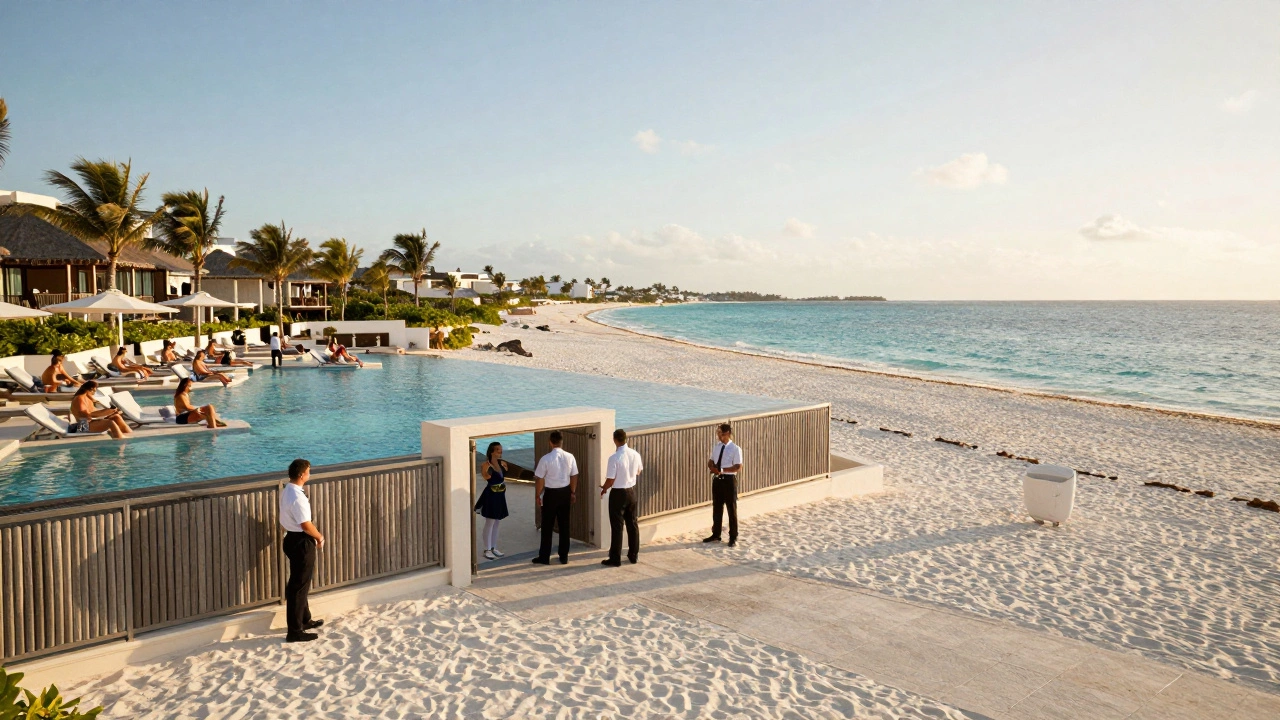
When you hear "Mexico all-inclusive," you probably picture white sand, turquoise water, and a drink with a tiny umbrella. But right after that comes the question: Is it safe to go to Mexico all-inclusive? The answer isn’t yes or no. It’s more like, "It depends-here’s what you need to know." Most all-inclusive resorts in Mexico are built like fortified bubbles. They have their own security teams, private beaches, gated entrances, and staff who live on-site. You won’t see armed guards at the pool, but you’ll notice the fences, the checkpoints, and the fact that no one without a wristband can walk in. These places aren’t just hotels-they’re self-contained resorts designed to keep guests in, and trouble out. Let’s be clear: you’re not going to wander into a cartel-controlled neighborhood and come out fine. But you also don’t need to. The whole point of an all-inclusive is that you rarely leave the property. You eat, swim, drink, and nap inside the resort. The few times you do leave-say, for a guided snorkeling trip or a short taco tour in a nearby town-it’s usually with a reputable tour operator who knows the routes and the risks. Here’s what the data says. In 2025, over 4.2 million U.S. tourists visited Mexico’s all-inclusive zones in Quintana Roo (Cancún, Playa del Carmen, Tulum) and Riviera Nayarit (Puerto Vallarta, Nuevo Vallarta). The murder rate in those exact resort areas? Lower than in many U.S. cities like Detroit, Baltimore, or St. Louis. That’s not because Mexico is crime-free. It’s because the resorts are isolated from the areas where violence actually happens. Crime in Mexico isn’t random. It’s targeted. Cartels fight over drug routes, not tourists. Tourists are bad for business. They bring police attention, media coverage, and pressure from the U.S. government. So the cartels have a clear incentive to leave resorts alone. You’re not a target-you’re an asset. That said, there are real risks if you step outside the bubble. In 2024, a group of Americans got into a car in Playa del Carmen without checking their driver’s credentials. They ended up in a robbery. Another couple took an unlicensed taxi to a beach club and were held up at gunpoint. These weren’t resort attacks. They were poor decisions made far from the safety net. The safest all-inclusive experiences happen when you treat the resort like your home base and stick to approved activities. Book excursions through the resort. Use their shuttle service. Don’t wander off alone at night. Don’t flash expensive jewelry. Don’t accept rides from strangers. These aren’t warnings from a travel brochure-they’re basic rules you’d follow in any unfamiliar city. Some resorts even offer free safety briefings. You’ll learn how to spot a fake police officer, what to do if you lose your passport, and which local numbers to call. These aren’t gimmicks. They’re practical tools. One resort in Cancún started offering them after three guests got scammed by fake tour guides. The number of incidents dropped by 87% in six months. What about the news stories? You’ve seen headlines: "Tourist Found Dead in Mexico." "Violence Erupts Near Resort." Those stories are real-but they’re almost never about the resorts themselves. They’re about travelers who ignored warnings, took risky shortcuts, or got caught in crossfire in areas far from tourist zones. The Mexican government knows this. That’s why they’ve invested over $200 million since 2022 into a program called "Safe Tourism Corridors." It includes 24/7 surveillance, joint patrols with U.S. federal agents, and emergency response teams stationed at every major resort. If something happens, help arrives in under 12 minutes. That’s faster than in many U.S. suburbs. And here’s something most people don’t realize: the resorts have their own hospitals. Not clinics. Full-service hospitals with English-speaking doctors, trauma units, and ambulances on standby. You can get your appendix removed, your broken arm set, or your dehydration treated-all without leaving the property. So, is it safe? Yes-if you respect the boundaries. No-if you treat it like a backpacking trip in a foreign country. The resorts aren’t perfect. There have been thefts. There have been overpriced drinks. There have been rude staff. But violent crime against guests inside the gates? Extremely rare. A 2025 study by the Mexican Tourism Board tracked 1.8 million guest stays across 127 all-inclusive resorts. Only 12 cases of violent crime were reported. All 12 involved guests who left the resort without authorization. Zero incidents occurred inside the resort boundaries. If you’re still nervous, pick a resort with a U.S. or Canadian brand. Resorts owned by Hyatt, Marriott, or Apple Leisure Group have stricter safety standards than local operators. They use American-style security protocols, background checks for staff, and real-time monitoring systems. Bottom line: Mexico’s all-inclusive resorts are among the safest vacation spots in the world-if you stay inside. You don’t need to be paranoid. You just need to be smart. Don’t wander. Don’t take risks. Don’t assume "it won’t happen to me." It won’t… as long as you don’t go looking for trouble. If you want peace of mind, book a resort with a direct beach, a private pool, and a security team that checks IDs at every entrance. That’s not luxury. That’s just good planning. You’re not signing up for danger. You’re signing up for a vacation where the biggest risk is sunburn-and maybe a hangover.