Cottage Room & Sleep Calculator
How Many Rooms Do You Need?
Cottages often have fewer rooms than you might expect, but can sleep more people than the room count suggests. Calculate your needs based on group size and preferences.
Your Group
Your Results
Enter your group size to see results
3
Typical rooms needed
Most cottages have 2-4 rooms total. This calculation shows minimum rooms needed based on your group size.
How Cottages Work
Unlike modern homes, cottage room counts don't always match sleeping capacity:
- Classic cottages (2-3 rooms): Often have 1 bedroom with sleeping space for 2-4 people via lofts or fold-out furniture
- Modernized cottages (4-5 rooms): Typically have 2 bedrooms plus flexible sleeping space
- Family-focused: Look for properties with built-in bunk beds or convertible living areas
Always check the actual sleeping arrangements rather than room count alone.
When people picture a country cottage, they often imagine a cozy, charming little home with a thatched roof, flower boxes, and a stone chimney. But when it comes to the actual number of rooms, the answer isn’t as simple as it sounds. There’s no official rulebook for cottages-what counts as a room, how big it should be, or how many you’ll find depends on location, era, and purpose. Still, if you’re planning a getaway, buying one, or just curious, here’s what you’re likely to run into in a typical country cottage today.
What Counts as a Room?
First, let’s clear up a common misunderstanding. In real estate, a room usually means a space with a door that’s used for living, sleeping, or cooking. That means kitchens, bedrooms, and living rooms count. Bathrooms don’t. Hallways, closets, and utility rooms usually don’t either. So if someone says their cottage has three rooms, they’re not counting the bathroom or the pantry. They’re talking about the main functional spaces.
That’s why you’ll hear conflicting answers. A 19th-century English cottage might have just two rooms: one for cooking and eating, one for sleeping. But a modern renovation in the Lake District might have four or five. It all depends on how it’s been updated.
The Classic Cottage Layout
Most traditional country cottages built before the 1950s follow a simple pattern. You’ll typically find:
- One main living area (kitchen and sitting room combined)
- One or two bedrooms
- One bathroom (often added later)
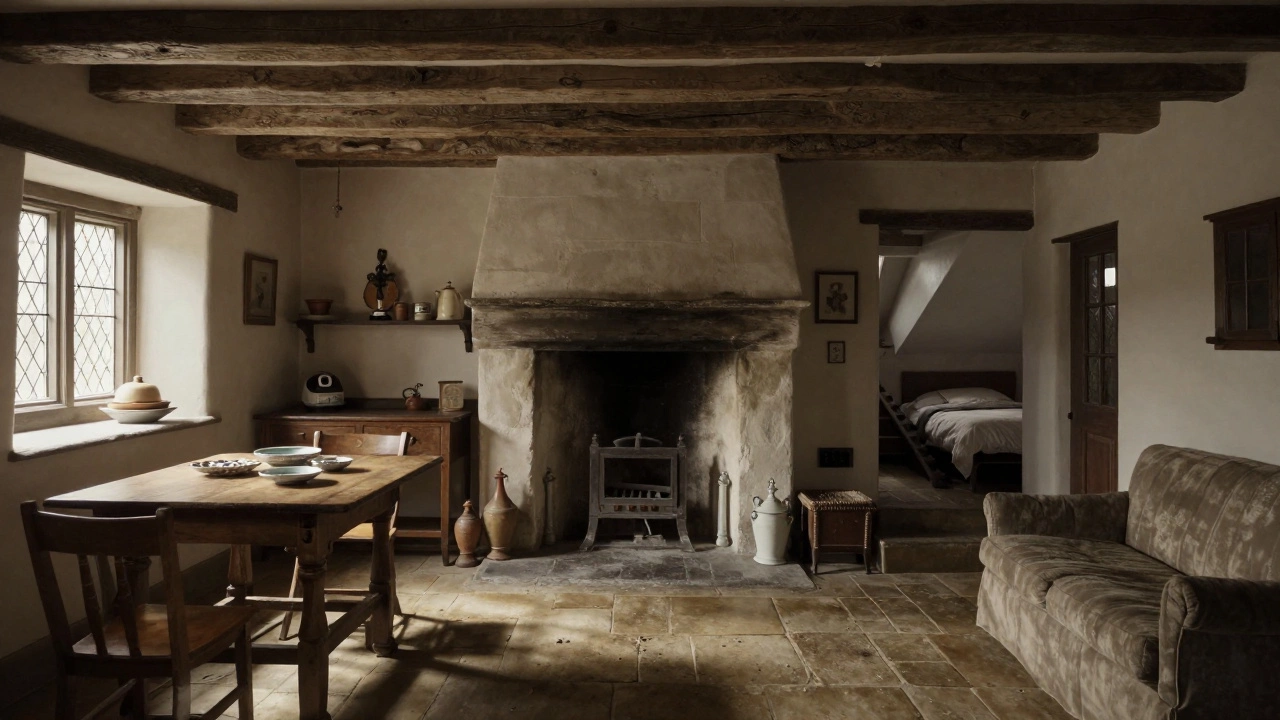
That’s three to four rooms total. The kitchen isn’t separate-it’s part of the living space. In older cottages, the fireplace served both heating and cooking, so the whole ground floor was one open area. Bedrooms were tucked upstairs, sometimes under low, sloping ceilings. You might need to duck your head in the hallway.
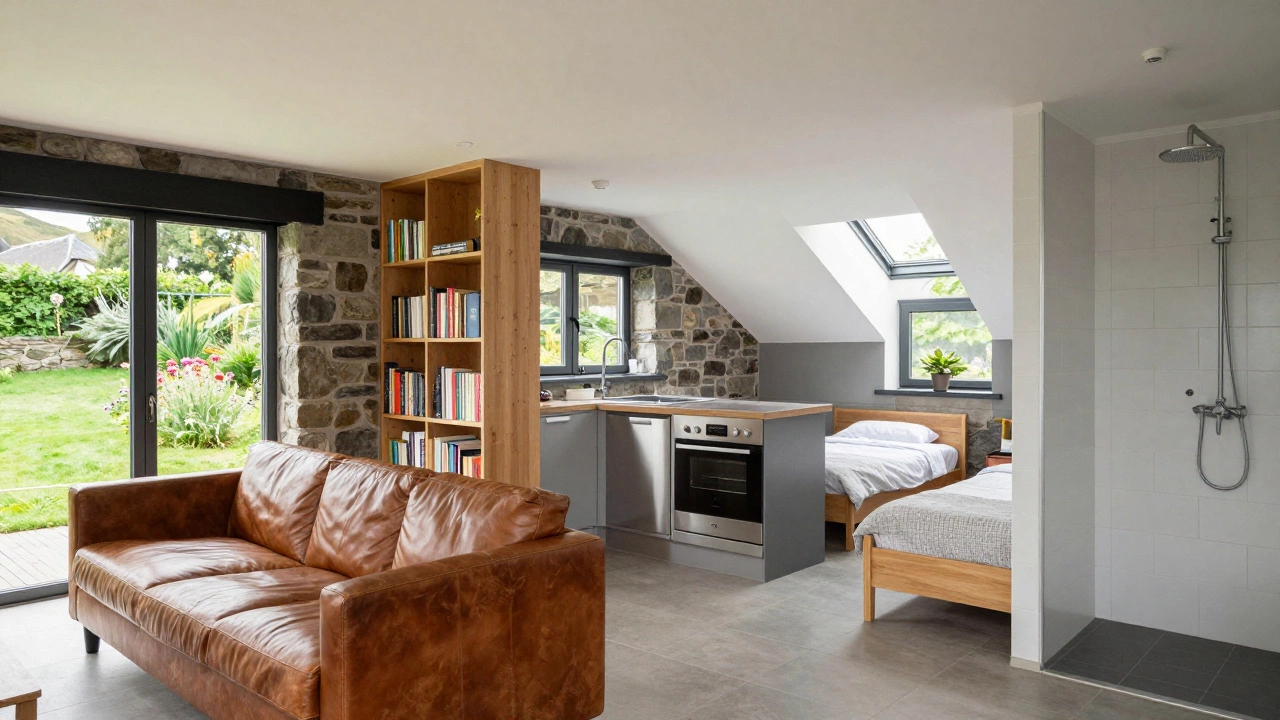
Modern cottages, especially those built or renovated in the last 20 years, often split the kitchen from the living room. That adds a room. They also add a second bathroom, a home office, or a small sunroom. So now you’re looking at five or six rooms.
Size Matters-But Not How You Think
Don’t assume a bigger cottage means more rooms. Many country cottages are intentionally small. In the UK, the average size of a traditional cottage is around 60 to 80 square meters (650 to 860 square feet). That’s smaller than a standard studio apartment in New York. Yet, it can still feel spacious because of high ceilings, large windows, and clever storage.
Here’s a real example: A 70-square-meter cottage in Devon, England, has:
- One open-plan kitchen/living room
- One bedroom upstairs
- One loft space used as a reading nook (not counted as a bedroom)
- One bathroom
That’s three rooms. But it sleeps four people. Why? Because the loft has a fold-out bed. The bathroom has a shower and toilet. The kitchen has a dining table. It’s efficient. That’s the cottage way.
Regional Differences
Not all cottages are the same. What you’ll find in Ireland, Scotland, or New Zealand isn’t identical to what you’d see in France or the American Midwest.
In England and Wales, cottages often stick to two or three rooms. The National Trust lists over 300 historic cottages, and 72% have fewer than four rooms. Many were built for farmworkers-just enough space to live, not to entertain.
In Scotland, you’ll see more two-story cottages with a separate kitchen, two bedrooms, and a sitting room. That’s four rooms. Some even have a scullery (a small room for washing dishes) and a pantry.
In New Zealand, where cottages are often weekend getaways, they tend to be more modern. A typical cottage here might have:
- Open-plan kitchen/living/dining
- One or two bedrooms
- One bathroom
- A small deck or porch (not counted as a room)
That’s three or four rooms. But because they’re often built on sloping land, the layout can be tricky. The bedroom might be on the ground floor, while the kitchen is up a few steps. It’s not about square footage-it’s about how the space works.
What About Modern Cottages?
Today, many people buy old cottages and completely rebuild them. They add insulation, solar panels, and ensuite bathrooms. Some even turn a single cottage into a two-unit guesthouse. So you’ll see cottages with five, six, even seven rooms.
But here’s the thing: if it’s been heavily modernized, is it still a cottage? Purists say no. A true cottage is defined by its simplicity. It’s not about luxury-it’s about charm, history, and connection to the land.
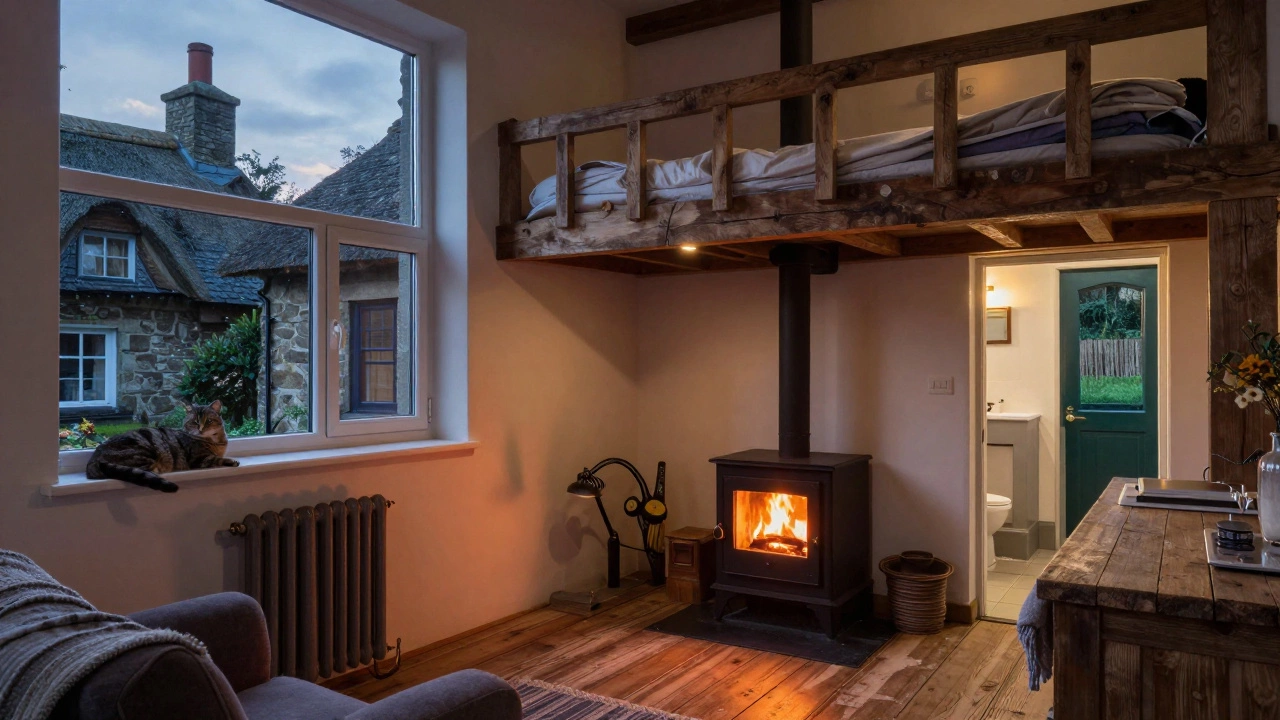
Most people who love cottages don’t want a five-star hotel. They want a place where the floorboards creak, the window doesn’t shut all the way, and the wood stove takes 20 minutes to warm up. That kind of place doesn’t need many rooms. It just needs to feel like home.
What’s Typical Today?
If you’re looking at cottages for rent or sale right now, here’s what you’ll most commonly find:
- 2-3 rooms: The classic, unchanged cottage. Perfect for solo travelers or couples.
- 4 rooms: The most common modernized version. Includes a separate kitchen, one or two bedrooms, and a bathroom.
- 5+ rooms: Usually a renovation or expansion. Might include a study, a second bathroom, or a loft bedroom.
Very few cottages have more than five rooms. Anything larger usually stops being called a cottage and becomes a country house, a farmhouse, or a vacation home.
Why So Few Rooms?
There’s a reason cottages stay small. Historically, they were built for one family, not for parties. Heating was expensive. Water had to be carried. Cooking was done on a single stove. There was no need for extra space.
Today, that simplicity is part of the appeal. You don’t need a TV in every room. You don’t need a walk-in closet. You need a warm bed, a good book, and a view of the hills. The charm isn’t in the square footage-it’s in the quiet.
What to Look For When Choosing a Cottage
If you’re booking or buying, here’s what really matters:
- Check how many beds are available-not how many rooms
- Ask if the kitchen is separate or combined with the living area
- Confirm if there’s a bathroom with a shower (some older cottages have only a toilet)
- Look at the layout on a floor plan. A cottage with a loft might sleep four even if it has only two rooms
- Don’t assume bigger is better. A 4-room cottage with a wood stove and a garden is often more comfortable than a 6-room one with no character
Some of the best cottages I’ve stayed in had only two rooms. But they had a fireplace, a well-stocked bookshelf, and a view of the river. That’s all you need.
How many bedrooms does a typical cottage have?
Most country cottages have one bedroom. Larger or modernized cottages may have two. Three bedrooms is rare and usually means the property has been expanded or converted from a larger house. If you’re booking a cottage for a family, check if there’s a loft, pull-out sofa, or additional sleeping nook-many cottages sleep more people than they have bedrooms.
Do cottages always have a bathroom?
No. Many historic cottages, especially those built before 1950, didn’t have indoor plumbing. Today, most rental cottages do include a bathroom, but some rustic ones-especially in remote areas-may only have a toilet and a sink. Always check the listing details. If it says "shared bathroom," that means it’s not inside the cottage.
Can a cottage have more than 5 rooms?
Yes, but it’s unusual. If a cottage has six or more rooms, it’s likely been significantly renovated or expanded-perhaps with an attached annex, a converted barn, or an added floor. At that point, it may technically be called a country house rather than a cottage. The term "cottage" usually implies modest size and simplicity.
Are cottages good for families?
Absolutely-but not because they’re large. Many cottages are designed for couples or small families. If you’re traveling with kids, look for features like a loft with a bed, a fold-out sofa in the living area, or a separate sleeping nook. Some cottages even have bunk beds or cots available. The key is to read the sleeping arrangements carefully, not just the number of rooms.
Why do some cottages feel bigger than they are?
Cottages often feel roomier because of high ceilings, large windows, open layouts, and minimal clutter. Many were built with natural light in mind, and they use clever storage-like under-stair cupboards or built-in benches-to save space. A 60-square-meter cottage with a kitchen-living area and one bedroom can feel as spacious as a 90-square-meter apartment with divided rooms.