Cottage Floor Height Calculator
Calculate how many floors your cottage can have based on local height restrictions and ceiling heights. Note: Most building codes focus on height limits (typically 11 meters in New Zealand), not floor count.
Enter height limit and ceiling height to see how many floors your cottage can have.
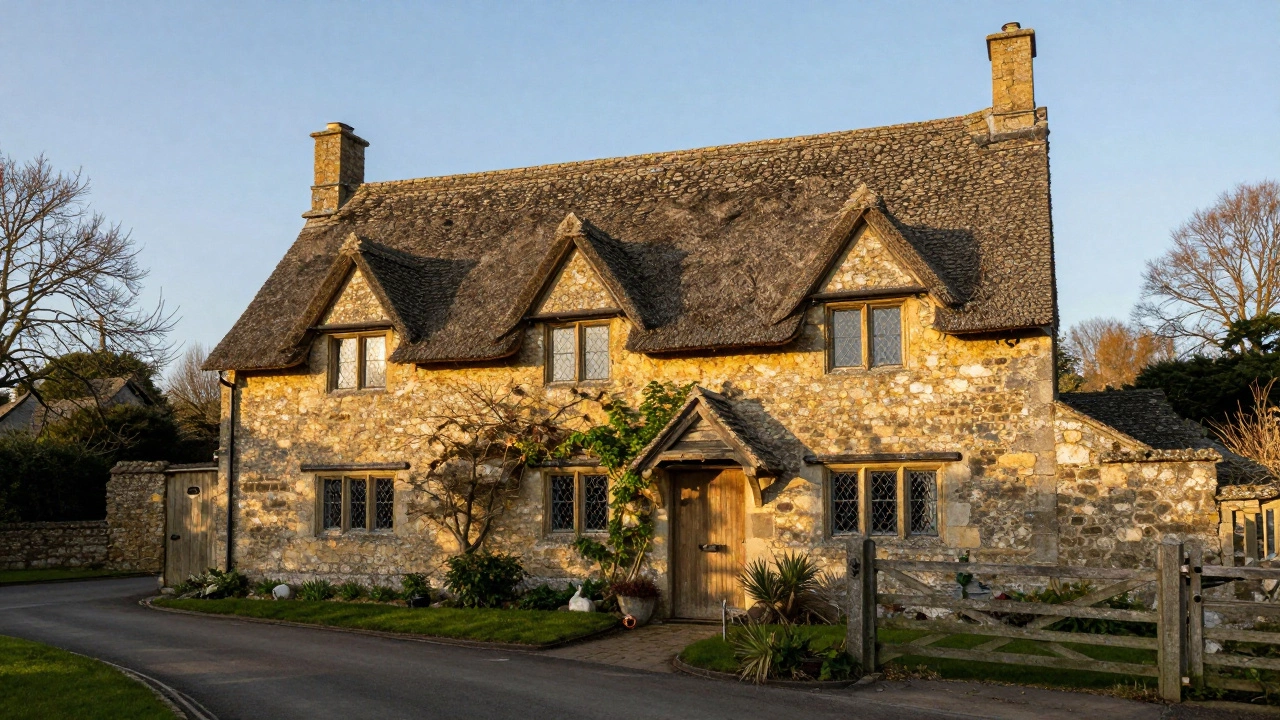
When you picture a cottage, you probably imagine a cozy, low-slung home with a thatched roof, a stone chimney, and maybe a small garden. That image sticks because for centuries, cottages were built to be simple, functional, and close to the ground. But times have changed. Today, people are building cottages with two, even three floors - especially in places like New Zealand, where land is tight and views are everything. So how many floors can a cottage actually have? The answer isn’t fixed. It depends on local rules, your budget, and what you really need.
Tradition vs. Reality
Historically, cottages were one-story homes. That wasn’t just style - it was necessity. Building materials were heavy, foundations were shallow, and stairs were a luxury. In rural England, Ireland, or Scotland, a single floor meant you could heat the whole place with one fireplace, carry water from the well without climbing, and keep the structure stable on uneven ground. Even in places like New Zealand’s South Island, early settlers built single-story cottages because timber was plentiful, but engineering know-how wasn’t.
Today, those limits are gone. Modern foundations, steel framing, and insulation mean you can build upward without risking collapse. But here’s the catch: if you call it a cottage, people still expect it to feel like one. A three-story timber-and-stone structure with floor-to-ceiling windows might technically be a cottage, but if it looks like a mini-mansion, you’ve lost the soul of the word.
What Do Building Codes Say?
In New Zealand, the Building Code doesn’t ban cottages from having multiple floors. But it does set limits based on height, not floor count. For example, in rural zones, the maximum building height is often capped at 11 meters - roughly three stories if you’re using standard ceiling heights (2.4 meters per floor). But there’s a loophole: if your land is on a slope, you can build into the hillside and legally count one floor as ground level even if it’s halfway up a cliff. That’s how some homes in Queenstown end up with three levels but still meet code.
Local councils have their own rules too. In Nelson, a cottage with two full floors and a loft might be allowed if it doesn’t exceed 100 square meters per level. In Otago, though, some rural districts restrict new builds to one story unless you’re replacing an existing two-story structure. Always check with your district plan - it’s not just about legality, it’s about fitting in.
Practical Limits: Why Most Cottages Stick to One or Two Floors
Even if the law lets you build three floors, most people don’t. Here’s why:
- Stairs take up space - A full staircase eats up 8-12 square meters of floor area. In a 60-square-meter cottage, that’s 15-20% of your living space gone.
- Heating gets harder - Heat rises. A two-story cottage needs better insulation, double-glazed windows, and maybe a heat pump. A single-story cottage? One wood burner does the job.
- Accessibility matters - If you’re aging in place, or have young kids, stairs become a safety issue. Many modern cottages now include a ground-floor bedroom and bathroom just to avoid future problems.
- Cost jumps fast - Adding a second floor increases foundation, roofing, and structural costs by 40-60%. A two-story cottage might cost $450,000 where a single-story version costs $280,000.
That’s why most cottages today are either one floor or one-and-a-half. The half-floor? A loft with a low ceiling - perfect for storage, a reading nook, or a kid’s room. It doesn’t count as a full floor under building codes, but it adds usable space without the cost.
Real Examples: Cottages With Two Floors
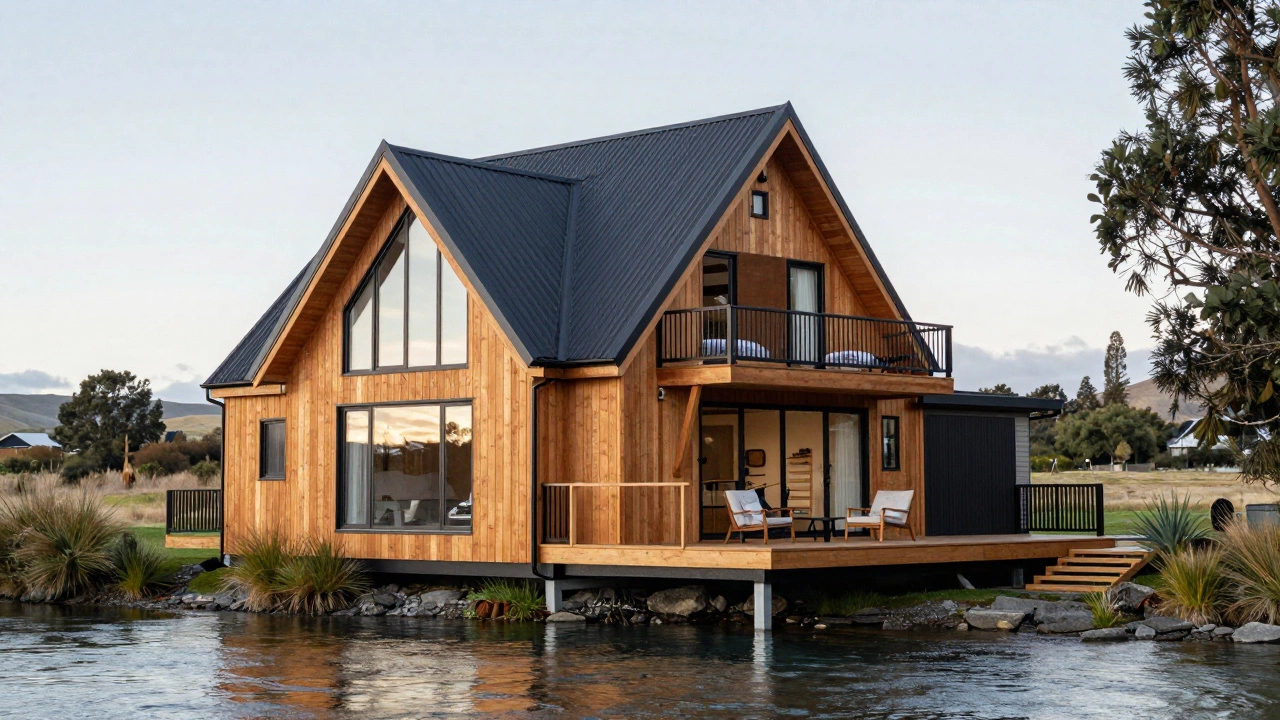
There are plenty of two-story cottages that work beautifully. Take the Whanganui Cottage - built in 2023 on a narrow riverbank plot. The owner needed more space but didn’t want to lose the garden. They built a two-story cottage with a steeply pitched roof, timber cladding, and a wraparound deck. The ground floor has the kitchen, living room, and bathroom. The upper floor has two bedrooms and a small balcony. It looks like a cottage from the outside. Inside, it’s smart, efficient, and cozy.
Another example: a restored 1890s cottage in Nelson. The original was one story. The owners added a loft-style second floor with exposed beams and skylights. It’s not a full floor - the ceiling slopes down to 1.6 meters on the edges - but it’s used as a sleeping area. Council approved it as a single-story building with a loft. That’s the sweet spot.
When Three Floors Make Sense
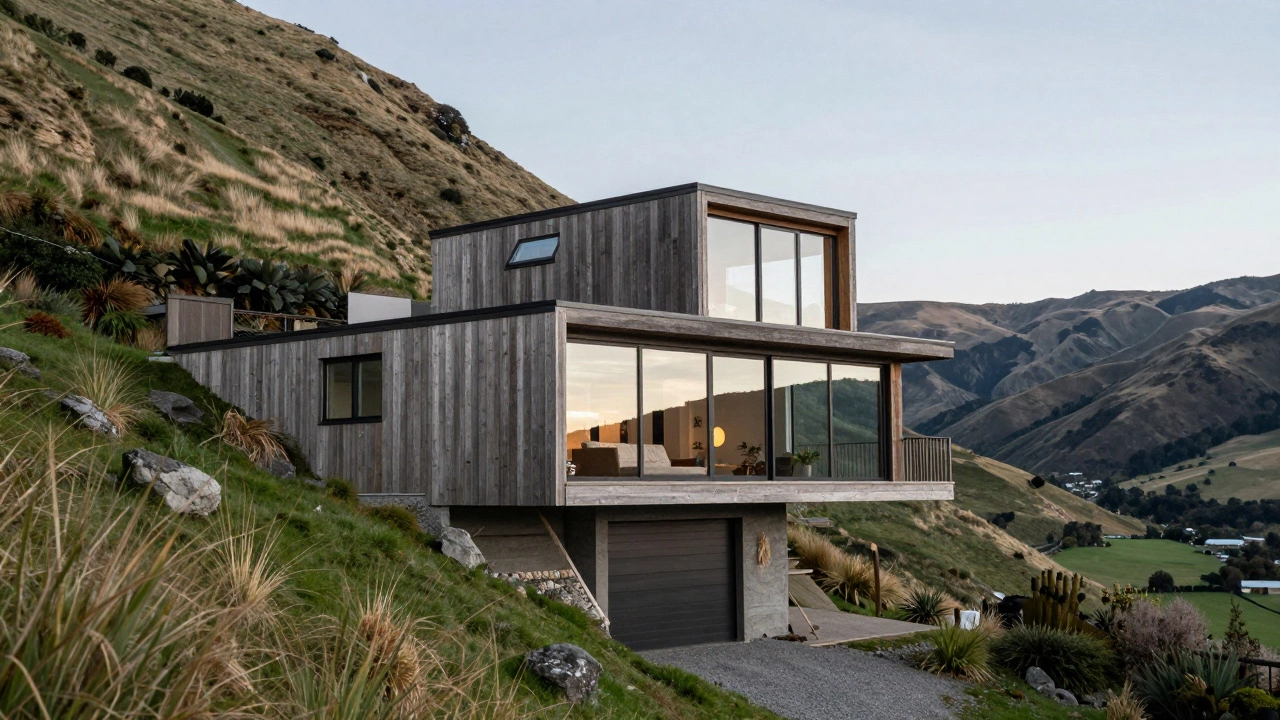
Three floors? Rare. But not impossible. One client in Marlborough built a three-level cottage on a steep hillside. The bottom level is a garage and utility room, buried into the slope. The middle level is the main living space, with windows facing the valley. The top level is a small bedroom with a skylight. It’s not a tower - it’s a terraced home that follows the land. The council approved it because it didn’t exceed the 11-meter height limit and looked like part of the landscape.
But here’s the truth: if you’re thinking three floors, you’re probably building a house - not a cottage. A cottage is meant to feel grounded, quiet, and humble. Three floors start to feel like a statement. And that’s okay - if that’s what you want. Just don’t call it a cottage if it’s really a small house.
What’s the Sweet Spot?
For most people, the best choice is one full floor plus a usable loft. It keeps costs down, heating simple, and the charm alive. If you need more space, expand outward - add a deck, a greenhouse, a studio shed. That’s what traditional cottages did. They didn’t go up. They went out.
And if you’re in a place like Devonport, where views are everything? A two-story cottage with a rooftop deck can give you the sky without losing the soul. Just keep the materials natural: timber, stone, clay tiles. Let the shape stay low. And never forget: a cottage doesn’t need to be big to be beautiful.
Quick Summary
- Most cottages have one floor - that’s the classic look and the most practical.
- Two floors are possible and common in modern builds, especially on tight plots or slopes.
- Three floors are rare, expensive, and often not called cottages anymore.
- Lofts count as half-floors and are a smart way to add space without breaking rules.
- Building codes focus on height, not floor count - always check your local district plan.
Can a cottage legally have three floors?
Yes, but it’s uncommon and often not called a cottage anymore. In New Zealand, building codes limit height (usually 11 meters), not floor count. A three-story cottage would need careful design - like building into a hillside - to stay under the limit. Most councils prefer low-profile buildings in rural zones, so even if it’s legal, it might not be approved without special permission.
Is a loft considered a second floor?
No, not usually. A loft is considered a partial floor if it has less than 1.8 meters of headroom around the edges. Most building codes allow lofts without counting them as full floors, as long as they’re not used as primary bedrooms. That’s why many cottages use lofts for storage, reading nooks, or kids’ rooms - they add space without triggering extra fees or inspections.
Do I need a special permit to build a two-story cottage?
It depends. In rural areas, you’ll need to check your district plan. Some places require resource consent for any building over one story. Others allow it if the total height stays under 11 meters and the footprint doesn’t exceed 100 square meters per level. Always talk to your local council before you start - it’s cheaper than tearing down a wall later.
Why do cottages usually have only one floor?
Tradition, cost, and practicality. Early cottages were built by hand with local materials - heavy timber, stone, and thatch. One floor meant easier heating, simpler construction, and better stability on uneven ground. Today, it’s still cheaper, easier to maintain, and more energy-efficient. Plus, it keeps the cozy, grounded feel people love.
Can I add a second floor to an existing single-story cottage?
Yes - but it’s not a simple add-on. You’ll need to reinforce the foundation, upgrade the roof structure, and often improve insulation and windows. In many cases, the existing walls can’t support the extra load. A structural engineer should check it first. If done right, it can double your space without expanding your footprint - and keep your cottage’s charm intact.