
Business Hotel vs. Resort Finder
Answer these questions about your upcoming trip to find out if you need a functional hub for productivity or an escape for relaxation.
Quick Comparison
| Business Hotel | Resort |
|---|---|
| Fast Wi-Fi | Spa & Pool |
| City Center | Scenic Nature |
| Efficiency | Relaxation |
| Quiet Rooms | Live Activities |
Not sure? Take the quiz to see which fits your itinerary best.
Result
AnalysisRecommendation
Why This Fits
You’re staring at two booking options on your screen. One promises a gym, a conference room, and a quick check-in. The other boasts a spa, a pool bar, and an all-day buffet. You might be wondering which one actually fits your plans. This is the classic clash between a business hotel is a type of accommodation designed primarily for corporate travelers and professionals attending meetings or events. and a resort is a destination-focused establishment that provides comprehensive leisure facilities and entertainment on-site.
The difference isn’t just about decor. It’s about what you expect to do with your time. If you need to send emails, attend back-to-back meetings, and sleep eight hours before flying out, a business hotel is your tool. If you want to forget your calendar, swim laps, and eat dinner by the water, a resort is your escape. Getting this wrong can ruin a trip, whether it’s a high-stakes negotiation or a long-awaited vacation.
The Core Purpose: Work vs. Play
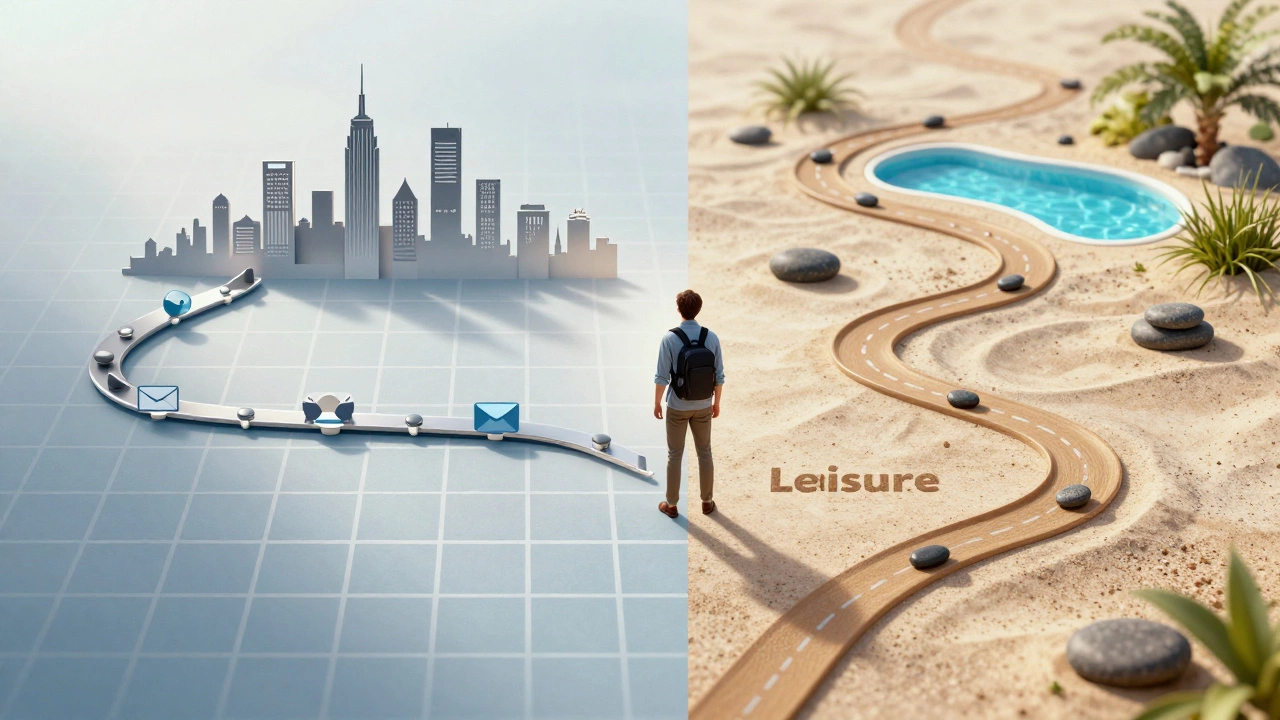
The biggest divide lies in the primary goal of the stay. A business hotel exists to support productivity. Every feature is built to help you work efficiently or rest effectively so you can work the next day. Think of it as a functional hub. The rooms are quiet, the Wi-Fi is fast and secure, and the staff knows how to handle urgent printing needs or early morning wake-up calls.
In contrast, a resort is designed to keep you on the property. Its purpose is leisure. The layout encourages wandering-past the pool, to the restaurant, maybe down to the beach or golf course. Time moves slower here. There is no pressure to leave. The entire ecosystem supports relaxation, recreation, and socialization rather than professional output.
- Business Hotel Focus: Efficiency, connectivity, convenience, and rest.
- Resort Focus: Entertainment, relaxation, amenities, and immersion.
If you book a business hotel expecting a vacation vibe, you’ll likely feel underwhelmed by the stark corridors and lack of activities. If you book a resort expecting a quiet place to write a report, you’ll probably get distracted by the live music and kids’ club noise.
Location and Accessibility
Where these properties sit tells you a lot about their function. Business hotels are almost always located in city centers, near financial districts, convention centers, or major airports. They prioritize accessibility. You want to be able to walk to a meeting or catch a taxi quickly. Proximity to public transport hubs is a key selling point. Being downtown means you are surrounded by offices, restaurants, and services that cater to professionals.
Resorts, however, often remove themselves from the hustle. They are frequently found in scenic locations-coastlines, mountains, islands, or rural areas. The journey to a resort is part of the experience. You might drive through winding roads or take a ferry to get there. Once you arrive, you are somewhat isolated from the outside world. This separation is intentional. It creates a bubble where you don’t have to think about traffic or city noise.
| Feature | Business Hotel | Resort |
|---|---|---|
| Typical Setting | Urban core, airport vicinity | Coastal, mountain, rural, island |
| Transport Access | High (public transit, taxis) | Low (often requires private car/shuttle) |
| Surroundings | Offices, shops, restaurants | Nature, beaches, recreational grounds |
| Noise Level | Moderate to high (city sounds) | Low (natural sounds, controlled environment) |
Amenities and Facilities
The amenities inside each type reflect its purpose. In a business hotel, you will find a business center with printers and copiers. There are often small meeting rooms available for rent. The fitness center is usually compact but equipped with standard cardio machines for those who refuse to skip workouts while traveling. The breakfast is typically a quick affair-coffee, pastries, eggs-designed to fuel you for the day ahead. Room service might be limited to late-night snacks.
Resorts go all-out with amenities. Expect multiple swimming pools, including infinity pools or heated ones. There are often full-service spas offering massages and treatments. Dining is a major component; resorts may have three or more restaurants, bars, and lounges. You might find tennis courts, golf courses, sailing clubs, or guided hiking tours. The goal is to provide everything you need without leaving the premises. Entertainment options like live shows, cooking classes, or kids’ clubs are common.
Consider the Wi-Fi. In a business hotel, reliable, high-speed internet is non-negotiable. It is often free and robust enough for video conferencing. In a resort, Wi-Fi might be spotty in certain areas, or access might be restricted to lobby zones unless you pay extra. Some luxury resorts even offer "digital detox" packages where technology is discouraged entirely.
Room Design and Comfort
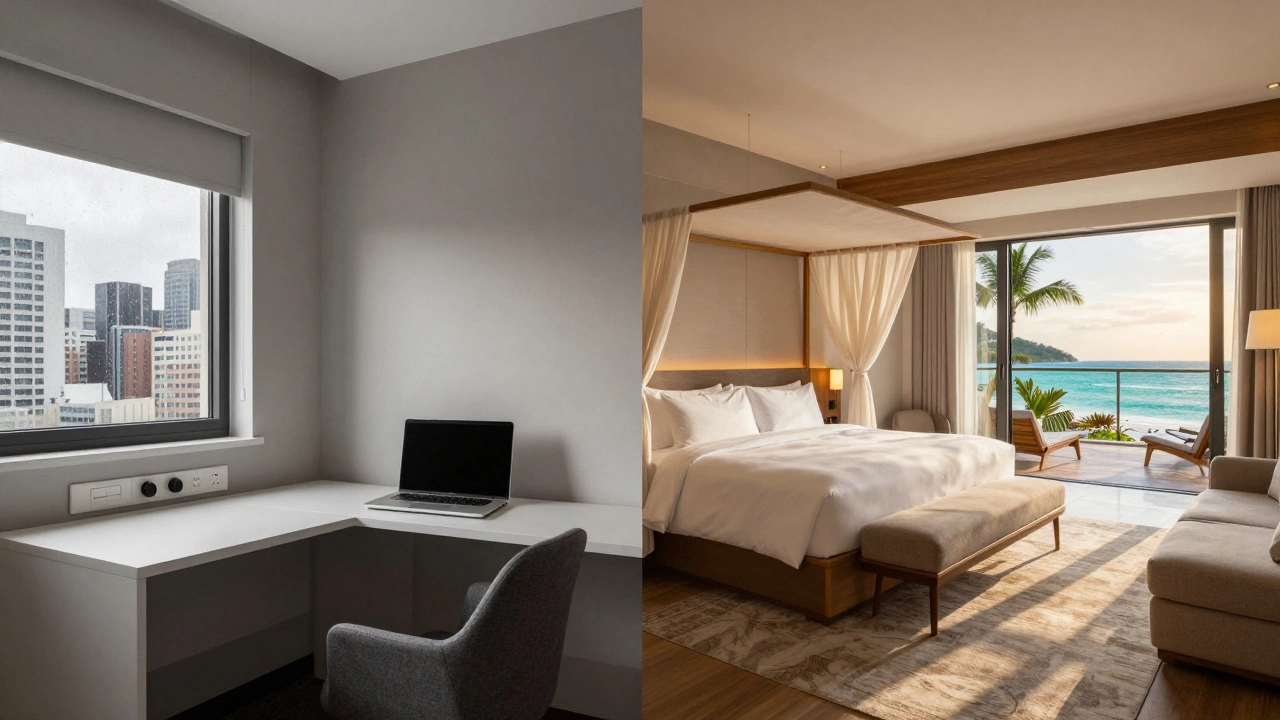
Walk into a business hotel room, and you’ll see a desk. It’s prominent, well-lit, and has plenty of outlets. The bed is comfortable but straightforward, aimed at providing good sleep. Storage space is optimized for suitcases and briefcases. The color palette is often neutral-grays, blues, whites-to minimize distraction and make cleaning efficient. Soundproofing is critical because you need silence to rest after a noisy commute.
Resort rooms focus on atmosphere and view. Balconies or patios are standard, offering vistas of the ocean, jungle, or garden. Furniture might include lounge chairs or hammocks. Decor is thematic, reflecting the local culture or natural surroundings. Beds are often larger, sometimes with canopy frames or luxurious linens. The emphasis is on comfort and aesthetic pleasure rather than utility. You aren’t expected to work here; you are expected to relax.
Service Style and Staff Interaction
Staff at business hotels are trained for efficiency and discretion. They know you are busy. Check-in and check-out are streamlined. Housekeeping respects your privacy and follows strict protocols. If you request something, they deliver it quickly. The interaction is professional and minimal. You don’t need chatty staff when you have a deadline looming.
At a resort, service is more personal and engaging. Staff members often know your name. Concierges spend time planning your daily activities, booking excursions, or recommending hidden gems. Servers might chat with you during meals. The vibe is friendly and hospitable. They want you to feel welcomed and entertained. This level of engagement can be charming on vacation but annoying if you just want to shower and sleep.
Cost Structure and Value
Pricing models differ significantly. Business hotels charge for the room and basic necessities. You pay extra for parking, meals, and meeting space. However, many companies have corporate rates that lower the cost. The value comes from convenience and location. You are paying to save time.
Resorts often use higher base prices that include more amenities. Some operate on an all-inclusive model where food, drinks, and activities are bundled into the rate. Others charge à la carte for every experience. While the nightly rate might seem higher, you could end up spending less overall if you utilize the included perks. Conversely, if you ignore the amenities, you are paying a premium for a room you barely use. Always calculate the total cost based on how you plan to spend your days.
When to Choose Which
Deciding between the two depends entirely on your itinerary. Ask yourself: What is the main activity?
Choose a business hotel if:
- You are attending a conference, trade show, or client meeting.
- You need to work remotely for several hours daily.
- You are traveling on a tight schedule with early flights.
- You prefer urban exploration and dining out at local restaurants.
- You value speed, security, and reliable internet above all else.
Choose a resort if:
- You are taking a vacation, honeymoon, or family holiday.
- You want to disconnect from work and stress.
- You enjoy on-site activities like swimming, spa treatments, or sports.
- You prefer not to cook or plan meals extensively.
- You seek a scenic backdrop and a relaxed pace.
Sometimes, lines blur. A "bleisure" trip (business + leisure) might start with a few nights in a business hotel for meetings, followed by a transfer to a nearby resort for the weekend. Planning this split can give you the best of both worlds without compromising either goal.
Can I use a business hotel for a vacation?
Yes, but you might miss out on leisure activities. Business hotels lack the extensive recreational facilities, such as pools, spas, and entertainment programs, that define a resort experience. If your vacation involves exploring the city, a business hotel’s central location is beneficial. However, if you want to relax on-site, it may feel too sterile and functional.
Are resorts suitable for business travelers?
It depends on the nature of your work. If you need a quiet environment for focused tasks, a resort might be distracting due to noise and activities. However, some resorts offer dedicated business wings or meeting facilities. They are better suited for retreats, team-building exercises, or informal client dinners where a relaxed atmosphere is preferred over a formal setting.
Which is more expensive: a business hotel or a resort?
Generally, resorts have higher base prices due to their extensive amenities and prime locations. However, business hotels in major financial hubs can also be very costly. The true cost depends on usage. If you eat out and seek external entertainment, a resort’s inclusive packages might save money. If you only need a bed and workspace, a business hotel is often more cost-effective.
Do business hotels have gyms?
Most mid-range and upscale business hotels have fitness centers. These gyms are typically smaller than those in resorts and focus on essential equipment like treadmills, ellipticals, and weights. They are designed for maintenance workouts rather than comprehensive training sessions. Check the specific hotel’s amenities page to confirm availability and operating hours.
What is a bleisure trip?
Bleisure combines "business" and "leisure." It refers to extending a business trip to include vacation time. Travelers often stay in a business hotel during workdays for convenience and then move to a resort or vacation rental for the remaining days to relax. This approach maximizes efficiency during work hours and ensures proper downtime afterward.