Eco Home Cost-Benefit Calculator
Calculate Your Eco Home Savings
See how much you could save on energy bills with eco-friendly upgrades. Based on real Devonport home data.
Your Savings
When people ask if eco homes are expensive, they’re usually thinking about the upfront price tag. But here’s the truth: eco homes don’t have to cost a fortune - and they often save you money before you even move in. I’ve seen this firsthand in Devonport, where neighbors are swapping old wood-burning stoves for heat pumps, retrofitting insulation in 1950s cottages, and cutting power bills by half. The real question isn’t whether they’re expensive - it’s whether you’re paying more by staying in a regular house.
What Makes a Cottage "Eco-Friendly"?
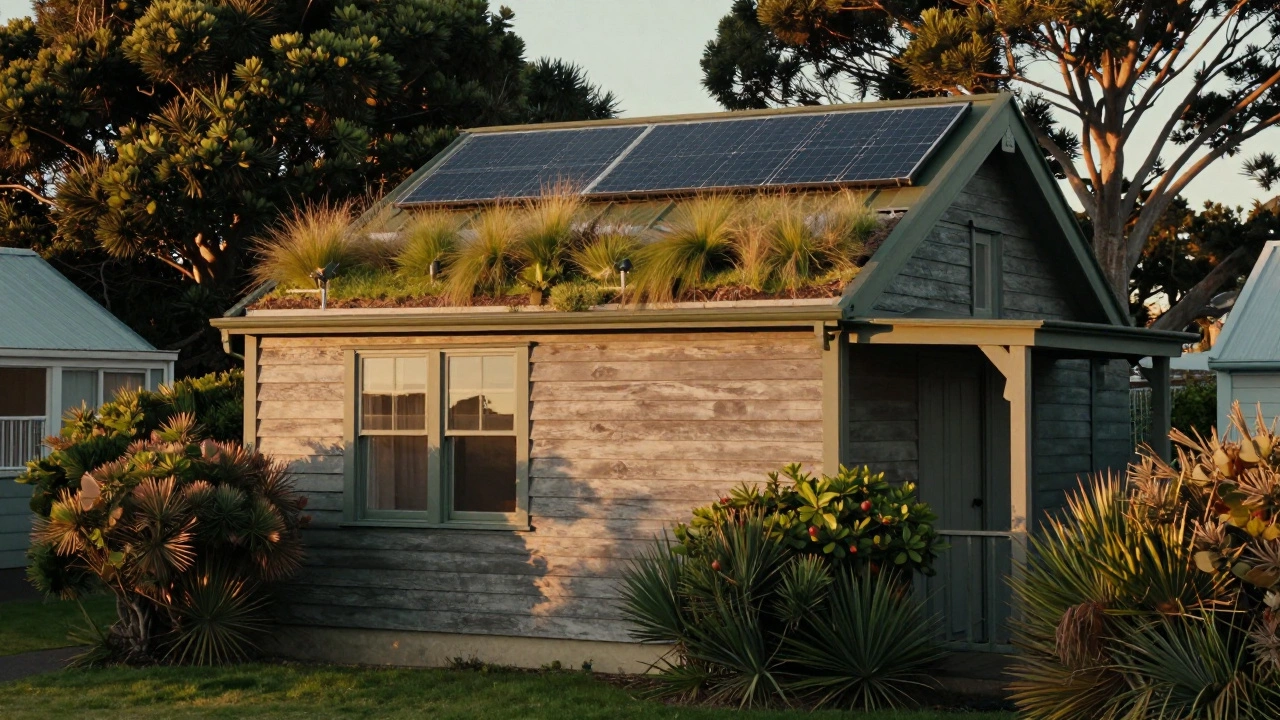
Not every cottage with a solar panel is an eco home. True eco-friendly cottages are built or retrofitted with three core goals: less energy use, fewer emissions, and lower long-term environmental impact. That means materials like recycled steel, sustainably harvested timber, and natural insulation (think sheep’s wool or cellulose) instead of foam plastics. Windows are double or triple glazed, oriented to catch winter sun. Roofs aren’t just sloped - they’re planted with native grasses or covered in solar tiles. Even the paint is low-VOC, so the air inside doesn’t make you sick.It’s not about looking like a futuristic pod. Many of the most effective eco cottages here in Devonport are old, simple structures - 1920s bungalows, seaside cabins - with smart upgrades. One couple I know turned their 80-year-old cottage into a net-zero home for $42,000 in renovations. No fancy tech. Just better insulation, a heat pump, and solar panels on the shed roof.
The Upfront Cost: What You Really Pay
Yes, building a brand-new eco cottage from scratch can cost 10% to 20% more than a standard build. That’s true. But that number doesn’t tell the whole story. In New Zealand, a typical 3-bedroom cottage might cost $600,000 to build. An eco version? Around $660,000. Sounds steep. But here’s what you get:- Insulation levels that meet or exceed NZ Building Code by 50%
- Heat pump heating and cooling (uses 70% less energy than electric heaters)
- Solar panels sized to cover 80-100% of your electricity
- Water tanks and greywater systems that cut municipal water bills by 60%
- Non-toxic, durable materials that last 2-3 times longer
Compare that to a standard home. You’ll need to replace the heating system every 10 years. Your power bill might hit $1,800 a year. Your insulation degrades. Your windows leak. You’re constantly fixing things. The eco home doesn’t just save energy - it saves you from constant repairs.
Retrospective Upgrades: The Smart Way In
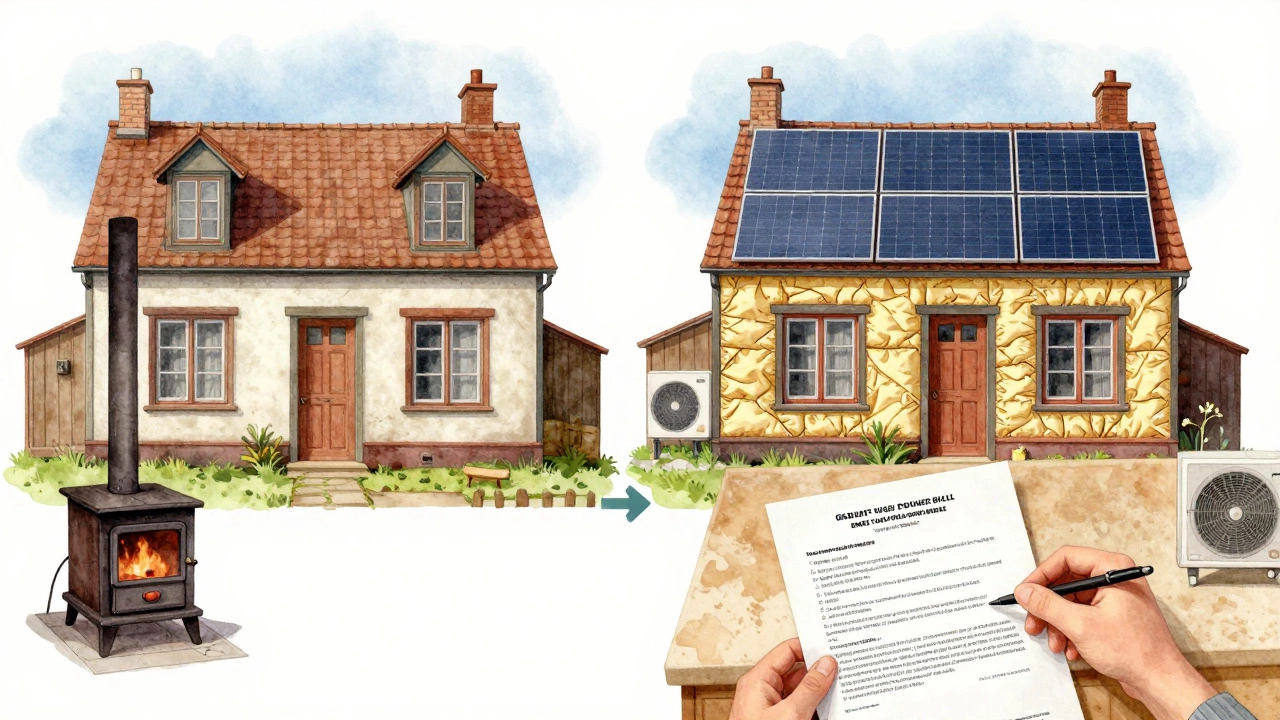
You don’t need to build new. Most eco homes in New Zealand are retrofits. And they’re cheaper. A full retrofit - insulation, windows, heat pump, solar - can cost between $35,000 and $65,000 depending on size. But here’s the kicker: the government gives you up to $10,000 in grants through the Warm Up New Zealand program. Plus, some local councils offer interest-free loans.One homeowner in Devonport did a phased retrofit. First year: added ceiling and wall insulation ($8,000). Second year: replaced windows and installed a heat pump ($18,000). Third year: added 5kW solar ($9,000). Total out-of-pocket: $35,000. Her power bill dropped from $210/month to $18/month. She paid off the cost in under 4 years. Now she’s saving $2,500 a year - tax-free.
Hidden Savings You Can’t Ignore
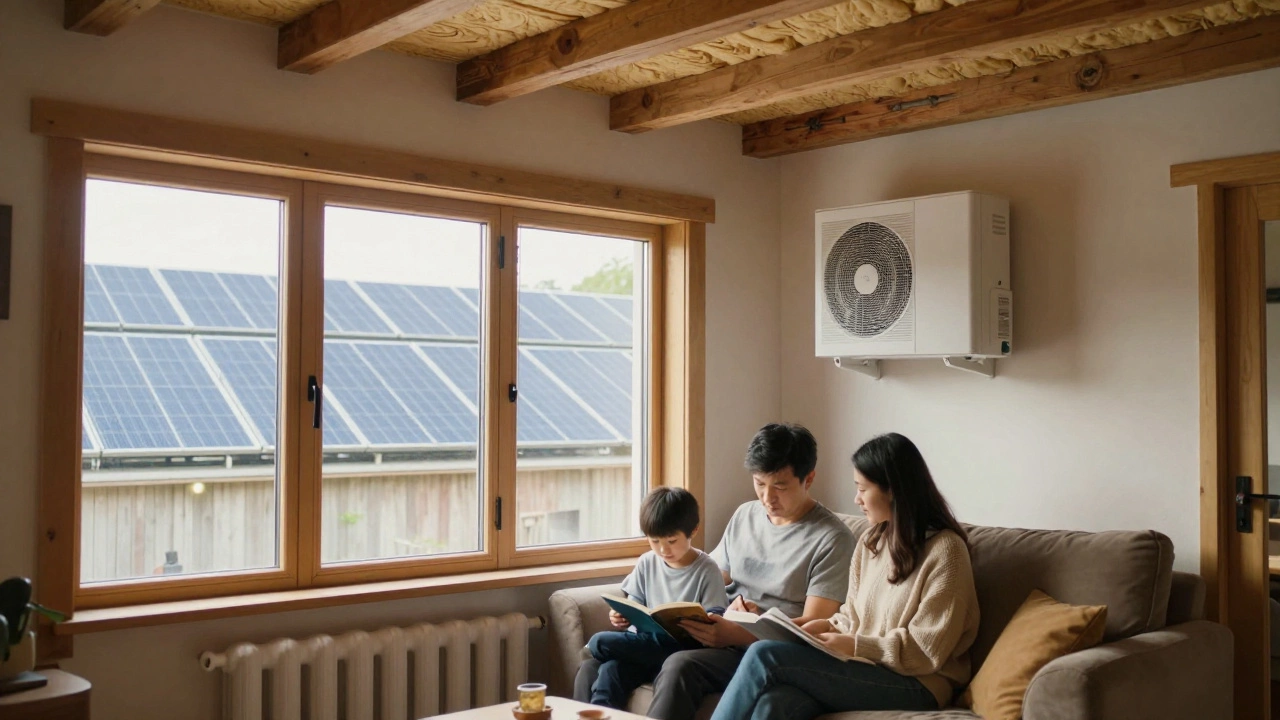
Eco homes don’t just save on electricity. They save on health, insurance, and even resale value.- Health: Better air quality means fewer asthma attacks and allergies. A 2024 study by the University of Otago found eco homes had 40% fewer respiratory issues among residents.
- Insurance: Many insurers offer discounts of up to 15% for homes with fire-resistant materials and storm-resistant designs. That’s $200-$400 a year saved.
- Resale: In 2025, homes with solar panels and energy ratings of 7+ sold 22% faster and for 14% more than non-eco homes in the North Island.
And here’s something most people overlook: time. If you’re spending 3 hours a week heating, cooling, or fixing leaks - that’s 156 hours a year. Time you could spend with family, working, or just relaxing. An eco home gives you back hours, not just dollars.
Myths About Eco Homes
Let’s clear up a few lies you’ve probably heard:- "Eco homes are only for rich people." False. Many are built by low-income families using grants, community loans, and volunteer labor. In Taranaki, a nonprofit built 12 eco cottages for $45,000 each using donated materials and student labor.
- "They look weird." Nope. Most look like ordinary cottages. The difference is inside - the insulation, the windows, the quiet. You won’t know unless you feel the temperature.
- "Solar doesn’t work here." New Zealand gets more sun than Germany - a global leader in solar adoption. Even on cloudy Devonport days, solar panels produce 60% of their rated output.
How to Start Without Going Broke
You don’t need to do everything at once. Start with the biggest energy leak: insulation. If your walls or ceiling are under 100mm, you’re losing heat like a sieve. Adding 150mm of recycled wool insulation costs under $5,000 and cuts heating bills by 30%. Next, swap out old light bulbs for LEDs - they use 85% less power. Then, install a smart thermostat. It learns your habits and cuts energy when you’re out.After that, look into government grants. The Warm Up New Zealand program covers up to 80% of insulation and heating upgrades. The Energy Efficiency and Conservation Authority (EECA) also has free home energy audits. They’ll tell you exactly where to spend your money - and what you can skip.
Real Numbers: What It Actually Costs
Here’s a realistic breakdown for a 90m² cottage in New Zealand:| Feature | Standard Cottage | Eco Cottage |
|---|---|---|
| Upfront Build Cost | $600,000 | $660,000 |
| Annual Power Bill | $1,900 | $180 |
| Annual Heating Cost | $1,200 | $0 (heat pump) |
| Water Bill | $800 | $320 |
| Insurance Cost | $1,200 | $1,020 |
| Annual Savings | $0 | $3,800+ |
| Payback Period (with grants) | N/A | 3-5 years |
That’s not a luxury. That’s a smart financial move.
What Happens After 10 Years?
Here’s where eco homes win big. A standard home needs a new roof, new windows, a new heating system, and rewiring by year 10. An eco home? The roof might still be the original solar tile system. The heat pump is still running strong. The insulation is holding. The solar panels are still producing 90% of their original output.By year 15, the eco home has saved over $50,000 in energy and maintenance. That’s more than the extra $60,000 it cost to build. And it’s still going.
Are eco homes worth it if I plan to sell in 5 years?
Yes - even if you sell early. Homes with solar panels and high energy ratings sell faster and for 10-15% more. Buyers are looking for lower bills and healthier homes. You don’t need to wait 10 years to see a return. In fact, many buyers in 2025 are willing to pay a premium just to avoid future energy costs.
Can I make my existing cottage eco-friendly without a full rebuild?
Absolutely. Most eco cottages are retrofits. Start with insulation, then windows, then a heat pump. Add solar panels later. Even small changes - sealing drafts, switching to LED lights, installing a programmable thermostat - add up. You don’t need to go all-in to get 70% of the benefits.
Do eco homes need batteries for solar power?
Not necessarily. Most homes stay connected to the grid. During the day, solar powers your home and sends extra to the grid. At night, you draw from the grid. You get paid for the power you send out (feed-in tariff). Batteries add cost - $8,000-$12,000 - and only make sense if you’re off-grid or want backup during outages.
Are eco homes colder in winter?
No - they’re warmer. Eco homes are designed to trap heat. Thick insulation, triple-glazed windows, and heat pumps mean your home stays cozy without cranking up the heater. In fact, many people find they need less heating than they ever did before.
What’s the biggest mistake people make when building eco homes?
Trying to do everything at once. People spend $100,000 on solar panels and fancy materials, then skip insulation. But insulation is the cheapest, fastest way to cut energy use. Always start with sealing leaks and adding insulation. Then add solar. Then upgrade appliances. Progress beats perfection.
At the end of the day, eco homes aren’t about being perfect. They’re about being smarter. They’re about choosing long-term comfort over short-term savings. And in a place like Devonport - where winters are damp and winters are getting longer - that’s not just smart. It’s necessary.