Eco-Friendly Home Type Identifier
Select the features present in your home or design plan:
LED Lighting
Energy efficient bulbsLow-Flow Fixtures
Water saving toilets/tapsRecycled Materials
Insulation or timberENERGY STAR
Certified appliancesSuper Insulation
Thick walls/roofAirtight Seal
No drafts/leaksHeat Recovery (HRV)
Ventilation systemTriple Glazing
High quality windowsSolar Panels
On-site generationNet Zero Goal
Production = ConsumptionSmart Metering
Usage trackingThermal Mass
Concrete floors/wallsNatural Materials
Rammed earth/strawRainwater Harvest
Collection systemsNon-Toxic Finishes
Low VOC paints/gluesGreywater Reuse
Irrigation recyclingAnalysis Result
You walk past a house with solar panels on the roof and a rain barrel by the driveway. You think it looks "green." But if you ask an architect or a builder what that house is actually called, they might not say "eco-friendly." That term is too broad. In the world of sustainable building, there are specific names for different types of energy-efficient homes. Knowing these names helps you understand exactly how much energy the house saves and what features it has.
The short answer is that an eco-friendly house is most commonly called a green home. However, depending on its performance level, it might also be labeled a passive house, a net-zero home, or a zero-energy building. Each name tells a story about how the house was built and how it operates. Let’s break down what each term means so you can spot the difference.
Green Home: The Umbrella Term
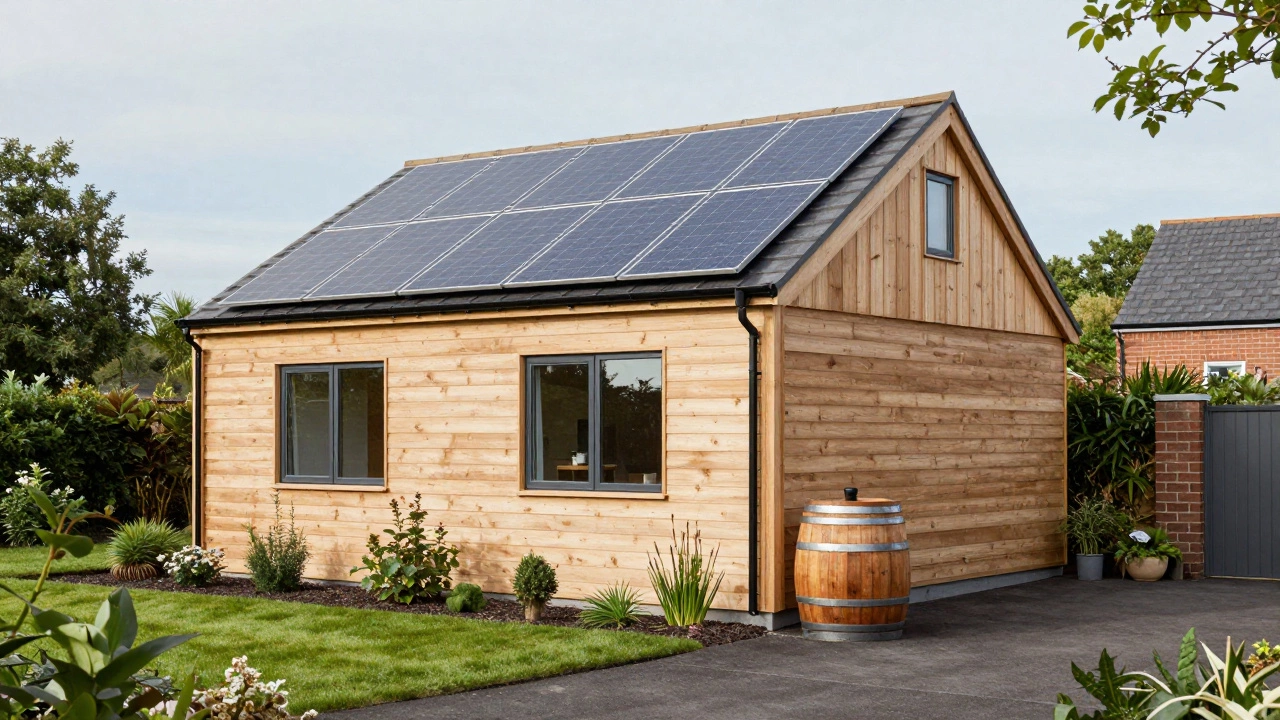
When people talk about environmentally friendly housing in general, they use the term Green Home which is a residence designed to minimize environmental impact through efficient resource use and non-toxic materials. This is the catch-all category. It doesn’t have one strict definition, but it usually involves three main goals: saving energy, saving water, and using healthy materials.
A green home might feature low-flow toilets, LED lighting, and insulation made from recycled denim instead of fiberglass. It might also use locally sourced timber to reduce transportation emissions. The key here is intent. The builder tries to make choices that are better for the planet than standard construction practices. However, a "green home" label doesn’t always come with a rigorous certification. It’s more of a philosophy than a technical spec sheet.
If you are looking at real estate listings, "green" often appears as a marketing buzzword. To verify if a house truly qualifies, look for specific features like ENERGY STAR appliances, dual-pane windows, or a certified composting system. Without these concrete details, the term remains vague.
Passive House: The Efficiency Fortress
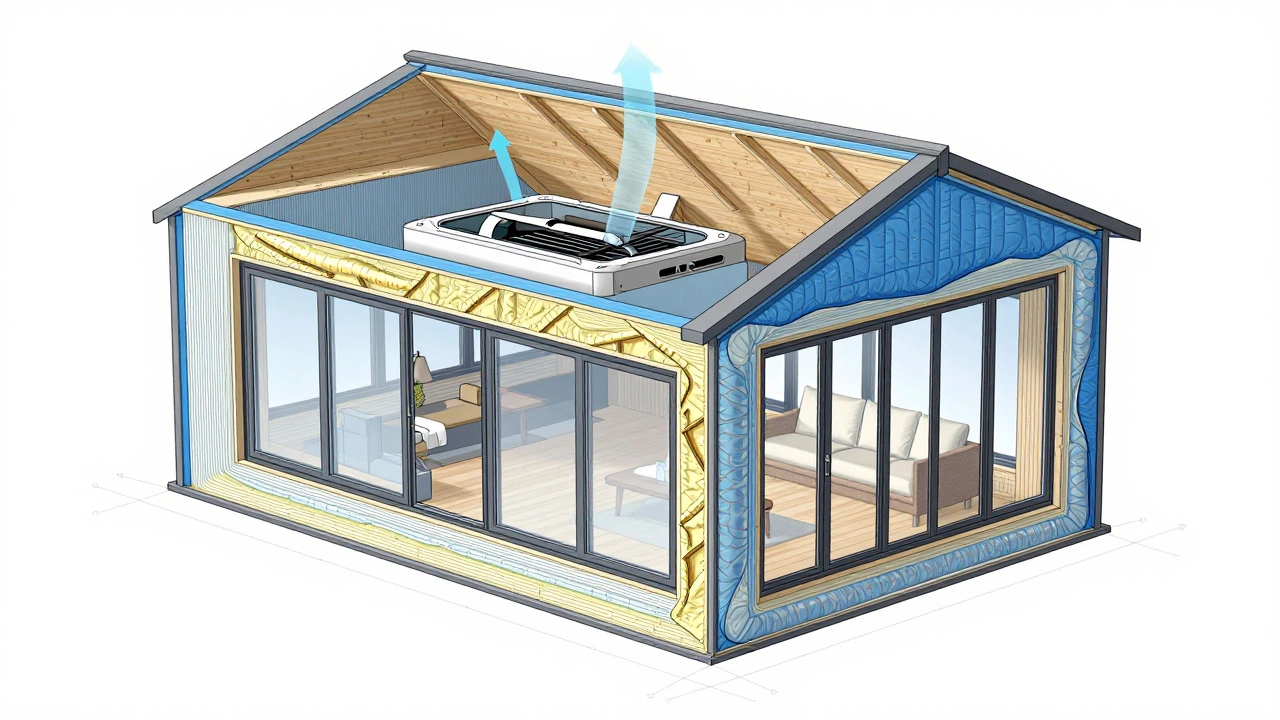
Now, let’s get technical. If a house is built to extreme standards of insulation and airtightness, it earns the title of a Passive House (or Passivhaus) which is a building standard originating in Germany that reduces heating and cooling needs by up to 90% compared to conventional buildings. This isn’t just a marketing term; it’s a rigorous certification process.
The core idea behind a Passive House is simple: stop the heat from escaping. Standard houses leak air around windows, doors, and wall cavities. A Passive House seals those leaks completely. It uses thick insulation-often twice as thick as normal-and high-quality triple-glazed windows. Because the envelope is so tight, the house retains heat in winter and stays cool in summer without relying heavily on traditional HVAC systems.
To breathe, a Passive House requires a special machine called a Heat Recovery Ventilator (HRV). This device brings in fresh outdoor air while capturing the heat from the stale indoor air being expelled. You don’t feel drafts, but the air stays fresh. If you see a house labeled as Passivhaus-certified, you know it meets strict energy consumption limits, usually under 15 kWh per square meter per year for heating.
Net-Zero Home: The Energy Producer
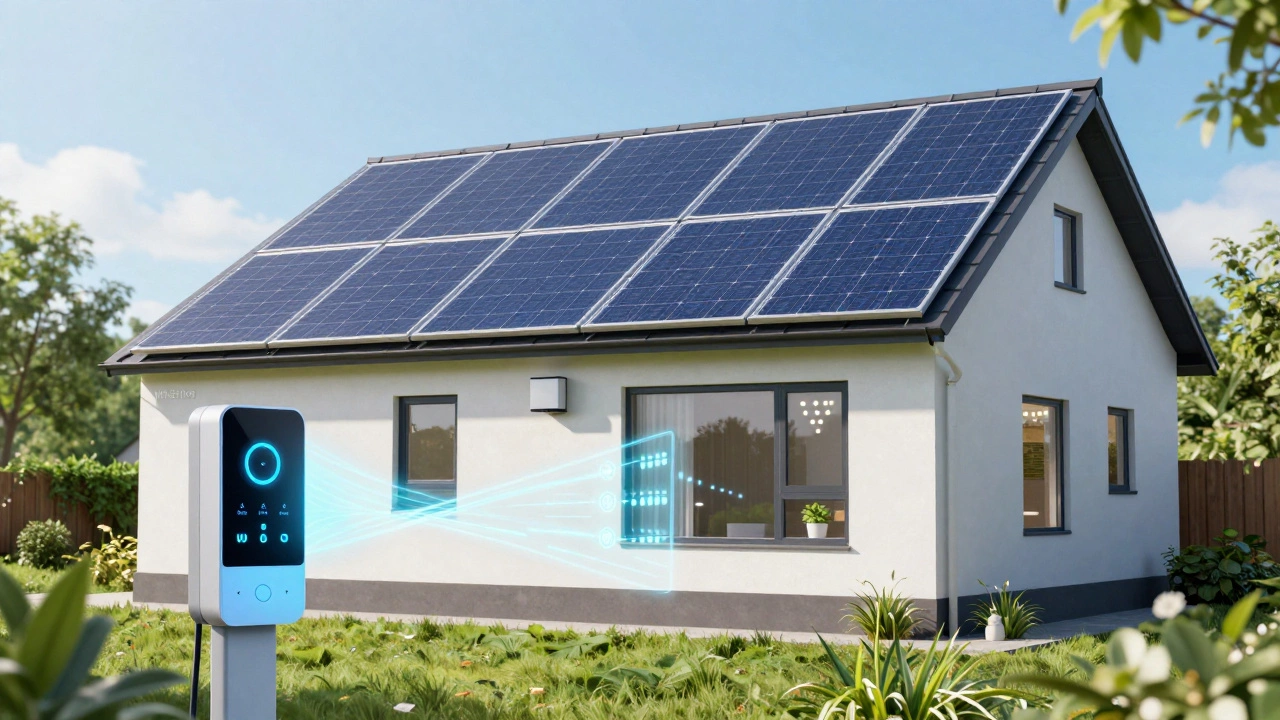
While a Passive House focuses on reducing demand, a Net-Zero Home is a residence that produces as much renewable energy as it consumes over the course of a year. These homes are often equipped with large solar panel arrays on the roof. The goal is to balance the books. In summer, the house generates excess electricity and sends it back to the grid. In winter, when sunlight is scarce, it draws power from the grid. Over twelve months, the net usage equals zero.
Building a net-zero home starts with efficiency. You wouldn’t install solar panels on a drafty, poorly insulated house because the panels would never generate enough power to cover the waste. So, most net-zero homes are also highly efficient, often incorporating passive design principles. They maximize natural light and use thermal mass-like concrete floors-to store heat during the day and release it at night.
In New Zealand, where sunlight is abundant but winters can be damp and cold, net-zero homes are becoming popular among homeowners who want to eliminate their electricity bills entirely. The upfront cost is higher due to the solar infrastructure, but the long-term savings are significant.
Zero-Energy Building (ZEB): The Broader Category
You might also hear the term Zero-Energy Building (ZEB) which is a broader classification for structures that achieve net-zero energy consumption, often used in commercial and multi-family contexts. While "net-zero home" usually refers to single-family residences, ZEB is a term used by architects and engineers for larger projects. A ZEB could be an apartment complex, an office block, or a school.
The distinction between a net-zero home and a ZEB is mostly semantic and contextual. Both aim for the same result: producing as much energy as they use. However, ZEBs often incorporate more complex technologies, such as geothermal heating systems or wind turbines, especially in urban environments where roof space is limited. For the average homeowner, "net-zero" is the more recognizable and relevant term.
Sustainable House: The Holistic Approach
Another common name is a Sustainable House which is a dwelling designed to meet present needs without compromising future generations, focusing on lifecycle impact rather than just energy. This term emphasizes longevity and material health. A sustainable house might be built with reclaimed wood, rammed earth walls, or straw bale construction. These materials have low embodied carbon, meaning they didn’t require massive amounts of energy to manufacture and transport.
Sustainability also looks at water usage. A truly sustainable house collects rainwater for irrigation and toilet flushing. It treats greywater from sinks and showers to reuse it in the garden. It avoids toxic paints and glues that off-gas volatile organic compounds (VOCs) into the living space. While a green home focuses on efficiency, a sustainable house focuses on harmony with the local ecosystem.
Comparison of Eco-Friendly Housing Types
To help you decide which term matters most for your search, here is a breakdown of the key differences between these housing types.
| Type | Primary Focus | Key Features | Certification Required? |
|---|---|---|---|
| Green Home | General Environmental Impact | LED lights, low-flow fixtures, recycled materials | No (Optional) |
| Passive House | Energy Efficiency & Air Quality | Super-insulation, airtight seal, HRV system | Yes (Strict) |
| Net-Zero Home | Energy Production vs. Consumption | Solar panels, high efficiency, smart metering | Yes (Utility Verified) |
| Sustainable House | Material Health & Lifecycle | Rammed earth, rainwater harvesting, non-toxic finishes | No (Philosophical) |
Why Does the Name Matter?
You might wonder why we need so many labels. Can’t we just call them all eco-friendly houses? The problem is that "eco-friendly" can mean anything. One builder might install a few solar tiles and claim the house is eco-friendly. Another might spend months designing a passive envelope that cuts heating costs by 90%. The outcome is vastly different.
Using specific terms like Passive House or Net-Zero gives you clarity. It tells you what to expect regarding comfort, utility bills, and maintenance. If you buy a Passive House, you know you’ll never have cold spots in the winter. If you buy a Net-Zero home, you know your electricity bill will hover near zero. Specificity builds trust.
Additionally, some governments offer grants or tax incentives only for certified homes. In New Zealand, for example, certain regional councils provide funding for homes that meet Passive House standards because they significantly reduce strain on the local energy grid. Knowing the correct terminology ensures you don’t miss out on these benefits.
Frequently Asked Questions
Is a green home the same as a sustainable home?
Not exactly. A green home focuses primarily on reducing energy and water consumption during operation. A sustainable home takes a broader view, including the environmental impact of the materials used to build the house, the lifespan of those materials, and the health of the occupants. All sustainable homes are green, but not all green homes are fully sustainable.
Do I need solar panels to have a net-zero home?
In most cases, yes. To produce as much energy as you consume, you need a renewable energy source. Solar photovoltaic (PV) panels are the most common method for residential homes. However, some net-zero homes use small wind turbines or purchase renewable energy credits if they cannot generate power on-site, though true net-zero usually implies on-site generation.
What is the difference between a Passive House and a LEED-certified home?
LEED (Leadership in Energy and Environmental Design) is a rating system that awards points for various green features, such as location, water savings, and materials. Passive House is a performance-based standard focused strictly on energy efficiency and air quality. A house can be LEED-certified without being a Passive House, and vice versa. Passive House is generally stricter regarding energy use.
Are eco-friendly houses more expensive to build?
Initially, yes. Passive Houses and Net-Zero homes typically cost 5% to 15% more to build than conventional homes due to higher-quality windows, insulation, and mechanical systems. However, these costs are offset over time by drastically lower utility bills. Many studies show that the return on investment occurs within 10 to 20 years, after which the homeowner enjoys nearly free heating and cooling.
Can I convert my existing house into a Passive House?
It is difficult and often prohibitively expensive to retrofit an existing home to meet full Passive House certification standards. However, you can achieve similar results through deep retrofits. This involves adding external insulation, replacing windows with high-performance units, and installing an HRV. While it may not earn the official "Passivhaus" label, it will deliver similar comfort and energy savings.